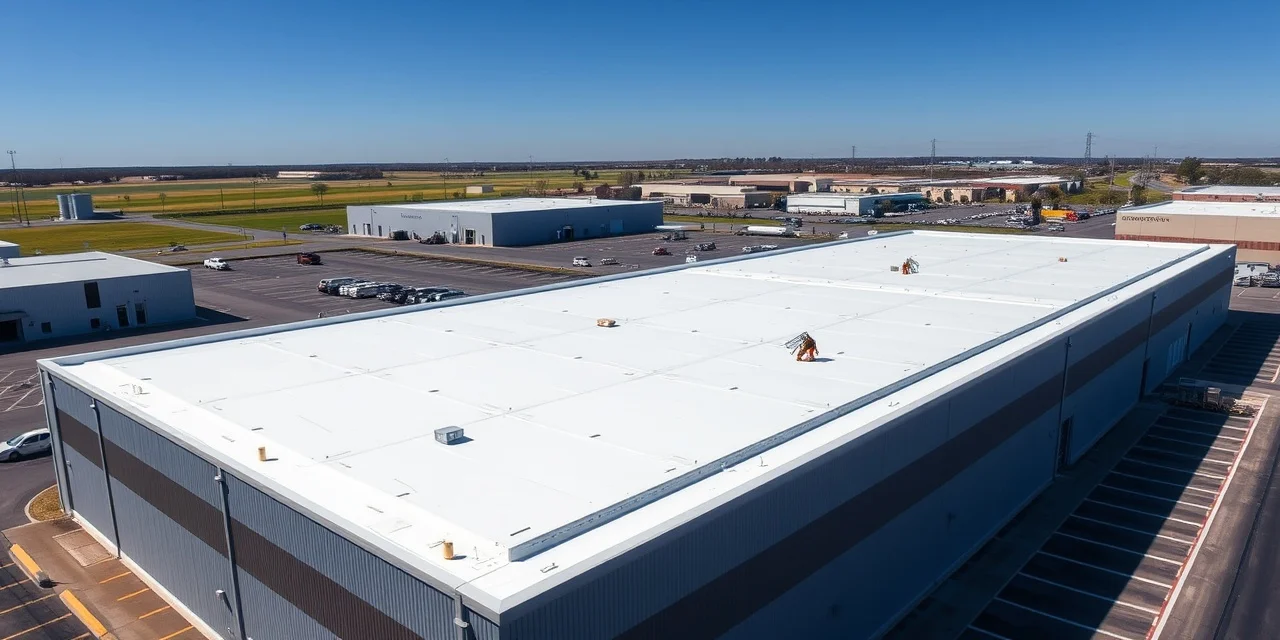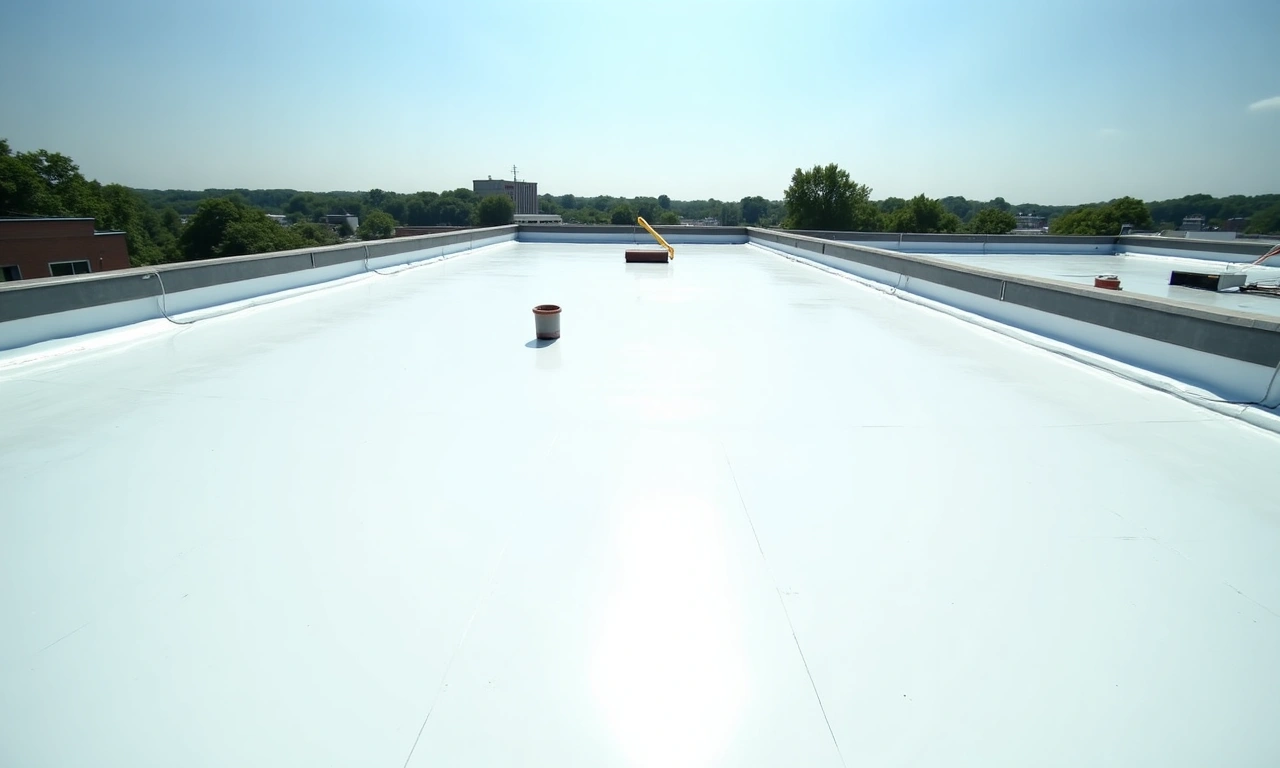
Short answer: A coating can restore a commercial flat roof that is sound and dry. It does not fix wet insulation, structural damage, or bad drainage.
Manufacturers say to repair leaks and confirm dryness first. A moisture survey decides which path fits the building. If the insulation is wet, replacement is the safer call.
This page covers the coating decision only. Replacement pricing lives in the Ohio commercial roof cost guide. Repair triage lives in flat roof repair versus replacement.
Fairfield Peak is a referral service, not a roofing contractor. We forward your request to independent contractors. They set prices, terms, and warranties.
When a Coating Fits a Commercial Flat Roof
A 2010 Department of Energy guide gives a simple test. A cool coating may fit if the roof is in good condition. It should have few, easy-to-repair leaks and at least five years of service life left.
The guide is old, but it matches current manufacturer documents. Henry's silicone application guide says substrate and insulation must be sound and dry. It calls the system a cost-effective alternative to replacement, which is a manufacturer claim.
The RCMA FAQs add that ballasted and gravel-surfaced membranes generally need special treatment. Henry's guide also excludes gravel-covered roofs. It excludes coal tar and shingles too.
When Replacement Is the Safer Call
Coatings seal the surface. They do not rebuild what sits under it. Three conditions point toward replacement or a tear-off section.
- Wet insulation. Henry says not to coat over saturated insulation or substrates. Wet material must be removed and replaced first.
- Active leaks and failed flashings. RCMA says leaks must be found and fixed before coating. Coatings may seal minor or pinhole leaks only.
- A roof near the end of its life. DOE says a poor roof, or one nearing the end of its service life, usually calls for re-covering or replacement.
Structural problems sit outside what a coating can do. A sagging deck needs repair first. Henry's guide requires tight fasteners and watertight penetrations before any coating goes on.
The Four Coating Types
RCMA says white coatings are commonly acrylic, urethane, or silicone based. DOE lists the same three major kinds. Asphalt-based coatings are the fourth family.
| Type | What the sources say |
|---|---|
| Acrylic | DOE: water based, moderate cost, very sensitive to weather. Most commonly used reflective coating. |
| Silicone | DOE: weathers very well, good water resistance, more expensive. Henry and PM Silicone publish thickness-based warranties. |
| Polyurethane (urethane) | DOE: solvent based, 3 to 10 times stronger than acrylic, less sensitive to weather, harder to work with, more expensive. |
| Asphalt-based | DOE: aluminized asphaltic emulsions fall short of cool roof standards for low-slope roofs. |
Compatibility matters as much as type. Henry's guide requires adhesion tests and may call for a primer. Ask the contractor to name the coating and cite its data sheet.
What a Moisture Survey Decides
A moisture survey is the gate. Henry pairs a visual check with infrared, nuclear, capacitance, or core-cut testing. The contractor must verify the roof is dry and leak free for warranty eligibility.
PM Silicone's gravel BUR overview (file dated 4.10.25) makes the rule concrete. Wet areas over 500 square feet need to be replaced. Isolated wet areas under 500 square feet need only a moisture relief vent.
That threshold is one manufacturer's rule for one system. Other manufacturers set their own. The repair and replacement guide covers core testing.
Cost: What Published Figures Show
No primary source we opened publishes an Ohio commercial coating price. The RCMA FAQs list none. The two figures below come from Fixr, a cost aggregator, and they cover different things.
| Item | Published figure | Source and caveat |
|---|---|---|
| Cool roof coatings | $0.75 to $1.50 per sq ft | Fixr, published April 13, 2021. Not commercial specific. |
| TPO roofing, installed | $4.50 to $16 per sq ft | Fixr, published September 10, 2026. Framed for commercial buildings. |
Do not subtract one from the other. The coating figure leaves out repairs, drying, wet insulation, and prep. For replacement pricing by system, use the commercial roof cost guide.
Compare a full coating scope against a replacement bid for the same roof. Get both in writing.
Cost per square foot, two published ranges
Bars share one scale. The two ranges come from different Fixr pages.
Fixr, published April 13, 2021. Not commercial specific.
Fixr, published September 10, 2026. Framed for commercial buildings.
- The coating figure leaves out repairs, drying, wet insulation, and prep.
- The two dates differ by years. Do not subtract one from the other.
Three coating types (DOE)
Acrylic
Water based. Moderate cost. Very sensitive to weather.
Silicone
Weathers very well. Good water resistance. More expensive.
Urethane
Solvent based. More expensive. 3 to 10 times stronger than acrylic.
Sources: Fixr pages listed in Sources. Coating types from the 2010 U.S. DOE cool roof guide.
Warranty Limits and Service Life
Warranty length and service life are different things. Warranties follow product rules. Service life follows the roof.
RCMA says coatings can often add 10 years or more. Results depend on coating type, conditions, and film thickness.
Manufacturers tie warranties to thickness. Henry lists 10-, 15-, and 20-year silicone systems with minimum film thicknesses. PM Silicone's gravel BUR sheet lists 30 mils for 5 years and 45 for 20.
Both require a dry roof. Henry also requires at least 2.0 pli adhesion on each test for warranty eligibility. Read the warranty before you sign.
Chart: coating thickness vs warranty length
Manufacturers tie longer warranties to thicker film. Hover or focus a bar for detail.
PM Silicone, gravel BUR system
Henry silicone systems
Sources: PM Silicone gravel BUR overview (file dated 4.10.25) and the Henry Pro-Grade silicone application guide (no date shown). Dashed bars mean no value is stated.
Energy Claims and Ohio Cautions
ENERGY STAR says cool roofs work best in hot, sunny climates. It gives no dollar savings. EPA (updated June 18, 2026) says summer cooling savings typically offset winter heating losses.
DOE says energy savings alone will not normally justify coating. Treat reflectivity as a bonus, not the budget case.
Ponding. RCMA says only some coatings tolerate ponding, so ask the manufacturer in writing. Henry requires positive drainage.
Cold weather. Henry requires the substrate to be above 35 degrees F and rising. We found no primary page on coating freeze-thaw performance, so we make no claim.
See the maintenance guide for Ohio seasonal stress.
Incentives. We found no official page confirming a tax credit or rebate. Ask your accountant and utility.
To compare membranes, read the membrane comparison.
Coating or Replacement? Fit Check
Fit Check quiz
How to use this: answer each question about your roof. The result updates as you go. Nothing is sent anywhere.
Answer all questions to see your result.
Rule: any replacement flag gives "Replacement or re-cover likely needed". Otherwise any unknown gives "Get a moisture survey first". Otherwise "A coating may fit". Criteria come from the DOE guide, RCMA, Henry and PM Silicone, as cited above.
Enter an area to multiply the two Fixr ranges.
Formula: area x low figure and area x high figure. No other costs are included.
General information, not legal, insurance or engineering advice. Fairfield Peak is a referral service.
Frequently Asked Questions
Can you coat a commercial roof that has wet insulation?
No, Henry's silicone guide says not to coat over saturated insulation. PM Silicone's gravel BUR overview says wet areas over 500 square feet must be replaced. A survey finds them.
How long does a commercial roof coating last?
RCMA says coatings can often add 10 years or more. Results depend on type, conditions, and film thickness. Warranties in the manuals we opened run 5 to 20 years.
Is a coating cheaper than replacement?
Per square foot, usually yes. Fixr lists coatings at $0.75 to $1.50 and TPO replacement at $4.50 to $16. The coating figure leaves out repairs, drying, and wet insulation.
Does ponding water rule out a roof coating?
Not always, but it limits your options. RCMA says only some coatings tolerate ponding, so confirm with the manufacturer. Henry's guide wants positive drainage and refers ponding repairs to its support team.
Does a reflective coating save energy in Ohio?
Maybe, but not enough to justify a coating alone. A 2010 DOE guide says energy savings alone will not normally justify coating a roof. ENERGY STAR says cool roofs work best in hot, sunny climates.
Are there tax breaks or rebates for roof coatings?
We found no official Ohio or federal page confirming one. RCMA says some states, cities, and utilities offer incentives. It says coatings are typically treated as maintenance, so check with your finance lead.
Sources
- Roof Coatings Manufacturers Association, FAQs (no date shown). Covers coating families, ponding, leaks, life extension. Gives no prices.
- U.S. DOE, Guidelines for Selecting Cool Roofs, July 2010. Dated. Covers coating suitability, types, energy.
- Henry Pro-Grade Silicone Roof Coating System application guide. One manufacturer's rules. Covers moisture, drainage, temperature, warranty thickness.
- PM Silicone, Roof Coating Restoration over Gravel BUR installation overview. One system. Covers 500 sq ft moisture rule and warranty mils.
- EPA, Using Cool Roofs to Reduce Heat Islands, updated June 18, 2026. Heating penalty.
- ENERGY STAR, cool roofs (no date shown). Climate suitability. No dollar figures.
- Fixr, energy-efficient roofing options, April 13, 2021. Coating cost.
- Fixr, TPO roof cost, September 10, 2026. Replacement cost.
RCMA's acrylic tech note would not open, so we do not cite it. We found no Ohio-specific coating price or incentive page.
Compare Coating and Replacement Options
Fairfield Peak is a referral service, not a roofing contractor. We forward your request to independent contractors. They set their own pricing, availability, and terms.
Also see commercial roofing, Lancaster, Newark, Reynoldsburg, and Columbus service areas. Permit data is in the Columbus reroof permit values study.