Those Dark Streaks on Your Ohio Roof Are Eating It Alive
Those dark streaks running down your shingles are not dirt. They will not wash off in the next rain.
They are colonies of blue-green algae, and Ohio's climate feeds them well.
"Ohio's mix of wet, humid summers and cold winters creates the perfect breeding ground for moss and algae," according to Columbus Roofing Co. Fairfield County sits squarely in that pattern.
The Dark Pigment Is Doing Real Damage
Algae is not just an eyesore sitting on top of your shingles. The pigment it produces changes how your roof behaves in the sun.
"The stain absorbs sunlight, heats the shingle, and dries it out over time," Columbus Roof Clean reports. Dried-out, overheated shingles granulate faster and lose their protective coating sooner than a clean roof would.
"Left alone, this cycle shortens roof life," the same source notes, "and can nudge small vulnerabilities into leaks."
Moss Is a Different Problem, and a Worse One
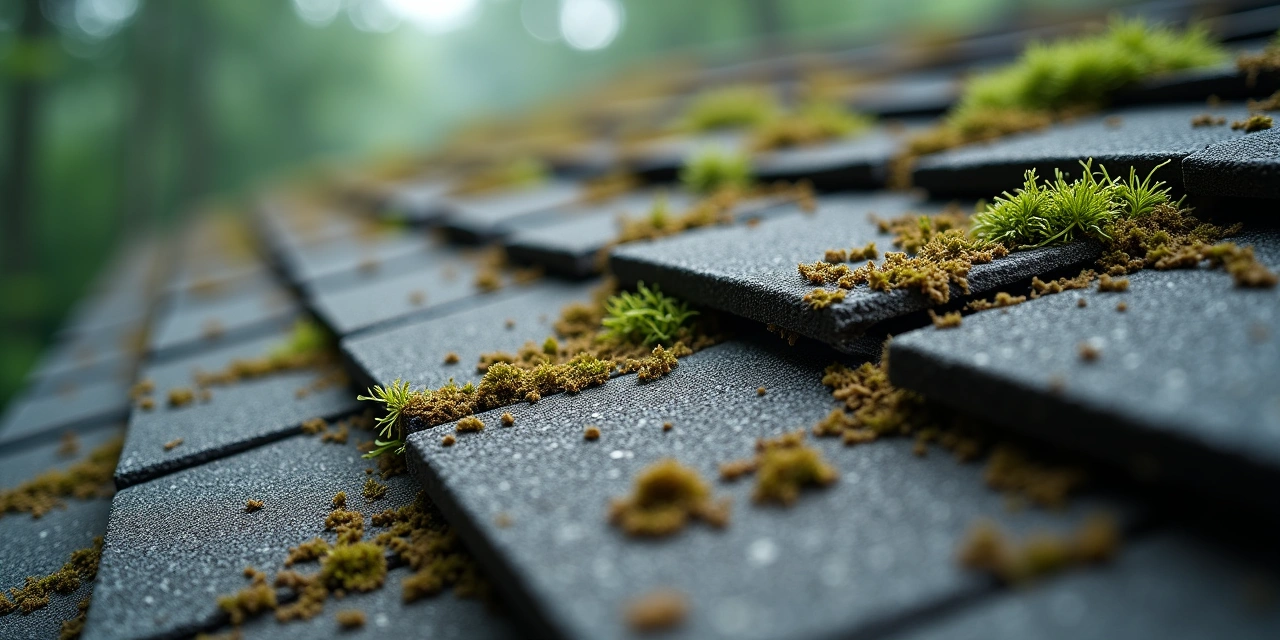
Algae stains. Moss digs in. It forms a root-like structure called a rhizoid that grabs onto the shingle surface.
"Moss can lift roofing shingles, allowing water to seep beneath them," per Columbus Roofing Co. Once water gets under a shingle, it stops being a cosmetic problem.
"Moss traps moisture against the surface of your roof, accelerating wear and tear," the same source adds. A shaded, north-facing roof slope in a wooded Lancaster neighborhood is exactly the environment moss wants.
It Is Also Raising Your Cooling Bill
An algae-darkened roof does not just look worse. It runs hotter.
"You may also notice higher attic temperatures in summer as dark algae streaks absorb heat," Columbus Roof Clean reports. That extra attic heat pushes your air conditioner to work harder through an Ohio summer that is already humid enough.
Relative Attic Heat Load: Clean vs. Algae-Streaked Shingles
Illustrative comparison based on the heat-absorption mechanism described by Columbus Roof Clean: dark algae pigment absorbs more solar radiation than clean shingle granules, raising attic temperatures. Bar lengths are relative, not measured lab values for a specific roof.
Timing the Cleanup Actually Matters
Ohio roofing sources agree on a window. "The best time to clean your roof is during the spring or fall, when temperatures are moderate and the weather is drier," Columbus Roofing Co. advises.
Wait until deep winter and ice makes the job dangerous. Wait until peak summer and you are cleaning during the exact conditions that let the algae regrow fastest.
Heavily wooded or shaded properties need to watch this closer than an open lot. Columbus Roof Clean suggests those properties "may benefit from a maintenance plan" rather than a one-time cleaning.
Pressure Washing Can Cause the Damage It Is Meant to Fix
A homeowner with a rental pressure washer can strip the protective granules right off an asphalt shingle. That damage is often worse than the algae itself.
Soft washing with the correct chemical mix kills the organism without blasting the shingle surface. It is the method most Ohio roof-cleaning services default to for exactly this reason.
Next Move
Walk your property line this month and look at your roof from a distance, in full daylight. Dark streaking running down from the ridge is algae. Green, raised patches in shaded valleys are moss.
If you see either, get a soft-wash cleaning scheduled for late September or October, ahead of Ohio's next freeze-thaw cycle, not after it.
Get a Roof Condition Check Before Winter: 877-367-1885
Related articles:
Your Insurer Already Photographed Your Roof From the Sky
Roof Inspection Services in Fairfield County
Glossary: Asphalt Shingles
Sources:
Columbus Roofing Co.: How to Prevent Roof Moss and Algae Growth
Columbus Roof Clean: How Moss and Algae Can Shorten the Life of Your Roof