Short answer: No reliable current commercial inspection price was found in a primary source. Cost depends on method, roof size, access, and report depth.
Compare written scopes, not totals. A low bid with a thin scope is not a bargain.
This guide does not repeat our commercial roof cost guide. It covers inspections only. It also avoids unsourced numbers.
What the Published Sources Say About Price
Two sources gave usable dollar figures. Neither is a current commercial price list.
| Source | Figure | Basis and limits |
|---|---|---|
| Fixr roof inspection page | $426 average, $307 to $571 typical, $120 to $800 full range | Updated January 31, 2025. General roof inspections. It does not price commercial, infrared, or drone work. |
| IIBEC reprint of a 1997 Interface article | $0.01 to $0.25 per sq ft for moisture surveys | Written by Karl Schaack, P.E., in March 1997. Over 25 years old. Useful for scale, not for budgeting. |
Our maintenance guide also cites the IIBEC range. Read it as a 1997 figure.
Our flat roof repair guide quotes prices for core tests and infrared scans. We could not confirm those against a primary source for this page. Treat them as unverified.
Search results also show per-square-foot ranges on contractor and cost-aggregator sites. We left them out. None came from a primary source with a stated date and basis.
What the Sources Say About Price, at a Glance
Only two published figures were found. Each bar has its own scale, so do not compare across cards.
Fixr roof inspection page
General roof inspections. Updated January 31, 2025.
$426 average
- Full range $120 to $800
- Typical $307 to $571
- Average $426
Basis: Fixr, general roof inspections. It does not price commercial, infrared or drone work.
IIBEC reprint of a 1997 article
Moisture surveys. Written March 1997 by Karl Schaack, P.E.
$0.01 to $0.25 per sq ft
Basis: a 1997 figure for moisture surveys. Useful for scale, not for budgeting.
What was not found
No current commercial, infrared, core or drone price found.
Inspection Types Compared
The method sets the scope of work. It also sets the price.
| Method | What it finds | What it cannot do |
|---|---|---|
| Visual walk-over | Open seams, damaged flashing, ponding, clogged drains, punctures | See wet insulation under an intact membrane |
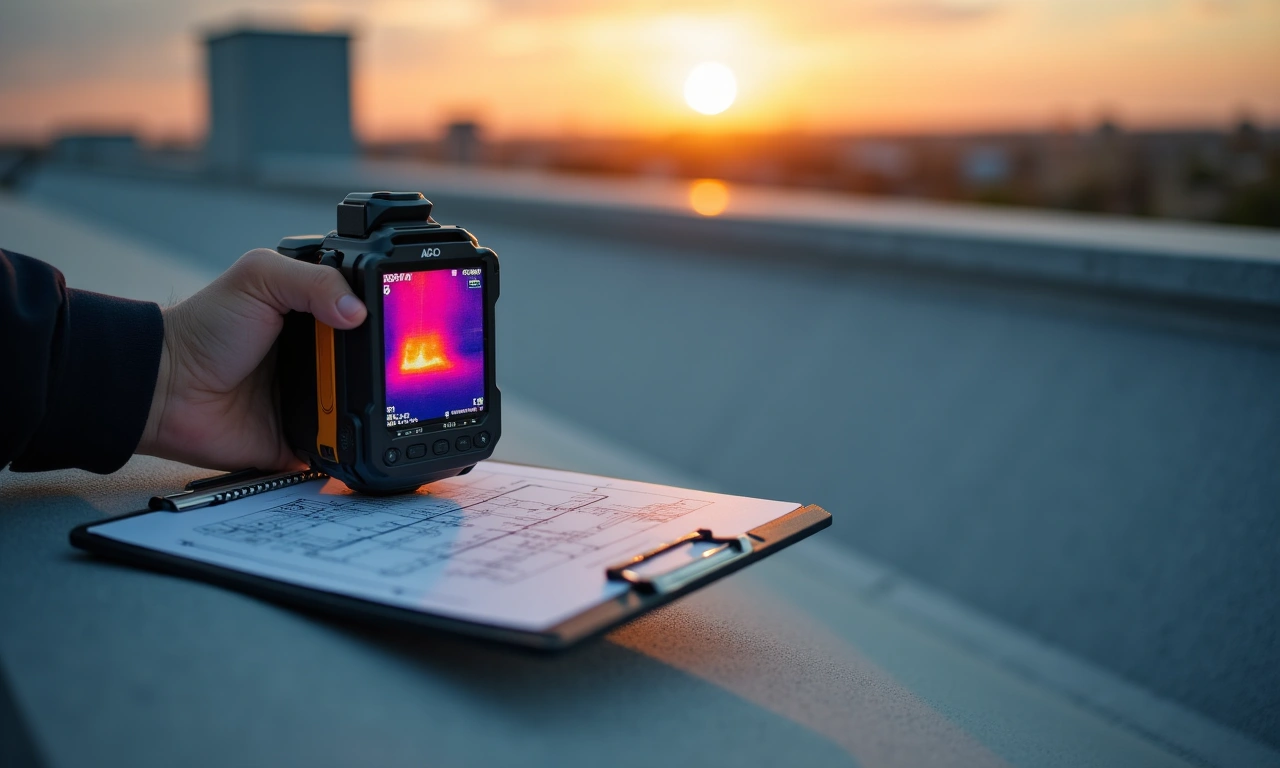
| Infrared moisture scan | Likely wet insulation, found by heat patterns at night | Show the cause or entry point of moisture |
| Core sampling | Layers, insulation condition, and moisture at the cut location | Map the whole roof. Each core is one spot. |
| Drone survey | Overview images of hard-to-walk or fragile areas | Replace hands-on checks of seams and flashing |
The ASTM C1153 catalog page describes night-time infrared imaging for wet insulation. It covers ground-based and aerial work. It also covers operator qualifications and checking results with invasive tests.
It says the method does not determine the cause of moisture. That page lists the 2015 version as historical. ASTM lists C1153-23 as current.
The drone and core rows are a plain-language summary, not a standard. No standard was opened for them.
Where Each Inspection Method Looks
A roof cross-section showing where each method looks. Source: the Inspection Types Compared table above.
How to use this: Tap or focus a numbered marker. It shows what the scan finds and cannot do.
Choose a method to see what it finds and what it cannot do.
What Drives the Price
- Method: A walk-over is the base. Infrared, cores, or drone work add scope.
- Roof size and layout: Large or broken-up roofs take longer to cover.
- Access: Fixr names access as a driver. Ladders, hatches, and fall protection all take time.
- Timing: Infrared work happens at night. Weather can force a repeat visit.
- Report depth: Photos, a roof plan, and ranked repairs take more hours than a checklist.
- Verification: Cores or probes to confirm a scan add a second step.
Fixr says costs vary with roof size, inspection type, and accessibility. The other drivers above are our reading of how the work is done.
Who Performs the Inspection
NRCA's Professional Roofing column (April 2012, Mark Graham) says trained staff can handle routine checks. They must follow safety procedures. Owners without such staff should retain a professional roofing contractor.
- Roofing contractor: Common for routine and maintenance inspections. The inspector may also bid the repair work.
- Independent consultant or engineer: Does not sell the repair. Often used for disputes, sales, or large projects.
- Manufacturer-licensed applicator: Elevate recommends at least one yearly assessment by the applicator that installed its roof.
Who inspects affects independence, not just price. Ask if the firm plans to bid the repairs.
What a Written Report Should Contain
NRCA says to record conditions in writing with photographs. File the records so later visits can show how conditions have changed over time. Elevate says the contractor reports problems and suggests repairs.
Use this list for any scope. It is a suggestion, not a standard. Adjust it to the building.
- Date, weather, roof area covered, and method used
- Roof plan with numbered findings
- Dated photos tied to each finding
- Condition rating and repair priority for each item
- Any areas not reached, and why
- For scans, the cores or probes used to verify them
- Inspector name and credentials
How Often to Inspect
NRCA recommends at least two inspections a year, preferably spring and fall. It also suggests one after severe weather.
Elevate repeats the twice-yearly schedule. Our maintenance guide has the Ohio seasonal calendar.
Moisture scans are a different matter. None of the sources opened sets a schedule for them. Owners often order one before a re-roof or sale, but that is a judgment call.
When an Inspection Is Required
We found no general Ohio rule that forces an inspection at sale or lease. Requirements come from documents you can read.
- Sale or lease: The contract, lender, or lease terms may call for one.
- Warranty: Many warranties set inspection and maintenance duties. Check your document.
- Insurance: A policy or claim may call for documented roof condition. Ask your insurer in writing.
Our membrane comparison helps if the report points to replacement. For permit values, see Columbus reroof permits.
How to Compare Inspection Bids
- Send every bidder the same written scope.
- Ask which methods are included, and which are extra.
- Ask for a sample report.
- Ask who does the work and who signs the report.
- Ask if the price changes when weather forces a second visit.
Compare Inspection Bids
Check which report items each bid promises in writing. Items come from the report above.
How to use this: Name up to three bids. Tick each item the bid promises in writing.
| Report item | Bid 1 | Bid 2 | Bid 3 |
|---|
Rule: completeness is the number of ticked items out of 7. Items no bid ticks are flagged. Ask about those.
Compare written scopes first, then price. No price ranking.
General information, not legal, insurance or engineering advice. Fairfield Peak is a referral service.
Fairfield Peak serves Lancaster, Newark, and Columbus. See our commercial roofing page for service types.
Frequently Asked Questions
How much does a commercial roof inspection cost?
No reliable current commercial price was found in a primary source. Fixr's January 2025 page gives general roof inspection figures, not commercial ones.
Price depends on method, roof size, access, and report scope. Compare written scopes from each bidder.
Is an infrared scan worth it on a flat roof?
It can be. Infrared imaging helps locate wet insulation that a walk-over cannot see.
ASTM C1153 covers night-time imaging for that purpose. It does not find the cause of moisture. Ask whether the scan will be checked with cores or probes.
Who should inspect a commercial roof?
NRCA says trained building staff can do routine checks if they follow safety rules. Without such staff, retain a professional roofing contractor. For a sale, dispute, or claim, some owners hire an independent consultant or engineer.
How often should a commercial roof be inspected?
NRCA recommends at least two inspections a year, preferably spring and fall. It also suggests an inspection after severe weather. Your warranty or insurance policy may set its own schedule, so read both.
Is a roof inspection required when buying or leasing a building?
No general rule was found that says so. Requirements usually come from the purchase contract, lease, lender, insurer, or roof warranty.
Read those documents. Ask the other party in writing what they require.
Get Inspection Bids for Your Building
Fairfield Peak is a referral service. We are not a roofing contractor. We forward your request to independent contractors. Each sets its own availability, pricing, and terms.
Send your building details and tell contractors you want a written scope. Request a commercial roofing contact to start.
Sources
- Fixr: roof inspection cost (updated January 31, 2025)
- IIBEC: Roof Moisture Surveys, An Effective Tool for the Industry (March 1997)
- ASTM C1153-10(2015) catalog page
- NRCA Professional Roofing column (April 2012)
- Elevate: seasonal commercial roof inspections (undated)
Compare Commercial Roof Inspection Bids
Fairfield Peak is a referral service. We forward your request to independent contractors.