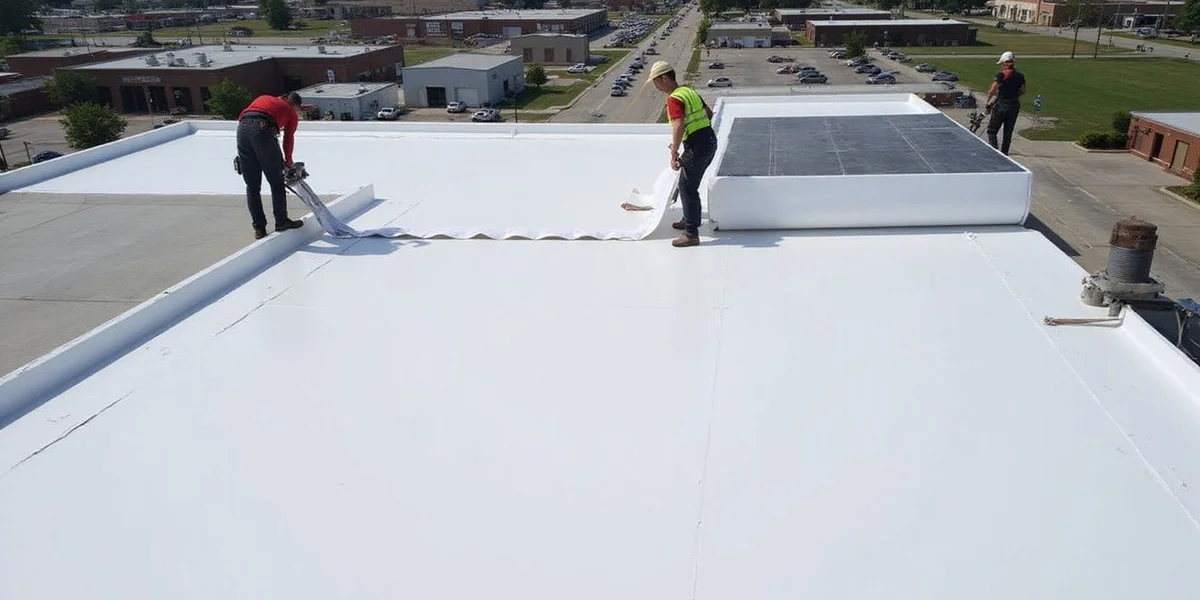
Find a Commercial Roofing Contractor in Lancaster and Central Ohio
Commercial roofing contractor referrals in Lancaster, Columbus and Central Ohio. EPDM, TPO, modified bitumen, and built-up flat roof systems for businesses, warehouses, and multi-unit properties.
Commercial Features and Benefits
- TPO, EPDM, and modified bitumen single-ply membrane systems
- Built-up roofing (BUR) for maximum puncture resistance
- Preventive maintenance programs to extend roof life
- HVAC curb, skylight, and rooftop unit penetration flashing
- Ask about emergency leak repair availability for commercial properties
Commercial Roofing Solutions Built for Lancaster Businesses
Commercial roofing is a fundamentally different discipline from residential work. Flat and low-slope roof systems use entirely different materials, attachment methods, and detailing techniques than the steep-slope shingle and metal roofs found on homes. Fairfield Peak Roofing connects commercial properties with independent contractors. Projects range from small retail buildings to large warehouses and apartment buildings in Fairfield County.
Commercial contractors install and maintain these flat roof systems: TPO, EPDM, modified bitumen, and built-up roofing. Ask each one which systems they handle and what experience they have with your building type, budget, and long-term goals.
TPO: The Modern Standard for Commercial Roofs
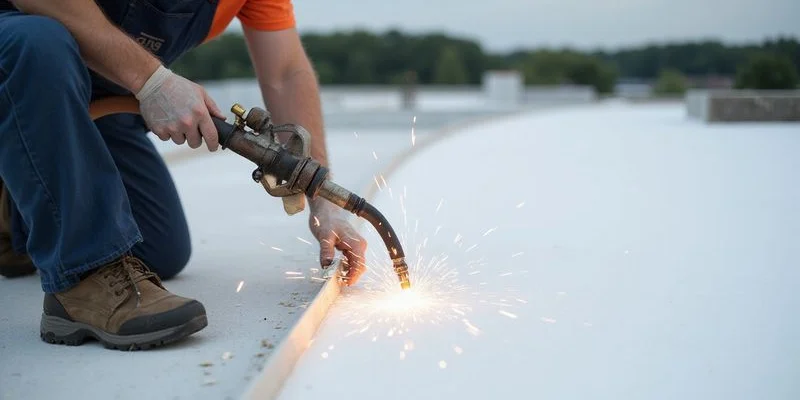
Thermoplastic Polyolefin (TPO) has become the dominant commercial roofing membrane in North America over the past 15 years, and for good reason. TPO provides an outstanding combination of weather resistance, energy efficiency, and cost-effectiveness that is hard to match with other systems.
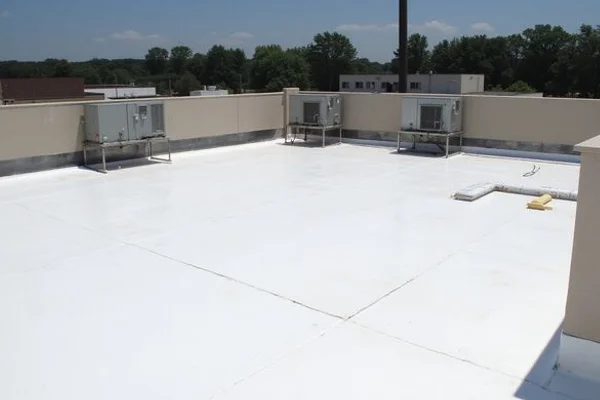
The white reflective surface of TPO meets Energy Star and Cool Roof Rating Council requirements, bouncing solar radiation instead of absorbing it. For Lancaster businesses with large roof footprints, this can translate to measurable reductions in summer cooling costs. The energy savings are particularly significant for warehouses, retail buildings, and office spaces with large HVAC loads.
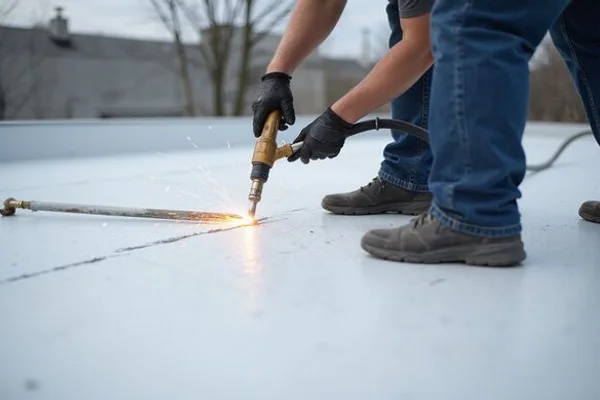
TPO seams are hot-air welded, creating a fusion bond between membrane sheets that is actually stronger than the membrane itself. This welded seam is the key durability advantage of TPO. Older systems use adhesive-fastened or tape-sealed seams. A properly welded TPO seam does not degrade over time.
Membrane manufacturer and thickness vary by project, so ask each contractor which brand and thickness they would specify for your building.
EPDM: Proven Performance Over Five Decades
Ethylene Propylene Diene Monomer (EPDM) rubber roofing has the longest track record of any single-ply commercial membrane. Buildings roofed with EPDM in the 1970s and 1980s are still performing today - a real-world reliability record that no other flat roof material can claim.
EPDM is a synthetic rubber membrane that remains flexible across an extreme temperature range, from well below zero to above 200 degrees Fahrenheit. This flexibility means the membrane absorbs thermal movement, structural settling, and building vibration without cracking or splitting - a particular advantage for older buildings in Lancaster with steel or concrete structures that move seasonally.
EPDM is available in black or white and can be installed fully adhered to the insulation, mechanically attached with plates and fasteners, or ballasted with river rock. Fully adhered systems provide the best wind uplift resistance and are the standard recommendation for occupied buildings.
For ponding water conditions - a common issue on flat roofs - EPDM remains stable and watertight even under standing water, while some other membranes can degrade when continually submerged.
Modified Bitumen: Maximum Puncture Resistance
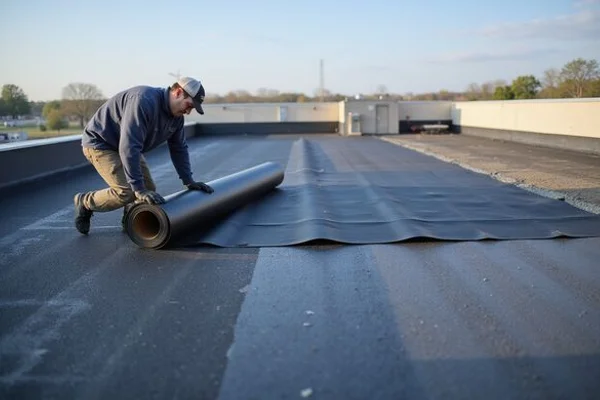
Modified bitumen roofing uses asphalt-based sheets reinforced with polyester or fiberglass mats and modified with APP (atactic polypropylene) or SBS (styrene-butadiene-styrene) polymers. The result is a multi-layer membrane system with exceptional puncture resistance and the ability to handle heavy foot traffic.
This makes modified bitumen the preferred choice for commercial roofs that support frequent maintenance traffic - buildings with rooftop HVAC equipment, satellite dishes, or other systems that require regular technician access. The thick, reinforced membrane resists damage from dropped tools, dragged equipment, and heavy boots far better than thin single-ply membranes.
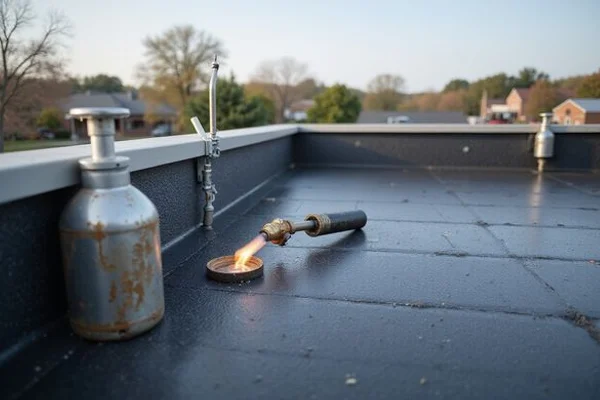
Modified bitumen can be installed with torch-applied or cold-adhesive methods. Cold-adhesive installation eliminates the open flame associated with torch application, making it the preferred method for occupied buildings and facilities near combustible materials.
Built-Up Roofing for Maximum Durability
Built-up roofing (BUR) - often called tar and gravel - is the original flat roof system and still offers the highest puncture resistance and redundancy of any commercial membrane. BUR consists of multiple alternating layers of bitumen and reinforcing fabric, topped with a flood coat of asphalt and embedded aggregate or a granulated cap sheet.
The multi-layer construction means that even if the top surface is damaged, several additional waterproofing layers remain intact. This built-in redundancy makes BUR an excellent choice for critical facilities where even a small leak would cause significant operational disruption.
Commercial Roof Maintenance Programs
The most cost-effective commercial roofing investment is not a new roof - it is regular maintenance of your existing one. Small issues like open seams, cracked flashing sealant, clogged drains, and displaced membrane patches cost very little to repair when caught early. Left unaddressed, they allow water into the insulation and deck, leading to expensive damage that can require partial or complete roof replacement.
Commercial maintenance programs from contractors in our network include:
Semi-annual inspections - Performed in spring after freeze-thaw season and in fall before winter, covering membrane condition, seam integrity, flashing, drainage, and penetration seals.
Priority repair scheduling - Maintenance clients receive priority scheduling for any repairs identified during inspections, with most issues resolved within the same week.
Documentation and reporting - Each inspection generates a written report with photos and condition ratings that help you budget for future capital expenditures and satisfy building insurance requirements.
Drain and scupper maintenance - Clogged roof drains are a leading cause of ponding water damage. Ask each contractor whether clearing drains and scuppers is part of every inspection visit.
Commercial Roofing Referrals in Lancaster, Columbus and Central Ohio
Fairfield Peak Roofing is a referral service, not a roofing contractor. We forward commercial roofing requests to independent contractors, which may serve Lancaster, Fairfield County, Columbus and nearby Central Ohio cities. Availability varies by address and building, and each contractor sets its own pricing and terms.
Commercial requests can cover flat and low-slope roofs on retail buildings, warehouses, offices, churches and apartment properties. Tell us the building type, roof system if you know it (TPO, EPDM, modified bitumen, built-up), and whether the problem is an active leak, a repair, a replacement or a maintenance program.
- Roofing in Columbus, OH, including commercial requests
- Commercial roof replacement cost in Ohio: published cost ranges by system
- Columbus commercial reroof permit values, 2021 to 2026
- Commercial roof maintenance programs
- Flat roof repair vs. replacement
- Commercial roof leak: emergency steps for building owners
- Commercial roof hail damage insurance claims in Ohio
- Commercial roof inspection cost and how to compare bids
- Commercial roof coating vs. replacement
- EPDM vs. TPO vs. modified bitumen
Call 877-367-1885 or request a commercial referral to ask about availability at your address.
How the Commercial Process Works
Commercial Roof Evaluation
Your contractor performs infrared moisture scanning and core sampling to assess your existing roof assembly, identify trapped moisture, and evaluate insulation R-value. The report includes photos, measurements, and recommended options.
System Design & Specification
Based on building use, budget, and performance requirements, your contractor specifies the optimal membrane system, insulation thickness, and attachment method, and provides a detailed written specification and warranty options from each manufacturer.
Professional Installation
Ask whether the contractor follows manufacturer standards for seam welding, adhesion, and flashing. Ask how they will limit disruption to your business.
Final Inspection & Warranty Registration
Your contractor performs a water test on completed sections, inspects every seam, flashing, and penetration, and registers your manufacturer warranty. You receive a complete as-built package with photos, specifications, and warranty documents.
Questions to Ask Your Contractor
Ask your matched contractor for a written estimate. Ask what warranty terms apply, in writing.
Commercial Projects in Lancaster
What Fairfield Peak Does
A Referral Service
Fairfield Peak is a referral service. Fairfield Peak does not perform roofing work.
Independent Contractors
Fairfield Peak connects homeowners with independent contractors. Availability and quality vary by contractor.
Ask About Warranties
Ask your contractor what warranty terms apply, in writing.
Ask for Proof
Ask for proof of insurance. Ask which manufacturer certifications the contractor holds.
Try Our Roofing Tools
Use the free online calculators to estimate costs and assess your roof's condition.
Commercial Questions Answered
Related Services
Metal Roofing
Metal roofing information for Lancaster, OH. Standing seam and R-panel systems with 50+ year lifespans.
Learn More →Standing Seam
Premium concealed-fastener standing seam metal roofing in Lancaster, OH. Crimp seam technology, superior wind resistance up to 160 MPH, and 50+ year performance.
Learn More →Storm Damage
Storm damage roof repair information for Lancaster, OH, including wind, hail, and fallen tree damage.
Learn More →Check Commercial Availability
Ask about availability for your commercial project. Fairfield Peak connects you with independent contractors.