If a flat commercial roof leaks, stay off it and protect people and contents inside. Photograph the damage and log the weather.
Report the leak to your warranty holder and insurer. Have a qualified contractor tarp the area and find the source.
A temporary measure buys time. A permanent repair needs the source found first.
Guides on repair versus replacement and maintenance programs cover other ground. The residential emergency roof repair page covers homes.
Different audience. Fairfield Peak is a referral service, not a roofer. It forwards your request to independent contractors, who set their own terms.
Safety and Water Control: The First Hour
Start inside the building. Move people, stock, and electronics away from the drip.
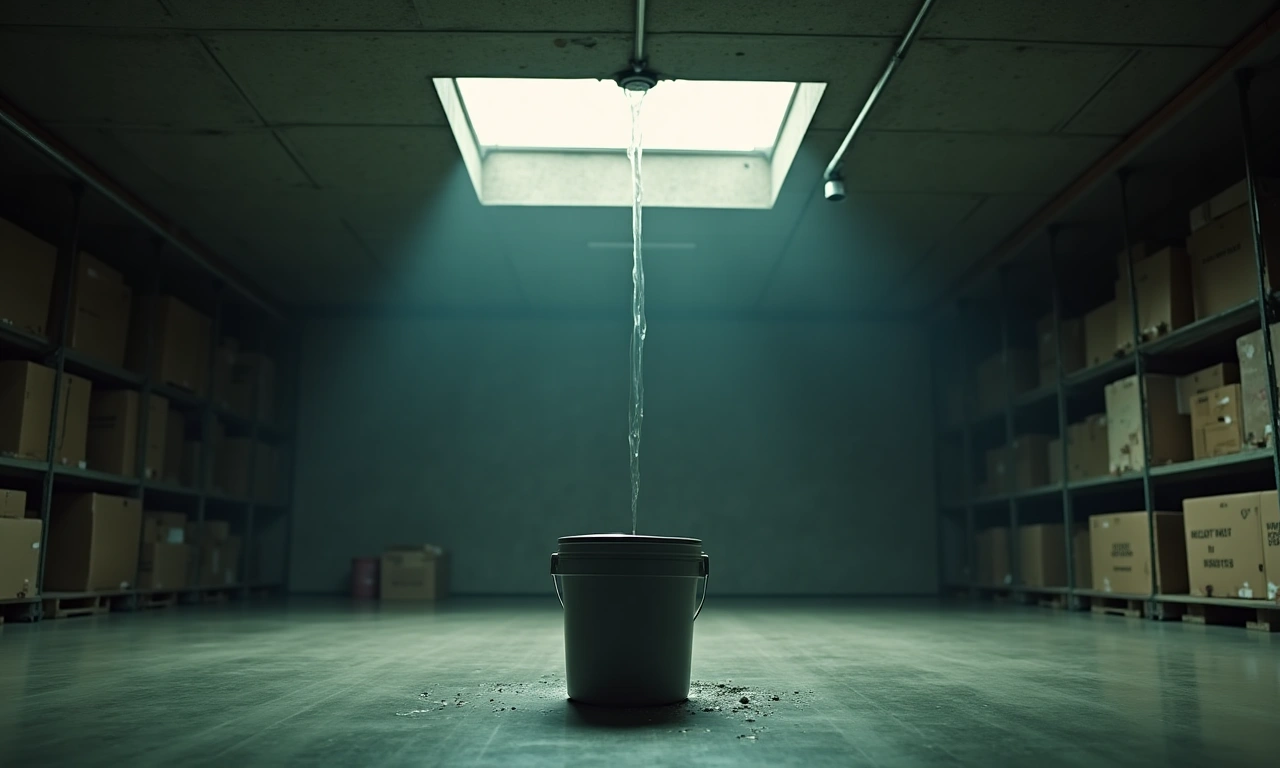
Put containers or plastic sheeting under active leaks. Keep people away from wet ceiling fixtures and outlets.
Stay off the roof. NRCA issued a release on caution after severe weather on September 7, 2021. It says owners should inspect from ground level only.
It says owners should never climb up to make repairs. The release covers storm damage, not every leak.
OSHA's hurricane eTool has a roof inspection sheet. It targets inspectors and workers, not owners, and no date appears on it. It lists these figures:
- Fall protection is required at unprotected edges 6 feet or more above a lower level.
- OSHA defines a low-slope roof as 4 in 12 or less.
- Stay 10 feet from overhead power lines unless they are de-energized and grounded.
- Take care on tarps and let damp surfaces dry before walking on them.
Those figures come from OSHA's construction context. Your maintenance staff may fall under different rules. The safe default is simple: only trained crews with fall protection go up.
Not every leak starts at the roof. The IKO owner guide says some moisture leaks do not originate in the roofing system.
ASTM D7053 also excludes condensation from its scope. Rooftop units, plumbing, and condensate lines can mimic a roof leak.
First Hours of a Commercial Roof Leak: Decision Flow
Why this stepSelect a step to see why. Use Tab and Enter on a keyboard.
Document the Damage Before Anything Changes
Good records help your roofer, your insurer, and your warranty holder. Start a leak log the same day.
The IKO owner guide asks for specific details when you report a leak. Use its list as your template:
- The interior location of the leak.
- Whether it leaks in heavy rain, light rain, or only with wind from one direction.
- Temperature range or time of day when it appears.
- Whether it stops after each rain or drips for days.
- Who can give the roofer access, with a phone number.
Add dated photos of ceilings, walls, stock, and equipment. Photograph the roof from the ground or a window.
Log anyone who goes onto the roof. IKO says an access log helps determine the timing and cause of leaks. Keep every receipt for cleanup, tarping, and emergency work.
Leak Response Checklist and Leak Log Builder
How to use this: tick each step you finish. Then fill in the log fields and build a plain-text log to copy.
Rule: ticked steps out of 12 total steps.
General information, not legal, insurance or engineering advice. Fairfield Peak is a referral service.
Temporary Protection vs. Permanent Repair
Temporary work stops water from entering. Permanent work fixes why it entered. Do not confuse the two.
| Item | Temporary protection | Permanent repair |
|---|---|---|
| Goal | Limit water entry until the source is found | Correct the cause of the leak |
| Who does it | A trained contractor, with fall protection | A contractor your warranty allows, if you hold one |
| Example | Tarp over the suspected area (IKO guide) | Repair to the membrane maker's procedure after investigation |
| Risk if skipped | More interior damage while you wait | Repeat leaks and wet insulation |
| Warranty note | Check terms before any work | Check who may perform repairs |
Temporary vs. Permanent Repair: Side by Side
Temporary protection
Limit water entry until the source is found
- Who does it
- A trained contractor, with fall protection
- Example
- Tarp over the suspected area (IKO guide)
- Risk if skipped
- More interior damage while you wait
- Warranty note
- Check terms before any work
Permanent repair
Correct the cause of the leak
- Who does it
- A contractor your warranty allows, if you hold one
- Example
- Repair to the membrane maker's procedure after investigation
- Risk if skipped
- Repeat leaks and wet insulation
- Warranty note
- Check who may perform repairs
One manufacturer's guide is blunt. IKO says to tarp suspected damage and call its approved applicator.
It says not to attempt other temporary repairs, except in the emergency conditions it describes. That guide covers one TPO warranty. Yours may differ, so read your own.
Who to Notify: Warranty Holder, Installer, Insurer
Warranty holder. If the roof has a manufacturer warranty, call first. IKO requires suspected leaks reported within 30 days of discovery under its Diamond Shield warranties.
IKO says its applicator typically responds within 48 hours. Weather or other conditions can delay that.
If the applicator cannot respond, emergency repairs may be made. They must follow accepted practice.
Insurer. Read your commercial property policy for notice and protection duties. Policies differ on gradual leaks, wear, and storm damage, so ask your agent.
The Ohio Department of Insurance claim pages for business owners returned errors when opened. So this page cites no ODI claim-step guidance. We found no Ohio agency page that sets a notice deadline for commercial property claims.
Ohio does set insurer response times. Ohio Adm. Code 3901-1-54 took effect February 14, 2022.
An insurer must acknowledge a claim within 15 days. It must accept or deny within 21 days of receiving proof of loss.
It must pay within 10 days after accepting an undisputed claim. Extra time is allowed in documented cases.
The rule covers claims under contracts issued to Ohio residents. It never names commercial policies, but it does not exclude them either. Ask your insurer.
What to Ask a Contractor Responding to a Leak
Each contractor sets its own availability, response time, and terms. Use the same questions with every roofer you call.
- Can you protect the area now, and what does that cost?
- Will you photograph the roof before and after your work?
- Are you approved by my membrane manufacturer?
- Will your temporary work affect my warranty?
- How will you find the leak source?
- Will you check for wet insulation?
- Will you give a written scope and price before permanent work?
Verify licensing and insurance yourself. NRCA warns about unprofessional contractors and unusually low bids.
It says to evaluate a contractor before paying a deposit. The guide to choosing a commercial roofing contractor lists eight criteria.
How a Permanent Repair Is Scoped
A good scope starts with an investigation. ASTM D7053 is a guide for professionals who evaluate leaks in low-sloped roofs.
It treats the roof as a full assembly. That includes the membrane, insulation, vapor retarder if present, deck, and structure.
Its method starts with a preliminary assessment and builds step by step. ASTM's page lists a last-updated date of September 9, 2024.
The guide admits limits. Investigation can be intrusive or destructive.
It may not find every leak source. Plan for repairing the test areas afterward, since probing can damage the roof.
Wet insulation is the usual hidden cost. A 1997 article from IIBEC lists three survey methods: infrared, nuclear, and capacitance meters.
Core samples are essential to confirm nuclear readings, the article says. It dates from 1997, so only its methods are used here.
Before approving permanent work, ask for a written scope that covers these items:
- Where the water entered, with photos.
- How far the wet insulation extends, and how it was found.
- The repair method, matched to your membrane.
- Flashing, seam, and drain work found along the way.
- Interior repairs, listed as a separate line.
- Warranty paperwork the repair must satisfy.
Replacement may be the better call. Repeated leaks or a large wet area point that way.
The repair versus replacement guide covers core testing. The membrane comparison helps if you replace. If the work grows into a reroof, see the Columbus reroof permit guide.
What Does Commercial Roof Leak Repair Cost?
No reliable published figure was found. Cost depends on roof size, membrane, access, and how much insulation is wet. This page does not estimate it.
The Fixr roof replacement page was updated February 4, 2026. It shows an average roof repair figure of $1,150.
It does not say whether that is commercial. Its content is written for homeowners, so it is not used as a commercial number.
For replacement pricing, use the commercial roof cost guide. For leak repair, get itemized written bids. Compare them line by line.
Buildings in Lancaster, Newark, and Columbus can request a referral. See the commercial roofing page for services.
Frequently Asked Questions
What should I do first when my commercial roof starts leaking?
Protect people and contents inside first. Stay off the roof.
Photograph the interior damage and note the weather. Then report the leak to your warranty holder and your insurer. Have a qualified roofer protect the area and investigate.
Should my maintenance staff tarp the roof themselves?
NRCA says owners should never climb onto a roof to make repairs. OSHA lists fall protection at edges 6 feet or more above a lower level. Let a trained contractor do rooftop work.
Does a temporary repair void my roof warranty?
It can, depending on the warranty. One manufacturer's owner guide says to tarp suspected leak areas and call its approved applicator.
It says not to attempt other temporary repairs except in emergencies. Read your own warranty first.
How soon must I tell my insurer about a roof leak?
Your policy sets the notice terms. We found no Ohio agency page that sets a commercial notice deadline.
Ohio Adm. Code 3901-1-54 sets insurer deadlines once a claim is made. Call your agent promptly.
How much does commercial roof leak repair cost?
We found no reliable published figure for commercial leak repair. The one cost page we opened gave a repair average without saying it was commercial. Ask for written, itemized bids after the source is found.
Sources
Each page below was opened. Dates are as shown on the page.
- NRCA press release on repairing roofs after severe weather (September 7, 2021). Covers owner safety and contractor vetting. It does not cover commercial leak steps.
- OSHA hurricane eTool: roof inspection (no date seen). Covers fall, electrical, and tarp hazards. Written for workers.
- IKO Innovi TPO Building Owner's Guide (MT1L030 02/26). Covers one manufacturer's leak reporting and temporary repair rules. Not a universal rule.
- ASTM D7053/D7053M-17 scope page (last updated September 9, 2024). Covers leak investigation method. Only the scope was read, not the full standard.
- IIBEC: Roof Moisture Surveys (Interface, March 1997). Covers survey methods. Its cost figure is unused because it is dated.
- Ohio Adm. Code 3901-1-54 (effective February 14, 2022). Covers insurer response times. Its scope text does not name commercial policies.
- Fixr: roof replacement cost (updated February 4, 2026). Opened to check for commercial repair cost. None found.
Get a referral for your building. Fairfield Peak is a referral service, not a roofer and not an insurance adviser. We forward your request to independent commercial roofers.
Each contractor sets its own prices, availability, and terms. This page is not a quote.
Tell them about the leak, your warranty, and your insurer notice. Start at the commercial request form, or call 877-367-1885.
Request a Commercial Roofer Referral
Fairfield Peak is a referral service. We forward your request to independent contractors.