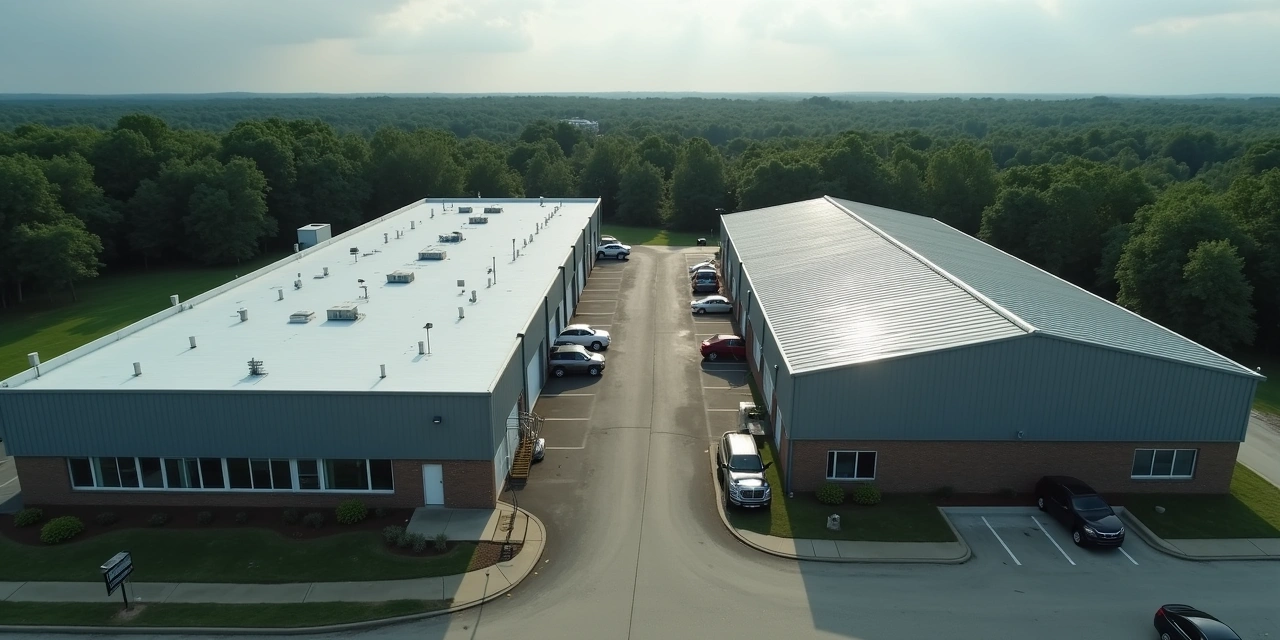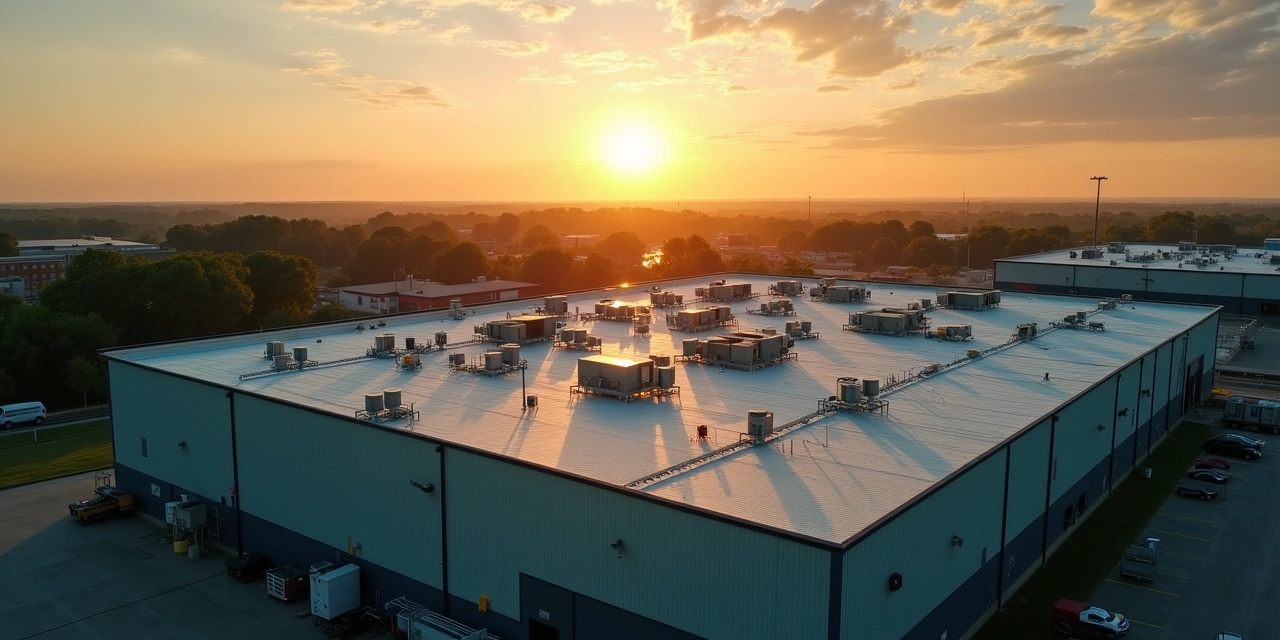
Commercial roof replacement in Ohio runs $8 to $25+ per square foot installed, depending on the membrane system, building size, and current labor market. For a 5,000 sq ft building, that's a total project cost of $40,000 to $70,000. A 20,000 sq ft property ranges from $160,000 to $340,000. Ohio's labor market runs 15-20% above the national average for commercial roofing, which is the biggest single reason quotes here don't match numbers from national pricing guides. This article gives you real 2026 numbers broken down by system type, building size, and the ROI calculus property managers actually need to make a capital planning decision.
How much does commercial roof replacement cost in Ohio?
The per-square-foot range for installed membrane roofing in Ohio in 2026 is $7 to $25+, depending on the system. Here are the numbers by roof type:
| Roof System | Cost/sq ft (installed) | Lifespan | Best For |
|---|---|---|---|
| TPO | $8–$14 | 20–30 yrs | Most commercial buildings |
| EPDM | $7–$12 | 25–30 yrs | Low-slope, budget-conscious |
| PVC | $10–$17 | 20–30 yrs | Grease/chemical exposure |
| Modified Bitumen | $9–$15 | 20–25 yrs | Foot traffic areas |
| Standing Seam Metal | $15–$25+ | 40–60 yrs | Long-term investment |
These are full installed costs including tear-off of the existing system, decking replacement as needed, new membrane, flashing, expansion joints, drains, and labor. They do not include rooftop equipment work, structural modifications, or interior damage remediation.
Total project budgets by building size:
- 5,000 sq ft: $40,000–$70,000
- 10,000 sq ft: $80,000–$140,000
- 20,000 sq ft: $160,000–$340,000
The wide range within each size band reflects membrane choice and building complexity. A 20,000 sq ft warehouse with a simple low-slope TPO replacement lands near the bottom. A 20,000 sq ft medical facility with PVC, significant flashing work around HVAC penetrations, and expansion joint replacement will hit the top.
What factors most affect commercial roofing costs?
Six variables drive most of the cost variance on a commercial roofing quote in Ohio.
1. Membrane system selected. The gap between EPDM and PVC on the same building can be $3-$5 per square foot. That's $60,000-$100,000 on a 20,000 sq ft roof. The system choice should be driven by the building's use, not just upfront price.
2. Existing deck condition. Wet insulation and deteriorated decking discovered at tear-off adds cost fast. An infrared (IR) moisture scan before bidding gives you a defensible estimate of hidden damage. Budget a contingency of 10-15% for decking work on roofs older than 15 years.
3. Roof penetrations and equipment. Every HVAC unit, exhaust stack, skylight, and pipe penetration requires custom flashing work. Dense mechanical equipment layouts add significant labor hours.
4. Access and logistics. Multi-story buildings or properties with limited staging areas drive up labor costs. Material lifts, crane time for heavy equipment, and traffic management around occupied buildings all add to the final number.
5. Warranty tier selected. A basic manufacturer warranty costs less upfront. A full NDL warranty (No Dollar Limit) requires third-party inspection during installation and adds $1-$3 per square foot to the project cost. For long-term owners, NDL coverage is worth it. For investors with a 5-7 year hold, it often isn't.
6. Ohio labor market. Fairfield County and central Ohio commercial roofing labor runs 15-20% above the national average due to sustained construction demand in the Columbus metro. That premium is baked into every quote you receive in this market.
TPO vs EPDM vs PVC: how do costs compare?
The three dominant membrane roofing systems each have a different cost profile. Here's what drives the differences.
EPDM is the most affordable installed option at $7-$12/sq ft. It uses adhesive-based or mechanically fastened installation. No heat welding equipment required, which reduces labor rates slightly. Seams are the weak point: adhesive-based seams can fail in Ohio's freeze-thaw cycles at sub-20°F temperatures. EPDM is the right choice for straightforward large low-slope roofs where cost control is the top priority.
TPO runs $8-$14/sq ft and has captured roughly 40% of the US commercial roofing market (NRCA). Heat-welded seams are more durable than EPDM adhesive joints. The white reflective surface qualifies for ENERGY STAR certification and reduces cooling loads, which can offset part of the cost premium. Most Ohio office buildings and light commercial properties land here.
PVC costs $10-$17/sq ft and is the premium single-ply option. Like TPO, it uses heat-welded seams. The key differentiator is chemical resistance: PVC handles grease, oils, and industrial solvents that degrade TPO and EPDM quickly. Restaurants, food processing facilities, and industrial buildings benefit most from the premium. See our full TPO vs EPDM vs PVC comparison for a technical breakdown.
For standard office and retail buildings in Fairfield County, TPO is usually the right answer. Don't pay for PVC unless your building actually generates chemical or grease exposure at the roof level.
How does building size affect per-square-foot pricing?
Bigger buildings cost less per square foot. This is one of the most consistent patterns in commercial roofing pricing, and understanding it helps you benchmark quotes accurately.
The reason is primarily fixed cost distribution. Crew mobilization, equipment delivery, permit fees, and supervisor time are largely fixed per project regardless of size. Spread over 5,000 square feet, those fixed costs add $1.50-$2.50/sq ft. Spread over 20,000 square feet, they add $0.50-$1.00/sq ft.
Approximate per-sq-ft adjustments by building size (relative to the base ranges above):
- Under 3,000 sq ft: Add $2-$4/sq ft above table rates (small job premium)
- 3,000-10,000 sq ft: At or near table rate
- 10,000-25,000 sq ft: Subtract $0.50-$1.50/sq ft
- 25,000+ sq ft: Subtract $1.50-$3.00/sq ft (volume pricing)
A 2,500 sq ft retail strip unit and a 25,000 sq ft warehouse with the same TPO membrane will have meaningfully different per-square-foot costs. If you're comparing quotes across buildings of different sizes, you need to adjust for this before drawing conclusions about which contractor is priced competitively.
What is the ROI of commercial roof replacement vs ongoing repair?
The standard threshold is clear: when annual repair costs exceed 30% of replacement cost, replace now. That's the point where continued patching exceeds the annualized cost of a new roof and you're throwing money into a deteriorating asset.
On a $200,000 replacement roof, the 30% threshold is $60,000 per year in repair spending. Most property managers don't get close to that on a single building, but it happens on roofs over 20 years old with active moisture infiltration.
A more common scenario: annual repair costs running 3-7% of replacement cost on a failing flat roof. On a $150,000 replacement cost, that's $4,500-$10,500 per year in reactive maintenance. The question then becomes whether a new roof's extended life, reduced interior damage risk, and energy savings justify the capital outlay now.
The DOE estimates that the building envelope accounts for 40% of commercial building energy loss, with roofing as a primary contributor. A reflective TPO or PVC roof in Ohio can reduce cooling costs by 15-25% on a building with substantial solar exposure. ENERGY STAR certified roofing systems also qualify for federal commercial energy efficiency tax credits under Section 179D, which can meaningfully reduce net project cost.
For a full accounting of long-term maintenance costs versus replacement economics, see our commercial roof maintenance Ohio guide.
How should property managers budget for roof replacement?
Most commercial property managers don't have a roof replacement budget until they need one. That's the wrong approach. Here's how to build one that holds up.
Step 1: Know your roof's age and condition. Commission an infrared (IR) moisture scan on any roof over 10 years old. At $0.10-$0.25/sq ft, this is low-cost intelligence that tells you exactly where moisture has infiltrated and how much insulation has been compromised. That data drives replacement timing.
Step 2: Establish a reserve schedule. Commercial roofs typically have a useful life of 20-30 years for membrane systems. Divide your estimated replacement cost by the remaining useful life and fund that amount annually into a capital reserve. If your current roof has 10 years left and replacement will cost $200,000, that's $20,000/year in reserves.
Step 3: Get a preliminary budget estimate before soliciting bids. Contact a commercial roofing contractor for a preliminary walkthrough and budget range before putting the project out to bid. This prevents the common scenario of getting bids that blow past your capital plan with no warning.
Step 4: Plan for contingency. Budget 10-15% above the base estimate for decking and insulation surprises. These are the most common sources of scope creep on commercial re-roofing projects.
Step 5: Check your lease structure. If you have NNN tenants, confirm whether the lease obligates you or the tenant to fund capital roof replacement. Many triple-net leases include roof replacement as a landlord obligation regardless of structure. Know this before you budget.
See also our commercial roof maintenance guide for ongoing cost planning and our overview of TPO, EPDM, and PVC membrane systems. For a comparison of flat versus pitched commercial roofing, see flat roof vs pitched commercial Ohio. Our commercial roofing services page covers what we do in Fairfield County specifically.
Frequently Asked Questions
How much does a commercial roof replacement cost per square foot in Ohio?
Ohio commercial roof replacement costs range from $7 to $25+ per square foot installed. TPO runs $8-$14/sq ft, EPDM $7-$12/sq ft, PVC $10-$17/sq ft, modified bitumen $9-$15/sq ft, and standing seam metal $15-$25+. Ohio labor runs 15-20% above national averages.
How long does a commercial roof last in Ohio?
Most single-ply membrane systems last 20-30 years with proper maintenance. Metal standing seam roofs last 40-60 years. Modified bitumen runs 20-25 years. Ohio's freeze-thaw cycles can reduce lifespan by 20-30% without a documented maintenance program.
What is the best commercial roofing system for Ohio?
TPO is the most popular choice for Ohio commercial buildings, covering roughly 40% of the market (NRCA). It offers heat-welded seams, an energy-reflective white surface, and a mid-range price. EPDM is the budget-friendly option for large low-slope roofs. PVC is preferred where grease or chemical exposure is a factor.
Does ENERGY STAR commercial roofing qualify for tax credits in Ohio?
Yes. ENERGY STAR certified roofing systems, including white TPO and PVC membranes, can qualify for federal commercial energy efficiency tax credits under Section 179D. The credit depends on total energy savings achieved. Consult a tax professional to confirm eligibility for your specific property.
When should a property manager choose repair over replacement?
The standard threshold: if annual repair costs exceed 30% of replacement cost, replace now. For example, if replacement costs $200,000 and you're spending $65,000+ per year patching, you've crossed the line. Below that threshold, documented repairs with an active maintenance program typically extend useful life and defer capital expenditure.
Need Help with Your Roof?
Get a free, itemized estimate from Fairfield County's trusted roofing team.
Commercial estimates require on-site assessment. Actual costs depend on roof access, structural condition, local code requirements, and material availability.
Request a Free Commercial Quote