The choice between flat and pitched roofing for an Ohio commercial building comes down to four factors: upfront budget, long-term maintenance commitment, building use, and how the structure handles Ohio's specific weather patterns. Flat roofs cost less to install. Pitched roofs cost less to maintain over time and perform better in snow and ice. Neither is universally better. The right answer depends on what you're building, what you can afford now, and how long you plan to own the property.
What are the core differences between flat and pitched commercial roofs?
"Flat" commercial roofs aren't truly flat. They have a slight slope (typically 1/4" per foot) to direct water toward drains and scuppers. The real distinction is low-slope versus steep-slope, and those categories use fundamentally different materials and systems.
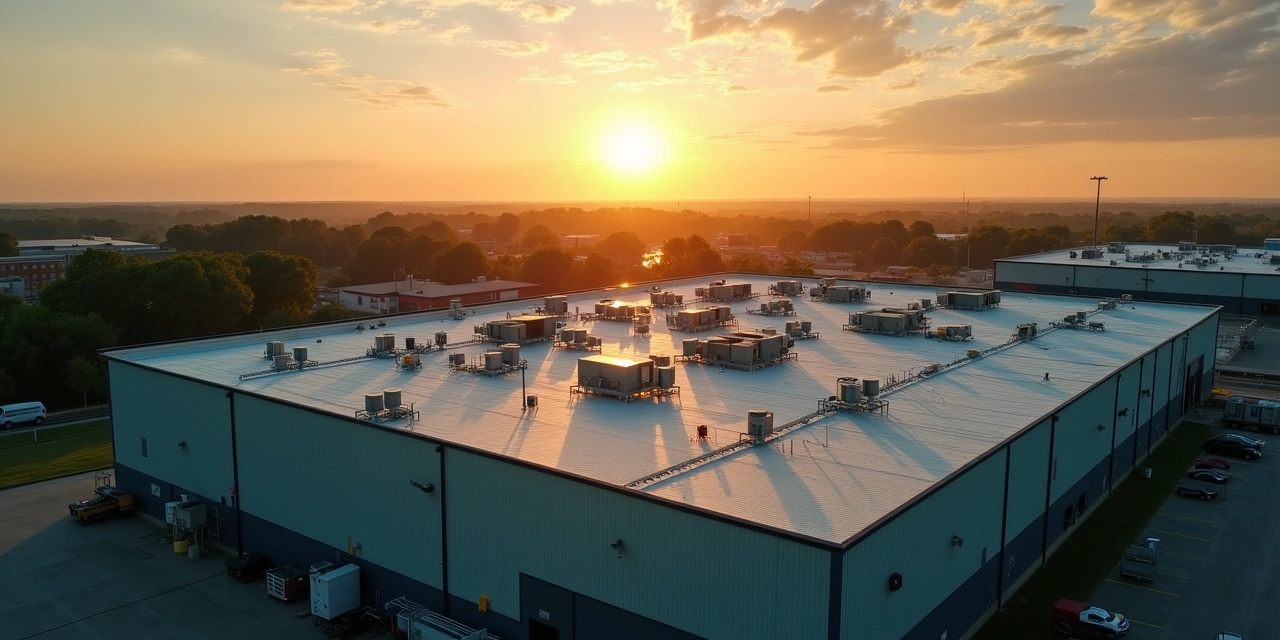
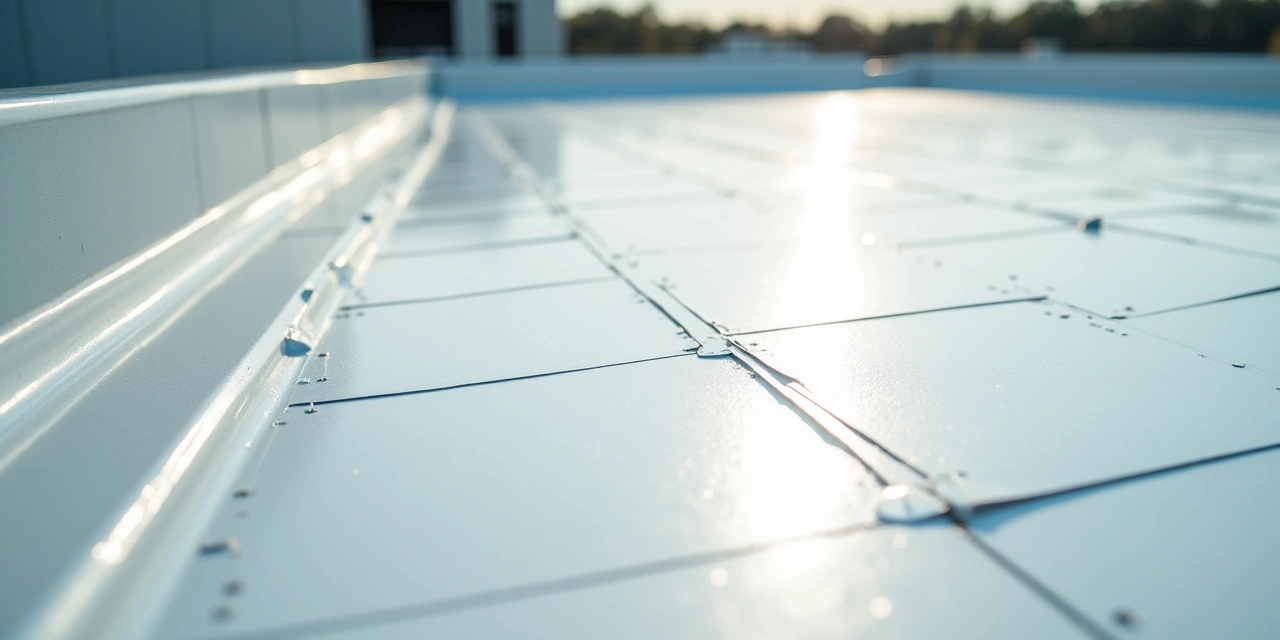
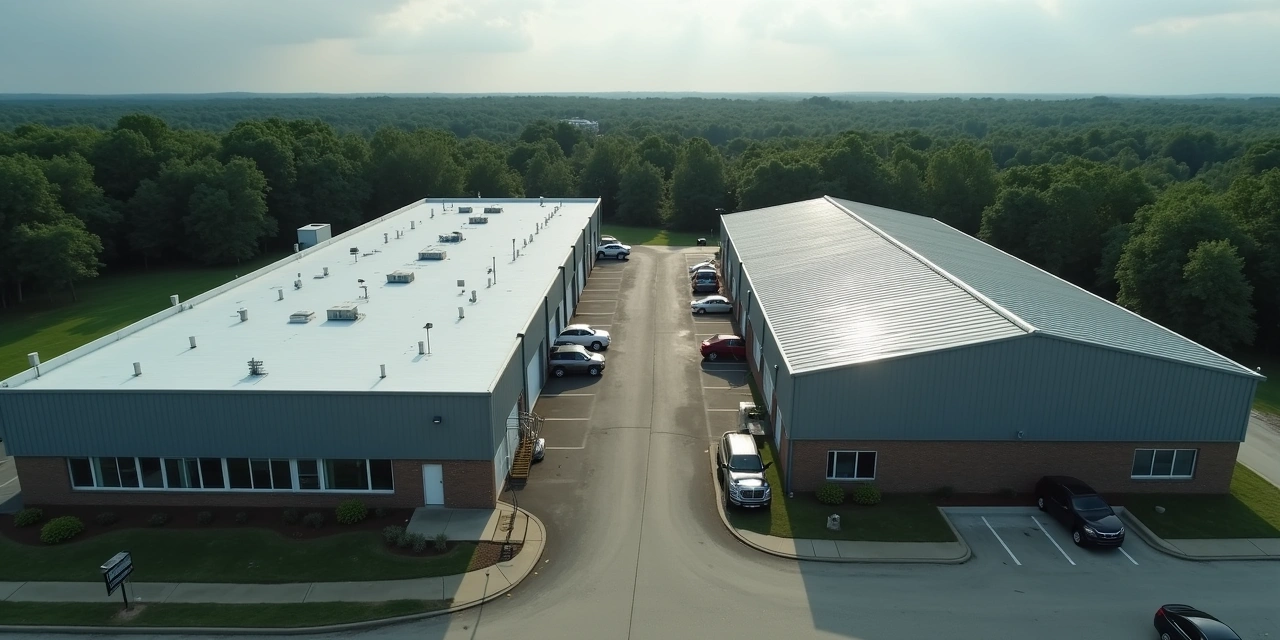
Low-slope (flat) roofs use membrane roofing systems: TPO, EPDM, PVC, or modified bitumen. These systems rely on waterproof membranes and internal drainage rather than gravity shedding. They're standard on warehouses, retail strip centers, office buildings, and most commercial construction built in the last 40 years.
Pitched commercial roofs use steep-slope systems: metal panels, architectural shingles, or tile. They shed water and snow through gravity. They look more like residential construction and are common on medical offices, churches, high-end retail, and manufacturing facilities where aesthetics or branding matter.
Here's the full comparison:
| Category | Flat Roof | Pitched Roof |
|---|---|---|
| Upfront cost | Lower ($8–$17/sq ft) | Higher ($12–$25/sq ft) |
| Lifespan | 20–30 yrs (TPO/EPDM) | 30–50+ yrs (metal/steep slope) |
| Maintenance frequency | Monthly inspection recommended | Annual inspection typical |
| Leak risk | Higher (standing water risk) | Lower (gravity-drained) |
| HVAC/equipment space | High | Low |
| Ohio winter performance | Ice dam risk, drainage critical | Snow sheds naturally |
| Best for | Retail, warehouse, office | Manufacturing, medical, high-end commercial |
How do flat and pitched commercial roofs compare in upfront cost?
Flat membrane roofing costs $8-$17 per square foot installed for standard systems (TPO, EPDM, PVC). Pitched commercial roofing runs $12-$25+ per square foot depending on the system. On a 10,000 sq ft building, that's a difference of $40,000 to $80,000 in upfront capital.
The cost gap comes from two places. First, pitched roofs require more structural framing to support the slope, which adds to the building's construction cost. Second, steep-slope installation requires more labor hours per square due to safety requirements and the complexity of working at pitch.
But the upfront gap narrows over the ownership period. A metal pitched roof lasting 50 years costs roughly the same per year of useful life as a TPO flat roof replaced twice in that same period. Factor in lower ongoing maintenance costs and potentially lower insurance premiums for pitched roofs, and the lifetime cost difference often closes significantly.
See our commercial roof cost guide for Ohio for a full breakdown of installed pricing by system type and building size.
Which type needs more maintenance in Ohio's climate?
Flat roofs need more active maintenance in Ohio. Full stop. Ohio's climate creates three specific problems that flat roofs are poorly positioned to handle on their own.
First, Fairfield County averages 40-55 freeze-thaw cycles per year. Every temperature swing through 32°F stresses membrane seams, flashing terminations, and drain collars. Small gaps get ice-expanded into larger ones. Pitched roofs with properly installed underlayment handle this cycle better because water exits quickly rather than pooling.
Second, flat roofs accumulate debris and snow. Drains clog. Water ponds. Ponding water deeper than 1/4" for more than 48 hours accelerates membrane degradation and is a warranty violation on most manufacturer systems. Pitched roofs shed snow and debris naturally.
Third, Ohio's spring storm season deposits significant rainfall in short periods. A flat roof's drainage system must handle peak flow without backup. A single blocked drain during a heavy rain event can create thousands of dollars in interior damage within hours.
The practical difference: flat roof operators should budget for monthly drain checks, post-storm inspections, and quarterly professional walkthroughs. Pitched roof operators typically get away with one annual inspection plus post-major-storm checks.
What are the drainage and leak risk differences?
Pitched roofs drain by gravity. Water hits the surface and moves to gutters and downspouts within seconds. There's no standing water, no pooling, no drain-clog risk. This is a fundamental engineering advantage in Ohio's climate.
Flat roofs drain through internal systems: roof drains, scuppers, or edge drains. Every one of those is a potential failure point. Drain covers clog with leaves and debris. Scuppers ice over in winter. When drainage fails, water sits.
The leak mechanics are also different. On a pitched roof, most leaks originate at penetrations (flashing around chimneys, vents, skylights) or at the ridge. They're localized and usually findable. On a flat roof, water can enter at a seam or penetration and travel horizontally through the insulation layer before showing up as a ceiling stain 20 feet away from the actual entry point. Finding the source requires an infrared (IR) moisture scan or careful probing.
For flat roof owners in Ohio, the practical implication is simple: keep drains clear and inspect them after every significant weather event. That one maintenance item prevents the majority of avoidable flat roof failures.
Can a flat roof ever outperform pitched for Ohio buildings?
Yes, in several real-world scenarios.
Rooftop equipment. If your building has significant HVAC, exhaust, or mechanical equipment, flat roofs are far more practical. Equipment sits on a flat surface. Access is easy. Maintenance workers aren't navigating a pitch. Pitched roofs with heavy mechanical equipment require expensive structural modifications and make ongoing equipment maintenance difficult and dangerous.
Large footprint buildings. Warehouses and distribution centers over 20,000 sq ft almost universally use flat roofing. The structural cost of pitching a large commercial building is prohibitive. The framing alone adds $15-$25 per square foot to the structure.
Budget-constrained new construction. If you're building a multi-tenant retail strip or basic office building and capital is constrained, flat roofing with a quality TPO or EPDM system gives you a 20-25 year building envelope at the lowest possible installed cost. You can fund the premium for a pitched system on a future project when cash flow supports it.
Solar installations. Flat roofs are easier to optimize for solar panel orientation and access. If you're planning a commercial solar installation, a flat roof gives you more flexibility to angle panels correctly.
What factors determine which roof type your building needs?
Four questions drive the decision for most Ohio commercial property owners.
1. What does the building look like? Multi-story office buildings and medical facilities with street visibility often benefit from the aesthetic of a pitched roof. A warehouse surrounded by a parking lot doesn't. If curb appeal affects tenant attraction or property value, pitched is worth the premium.
2. How long do you plan to own it? Short hold period (under 10 years): flat roof wins on capital efficiency. Long-term hold (20+ years): pitched roof's lower maintenance costs and longer lifespan make more economic sense over time.
3. What's your operational capacity? Flat roofs require ongoing management attention. If you have a property management team that can execute regular inspections and drain maintenance, flat is manageable. If the building is self-managed with minimal maintenance infrastructure, a pitched roof's lower maintenance demands are a real operational advantage.
4. What does the building do? Restaurants and food processing facilities with rooftop exhaust: flat is essentially required. High-end medical or retail tenants with image expectations: pitched often closes deals that flat can't. Industrial and warehouse tenants: flat is standard and expected.
For membrane system comparisons on flat roofs, see our TPO vs EPDM vs PVC comparison. For cost planning on either system, see the commercial roof cost guide. Ongoing maintenance planning for flat roofs is covered in our commercial roof maintenance guide. Our commercial roofing services page covers both system types for Fairfield County buildings.
Frequently Asked Questions
Can you put a flat roof on any Ohio commercial building?
Technically yes, but it requires proper structural design for load distribution and drainage. Buildings with spans over 60 feet often need engineered drainage plans to avoid ponding. Most new commercial construction in Ohio defaults to low-slope flat roof design because it reduces framing cost and maximizes interior volume.
Which commercial roof type has lower insurance costs in Ohio?
Pitched roofs generally carry lower commercial property insurance premiums because they shed water and snow more effectively, reducing leak and structural collapse risk. The difference varies by insurer and building use. Ask your insurance agent for a specific quote comparison before making a final decision.
How much more does a pitched commercial roof cost than flat?
Pitched commercial roofing typically costs $12-$25+ per square foot installed versus $8-$17 for flat membrane systems. The premium is $4-$10 per square foot. On a 10,000 sq ft building, that's $40,000-$100,000 more upfront. The offset is longer lifespan (30-50+ years for metal pitched versus 20-30 for flat membrane) and lower ongoing maintenance.
What is the biggest maintenance difference between flat and pitched commercial roofs in Ohio?
Drainage management is the critical difference. Flat roofs require monthly inspection of drains and scuppers and immediate attention after heavy rain or snow to prevent ponding. Pitched roofs shed water and snow naturally and typically need only annual inspection. Ohio's 40-55 freeze-thaw cycles per year make drainage maintenance on flat roofs a year-round operational task.
Need Help with Your Roof?
Get a free, itemized estimate from Fairfield County's trusted roofing team.