A commercial roof without a documented maintenance plan loses 30-50% of its useful life. That's not a worst-case estimate. That's the consistent finding from manufacturers, independent roofing engineers, and claims data across the industry. On a $200,000 roof with a 25-year design life, deferred maintenance can cut that to 13-17 years, forcing a replacement a decade early. The cost of a proper annual maintenance program runs 1-3% of original roof cost per year. The cost of replacing a roof 10 years early is 100% of replacement cost. The math is not complicated.
Why does commercial roof maintenance matter in Ohio's climate?
Ohio's climate creates conditions that are specifically hard on membrane roofing systems. Fairfield County averages 40-55 freeze-thaw cycles per year. Each cycle forces water that has infiltrated seams or terminations to expand as it freezes, then contract as it thaws. Over a season, that mechanical stress opens small gaps into large ones and pushes moisture deeper into insulation layers.
Ohio also delivers significant UV load in summer. UV degradation breaks down membrane elasticity over time, making seams brittle and prone to cracking. A roof that's been deferred on maintenance accumulates both freeze-thaw damage and UV-accelerated brittleness simultaneously.
Spring storms in central Ohio routinely bring hail between 3/4" and 1.5" diameter. Hail at that size causes impact damage to membrane surfaces that isn't always visible to the naked eye but accelerates degradation at those impact points. Post-storm inspections catch this early, when a targeted repair costs hundreds rather than thousands.
Finally, Ohio's summer heat concentrates on dark or aged membrane surfaces. Ponding water heated by direct sun accelerates chemical breakdown in EPDM and degrades TPO seam integrity faster than cooler standing water would. The combination of Ohio's four distinct seasons, each with its own failure mechanism, makes maintenance a year-round operational requirement.
What does a quarterly commercial roof inspection cover?
A thorough quarterly inspection covers seven core areas. Each one ties directly to a specific failure mode common in Ohio commercial buildings.
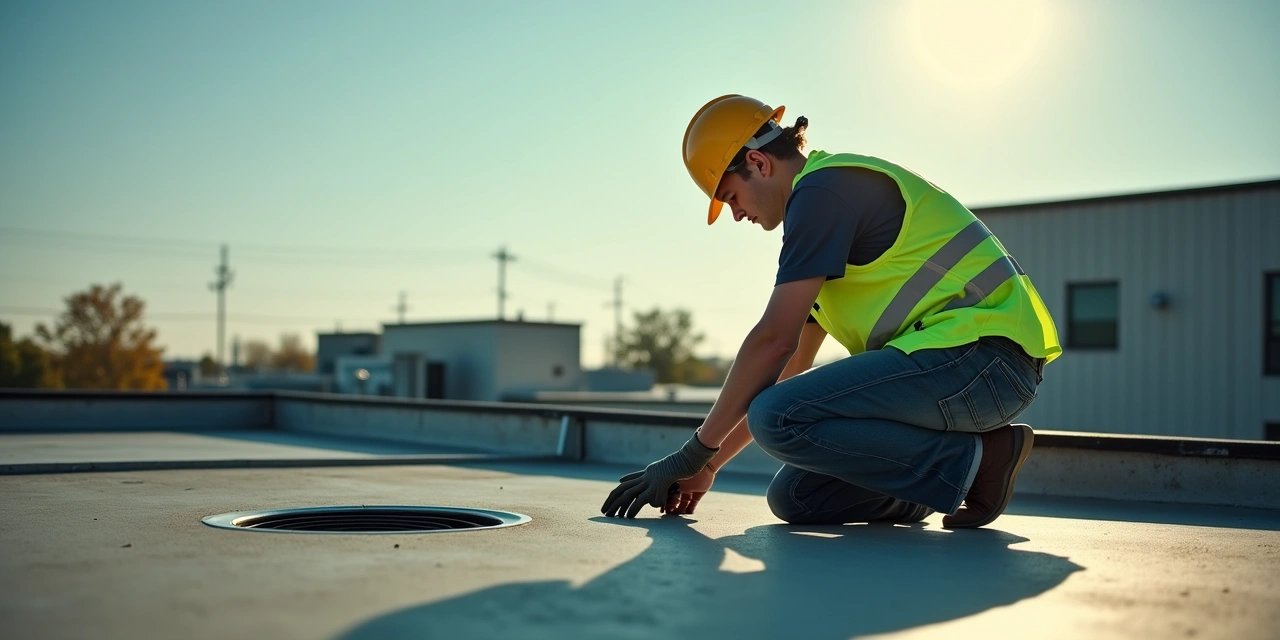
1. Drain and scupper condition. Clear all debris from drain covers and scupper openings. Verify that water flows freely. Blocked drains are the single most common cause of ponding water. This is the most critical single maintenance item on any flat roof.
2. Membrane surface condition. Walk the entire roof surface and look for blistering, punctures, tears, and UV-cracked areas. Note any locations where the membrane has pulled away from flashing terminations. Document with photos.
3. Seam integrity. Check all field seams and perimeter seams for lifting, bubbling, or separation. On EPDM systems, check adhesive-bonded seams carefully. On TPO and PVC, look for any areas where the heat-welded seam appears lifted or discolored.
4. Flashing condition. Inspect flashing at all penetrations: HVAC curbs, pipes, drains, skylights, parapet walls, and expansion joints. Flashing failures account for the majority of active commercial roof leaks. Look for cracks, separation from the substrate, and areas where sealant has dried and pulled back.
5. Ponding water evidence. Walk the roof 48 hours after a rain event, or look for tide marks and debris rings that indicate where water pooled. Water ponding deeper than 1/4" for more than 48 hours is a warranty violation on most membrane systems and accelerates degradation at 3x the normal rate.
6. Perimeter and edge metal. Inspect drip edge, gravel stops, and coping cap for corrosion, gaps, and open joints. Edge metal failures allow wind-driven water to enter at the perimeter, one of the most destructive leak pathways on a flat roof.
7. Rooftop equipment areas. Check around HVAC units and other equipment for foot traffic damage, torn membrane from equipment maintenance, and open penetrations. Equipment contractors who don't use walk pads regularly damage membrane surfaces.
What maintenance items extend flat roof lifespan most?
Not all maintenance tasks contribute equally to lifespan. These five items deliver the most measurable impact.
Drain maintenance. Keeping drains and scuppers clear is the highest-ROI maintenance task on any flat roof. Blocked drains create ponding. Ponding degrades membrane. The repair cost for drain-induced membrane damage is 10-50x the cost of keeping the drain clear. Schedule drain cleaning four times per year minimum in Ohio, and after every major storm.
Flashing repairs at first sign of failure. A $200 flashing repair at the first sign of separation prevents a $5,000-$15,000 interior water damage event. The window between "noticing a flashing gap" and "active interior leak" is often measured in weeks during Ohio's spring storm season. Don't defer flashing repairs to the next budget cycle.
Walk pad installation. HVAC technicians, electricians, and other tradespeople who access the roof for equipment maintenance cause significant membrane damage when they walk directly on the surface. Installing walk pads on high-traffic paths from access hatches to equipment costs $3-$8 per linear foot and prevents punctures and abrasion that are common claims on commercial roof warranties.
Periodic infrared (IR) moisture scanning. At $0.10-$0.25 per square foot, an IR scan every 3-5 years maps moisture infiltration that isn't visible during a walking inspection. Wet insulation spreads horizontally under the membrane. Finding it early means cutting out and replacing a small area rather than a full re-roofing. On a 15,000 sq ft roof, catching 500 sq ft of wet insulation early saves tens of thousands in eventual replacement cost.
Annual vapor barrier and base sheet review on modified bitumen systems. Modified bitumen roofs with a base sheet and cap sheet configuration require periodic inspection of the base sheet condition and any blistering at the cap sheet surface. Blistering indicates moisture trapped between layers and should be addressed before it spreads.
How do you handle Ohio's freeze-thaw cycles on a commercial roof?
Freeze-thaw management on an Ohio commercial roof comes down to three practices: pre-winter preparation, in-season monitoring, and post-winter assessment.
Pre-winter (October-November). Clear all drains and scuppers before the first freeze. Inspect and repair any open seams or flashing gaps before water can infiltrate and freeze. Check that all penetration boots and collars are fully adhered. Apply fresh sealant at any termination showing dried or cracked material. This is the most cost-effective maintenance investment of the year.
In-season (December-March). Monitor for ice damming at perimeter edges and scuppers. Ice dams form when interior heat melts snow on the roof deck and meltwater refreezes at the cold perimeter. On flat commercial roofs, blocked scuppers create ice buildup that forces water back under the membrane. Never use metal tools to chip ice from a membrane surface. Use calcium chloride ice melt in mesh socks placed over drain openings.
Post-winter (April). Conduct a full walking inspection and document any seam lifting, flashing separation, or membrane cracking that appeared over the winter. Commission an IR scan if the roof is over 10 years old or if you had any winter water intrusion events. Spring is when winter damage becomes visible and when it's most cost-effective to address it before summer UV exposure compounds the problem.
When is ongoing maintenance cheaper than early replacement?
Maintenance wins economically when the roof is structurally sound and moisture infiltration is limited. The decision framework is straightforward.
If your annual repair and maintenance costs are running under 3% of replacement cost, maintain. On a $180,000 replacement cost, that threshold is $5,400/year. Below that, you're getting cost-effective life extension from a functional system.
If your IR scan shows moisture infiltration covering less than 25% of the roof area, targeted repair and re-insulation of wet sections is almost always cheaper than full replacement. Above 25-30% moisture-affected area, the economics of replacement typically win.
If you've had three or more active leak events in a single year despite prompt repairs, the membrane system is past the point of reliable patching. Reactive repair cost is high, tenant disruption is significant, and the risk of major interior damage increases with each event. That's replacement territory.
The DOE notes that the roof accounts for 40% of building envelope energy loss. A degraded membrane with wet or compressed insulation loses R-value, increasing heating and cooling costs. When you factor in energy performance degradation alongside repair costs, the replacement case often arrives earlier than the repair-only calculus suggests.
For full cost comparison context, see our commercial roof cost guide.
What does a commercial roof maintenance contract include?
A well-written commercial maintenance contract specifies exactly what you get and protects both the property owner and the contractor. Here are the elements that must be present.
Inspection frequency and scope. Specify the number of inspections per year (minimum two, quarterly preferred in Ohio), what each inspection covers, and the deliverable: a written report with photos documenting condition, deficiencies found, and actions taken.
Emergency response terms. Define response time for active leak calls. Most reputable commercial roofing contractors offer 24-48 hour emergency response on maintenance contracts. Get it in writing with a specific time commitment and what happens if they miss it.
Included minor repairs. Good contracts include a defined dollar value of minor repairs per visit: seam re-welding, sealant application, drain cleaning, minor flashing repairs. This prevents nickel-and-diming on small items and incentivizes the contractor to catch problems early.
Warranty protection language. If your roof carries a manufacturer NDL warranty, the contract must specify that inspections will be conducted by qualified personnel and documented in a format acceptable to the manufacturer. NDL warranties require documented annual inspections to remain valid. Losing NDL coverage because inspection records weren't kept is an expensive and avoidable mistake.
Exclusions and escalation procedure. The contract should specify what's not included (structural repairs, major re-roofing, third-party damage from equipment contractors) and the process for getting an estimate and approval before major work begins.
For related guidance, see our articles on commercial roof replacement costs, Ohio-specific maintenance practices, and flat vs pitched roof comparisons. Our commercial roofing services page covers what contractors in our network offer in Fairfield County.
Frequently Asked Questions
How often should a commercial roof be inspected in Ohio?
At minimum, twice per year: spring after freeze-thaw season and fall before winter. Most commercial roofing professionals recommend quarterly inspections for flat membrane roofs in Ohio, plus an inspection after any significant hail, wind, or ice storm. NDL warranty holders are typically required to document annual professional inspections to keep coverage valid.
What does an infrared moisture scan cost for a commercial roof?
Infrared (IR) moisture scans for commercial roofs typically cost $0.10-$0.25 per square foot in Ohio. A 10,000 sq ft roof runs $1,000-$2,500. The scan identifies wet insulation and moisture infiltration not visible during a walking inspection. It's recommended every 3-5 years and is essential before any re-roofing bid.
What voids a commercial roof warranty in Ohio?
The most common warranty voids are: failure to document annual inspections, unauthorized modifications to the roof surface, allowing ponding water to persist, and using non-approved contractors for repairs. NDL warranties are especially strict. Keep a maintenance log with dates, inspector credentials, and work performed for every service visit.
How much does commercial roof maintenance cost per year?
Annual maintenance for a commercial roof in Ohio typically runs 1-3% of the original installation cost. On a $150,000 roof, that's $1,500-$4,500 per year. This covers two professional inspections, drain cleaning, minor seam and flashing repairs, and post-storm assessments. Deferred maintenance compresses the roof's useful life and leads to much larger unplanned capital costs.
Need Help with Your Roof?
Get a free, itemized estimate from Fairfield County's trusted roofing team.
- Check for ice damming at eaves and drains
- Inspect seams after freeze-thaw cycles
- Clear interior and exterior drains of ice
- Monitor for membrane lifting in cold snaps
- Document any ponding after melt events
- Full post-winter inspection — entire membrane surface
- Check for storm damage: punctures, seam separation
- Clear all debris from drains and gutters
- Seal exposed penetrations and pipe boots
- Photograph and log any new damage areas
- Check membrane for heat bubbling or blistering
- Inspect HVAC unit flashing and curb seals
- Mid-year drain flow check during rainfall
- Look for UV degradation on exposed seams
- Verify walkway pads are intact and secured
- Pre-winter full roof inspection
- Apply sealant to all exposed seams and flashings
- Clean gutters and all drainage outlets
- Document current condition with photos
- Schedule any repairs before first freeze