A roof is one of the largest single costs of owning a home. Storm season makes the question urgent for many Fairfield County homeowners.
This guide gives planning ranges and the factors that move a quote. It also shows how to compare bids. The ranges are estimates, not quotes.
Your price depends on your roof and your contractor.
Average Roof Replacement Costs in Ohio
Pricing for a new roof has risen in recent years. Material and labor costs drove the rise. Prices vary by project, so treat every figure here as a rough planning estimate.
Published cost guides give different ranges. The table below shows what three of those published guides say. None of these figures is a Fairfield County price.
Get written local quotes before you budget. For a material-by-material view, see our Ohio cost-per-square-foot guide.
What Published Cost Guides Say
| Source | Scope | Range | Date |
|---|---|---|---|
| Angi | Columbus, Ohio | $4 to $11 per sq ft. About $7,200 to $19,800 for a 1,500 sq ft home, average about $9,000. | Updated Aug 4, 2026 |
| Fixr | National | $3.75 to $11 per sq ft, average $4.75. Most projects $7,500 to $14,000. | Updated Feb 4, 2026 |
| Cost vs. Value Report | East North Central region (includes Ohio) | Asphalt shingle job cost $29,253. Resale value $20,252, or 69.2% recouped. | 2025 report |
| Cost vs. Value Report, Columbus page | Columbus, Ohio, asphalt shingle replacement | Job cost $26,705. Resale value $18,960, or 71% recouped. | 2025 report |
| Angi, shingle roof page | Columbus, Ohio, shingle roof | $7,163 to $22,920, most homeowners about $10,028. | Updated May 27, 2026 |
According to Angi, a 1,500 square foot home needs about 1,800 square feet of roofing. Angi also says some quotes leave out old roof removal. It puts removal near $1,000 for asphalt in Columbus.
Why the Numbers Differ
Angi says it starts with national average project costs. It then applies local price data from the U.S. Bureau of Economic Analysis, including Regional Price Parities.
The Cost vs. Value page does not state roof size or shingle grade. Treat its Columbus figure as a benchmark, not a quote.
The sources measure different things. Angi reports Columbus project data, while Fixr reports a national range.
Cost vs. Value prices one fixed project. Its job cost runs above the other two guides.
Resale value is an estimate, not a sale price.
Roof size, pitch, material, tear-off scope, and local labor also move any quote. Do not compare a per-square-foot rate with a whole-project price.
Shingle Manufacturing Prices
The BLS Producer Price Index tracks what manufacturers receive for asphalt shingle and coating materials. According to the FRED series, the index stood at 357.330 in September 2025. It was 370.379 in September 2026.
That is higher than a year earlier.
The index reached 377.255 in August 2026 before easing in September. The series is not seasonally adjusted. It tracks manufacturer prices, not what a contractor charges you.
The table ranks materials in general terms. Check each maker's warranty for lifespan claims.
| Material Type | Relative Cost | Typical Trade-Off |
|---|---|---|
| 3-Tab Asphalt Shingle | Lowest | Lowest upfront cost, lighter wind and wear resistance |
| Architectural Shingle | Low to moderate | Thicker, more wind-rated options, longer warranties |
| Standing Seam Metal | High | Higher upfront cost, long service life |
| Natural Slate | Highest | Heavy, needs specialists, very long service life |
Asphalt Shingle Roofing: The Ohio Standard
Asphalt shingles remain the most common residential roofing material in Ohio.
These materials work well because they flex with Ohio's rapid temperature changes.
A standard “three-tab” shingle is your most affordable option.
However, most homeowners in Lancaster now prefer Architectural (Dimensional) Shingles.
These are thicker, offer a multi-dimensional look, and typically come with better wind ratings.
For example, the Owens Corning Duration series has a reinforced nailing strip. Its Owens Corning Duration page advertises wind-resistance coverage. Coverage depends on the maker's components, including starter shingles on eaves and rakes.
Read the actual warranty.
Architectural shingles cost more upfront. They may pay off if you plan to stay in your home for many years.
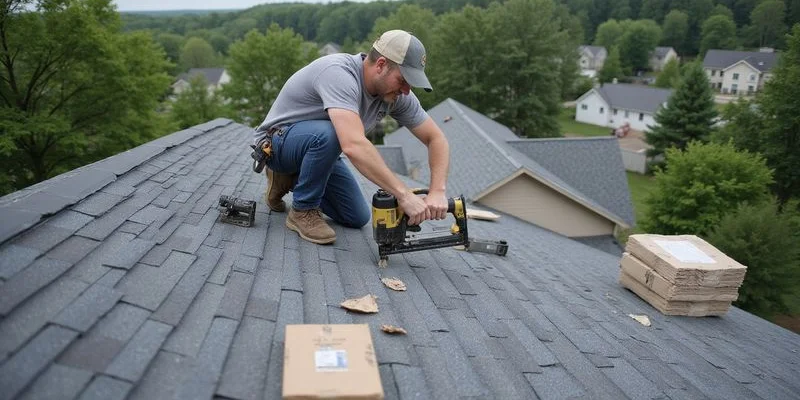
Metal Roofing: Durability Meets Style
Metal roofing has moved from barns to suburban subdivisions.
Contractors commonly install two main types: exposed fastener systems and standing seam systems.
Exposed Fastener: This is the cheaper option where screws are visible.
While cost-effective, the rubber washers on the screws eventually degrade and require maintenance.
Standing Seam: This is the premium choice where fasteners are hidden underneath the panels.
A standing seam metal roof is tough.
It easily sheds the heavy, wet snow common in February and March.
Slate Roofing: The Historic Choice
Slate is the gold standard for longevity and curb appeal.
Slate appears on many historic homes, where keeping the original look matters.
The cost is high because the material is heavy and brittle.
Installing slate requires specialized craftsmen rather than general roofers.
Insider Tip: Your home’s framing must be rated to support the immense weight of stone.
If your house was not originally built for slate, you may need structural reinforcement.
This engineering work adds cost before any slate is laid. Ask a structural professional to confirm.
Key Factors That Affect Your Roof Replacement Cost
Your neighbor’s roof can cost far more or less than yours. That holds even on a similar house.
Several technical variables set the final price.
Roof Size and “Squares”
Contractors do not measure in square feet.
Roofing is measured in “squares.”
One square equals a 100-square-foot area (10’ x 10’).
Precise measurement matters because cutting and fitting create material waste.
Roof Pitch and Complexity
The steepness of your roof dictates the safety equipment required.
A low-pitch, walkable roof is faster and cheaper to install.
Once the pitch gets steeper, crews must use harnesses, toe boards, and slower staging techniques.
Complexity also plays a major role.
Every chimney, skylight, and valley requires custom metal flashing.
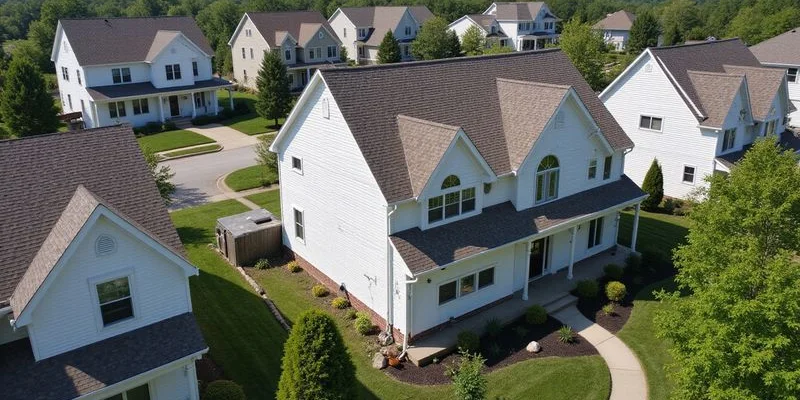
Hidden Decay (The Unknown Factor)
This is the variable that often catches homeowners off guard.
The condition of the decking is unknown until the old shingles come off.
Decking that is rotted or delaminated from small leaks generally must be replaced.
Cost note: Replacing decking is billed per sheet. Ask your contractor for the per-sheet price in writing before work starts.
Budget a contingency fund for this reason. Ask your contractor what size is sensible.
Tear-Off and Disposal Fees
You might be tempted to save money by layering new shingles over the old ones.
Many contractors advise against this “layover” method.
Ohio code does not allow a recover on a roof with two or more coverings. A second layer can also trap heat.
Check the shingle maker’s warranty terms before you layer over old shingles.
A full tear-off lets the crew inspect the deck and install fresh underlayment.
Disposal is a line item in most quotes.
Your quote includes the dumpster and the “tipping fees” charged by the local landfill.
Ohio-Specific Cost Considerations
Ohio's weather patterns dictate specific installation standards that you cannot ignore.
The Ice Dam Defense
Ohio winters bring repeated freezing and thawing.
Snow melts on the upper roof, runs down, and refreezes at the gutters.
This forms an ice dam that forces water backward under the shingles.
The Code Requirement: The Residential Code of Ohio requires an ice barrier. It applies where Table 301.2(1) designates a history of ice along the eaves.
The rule is Ohio Adm. Code 4101:8-9, Section 905.1.2. A self-adhering membrane is one allowed option for the barrier.
Ask your local building department. Ask whether it applies to your address.
Where it applies, it starts at the eave edge. It runs at least 24 inches inside the exterior wall line.
Skipping it to save money raises the risk of winter leaks.
Wind and Storm Prep
Ohio experiences significant wind events in the spring.
Contractors commonly use a starter strip, not cut 3-tab shingles, along the eaves and rakes.
A starter strip has an adhesive seal that helps hold the roof edges down.
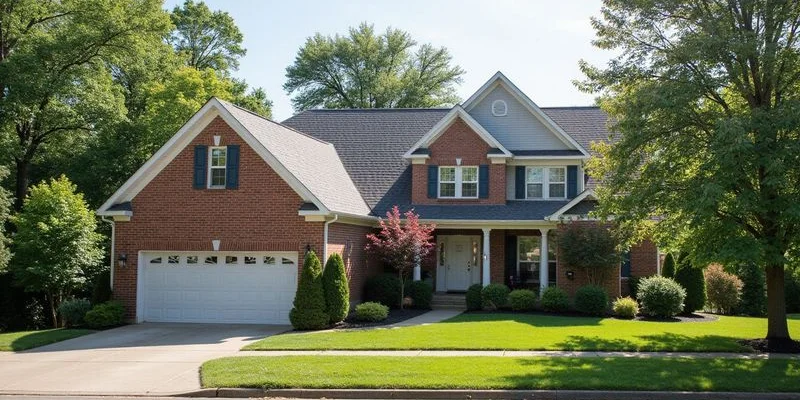
Why Three Quotes Can Land Far Apart
Quotes for one house can differ by thousands of dollars. The gap usually has real causes.
Pitch. Steeper roofs need more safety gear and slower work. Ask whether your quote shows pitch as a line item.
Complexity. Dormers, chimneys, and valleys add labor. A complex two-story home can cost more than a simple ranch of the same size.
Decking and layers. Rotted decking adds cost. So does removing an extra shingle layer.
Material grade. Premium shingle lines cost more. They often carry better wind ratings and longer warranties.
Compare quotes fairly by scoping all three identically. Match the material, tear-off layers, flashing scope, and warranty.
Tariffs and Roofing Costs
A June 2025 presidential proclamation raised Section 232 tariffs to 50%. They cover imported steel and aluminum.
Flashing, drip edge, ridge cap, and gutters use these metals. Metal roofing systems are the most exposed.
Some shingle makers have also announced price increases, but specific amounts are not verified. Ask your contractor how current material pricing affects your quote.
Tariff policy can change, so a quote has an expiry date.
Tips for Saving on Your Roof Replacement
Quality comes first, but you still don’t want to overpay.
Here are four ways to keep your budget under control.
1. Schedule for the Off-Season Roofing is a seasonal business. Contractors are often busiest in warm months.
Scheduling in a slower season may help you negotiate a better labor rate. Remember that asphalt shingles need mild weather to seal. Check the maker's cold-weather instructions.
2. Upgrade Your Ventilation This sounds counterintuitive, but spending money on vents saves money later. Heat buildup is the enemy of asphalt.
Balanced intake (soffit) and exhaust (ridge) ventilation can help your roof last longer. It prevents your shingles from cooking in the summer heat.
3. Understand Your Insurance Policy If your roof has wind or hail damage, your policy might cover the replacement. Have a contractor inspect the roof before you file a claim.
Say you file a claim for damage that isn’t there. It can still go on your insurance record as a “zero-pay” claim.
4. Ask About Material Manufacturer Rebates Some manufacturers occasionally offer rebates or promotions. Ask whether any current promotions apply to you.
Ask your contractor about current promotions.
Financing Your Roof Replacement in Ohio
A roof is a large out-of-pocket cost. Most homeowners look at one of these options.
Contractor financing. Many roofers offer same-as-cash periods. Pay it off in time and you owe no interest.
Miss the deadline and interest may backdate to the full purchase. Read the terms.
HELOC. A home equity line often has a lower rate than unsecured loans. The rate is usually variable.
Your home secures the debt.
FHA Title I loan. These fixed-rate loans come through approved lenders and do not require equity.
Loan limits apply.
Personal loans. Banks and credit unions offer unsecured loans. They are fast and place no lien on your home.
Rates depend on your credit.
Weatherization programs. Income-qualifying homeowners may be eligible for weatherization help. Roof work is not always covered.
Check eligibility with the Ohio Department of Development.
Frequently Asked Questions
How much does a roof replacement cost in Ohio?
Costs vary by roof size, pitch, material, and contractor. According to Angi, Columbus projects run about $4 to $11 per square foot. According to Fixr, the national range is $3.75 to $11.
Neither is a Fairfield County price. Get written local quotes.
What factors affect roof replacement cost in Ohio?
Several factors drive the price. Key factors include total roof square footage and pitch complexity. Material type matters too, whether asphalt, metal, or slate.
Tear-off and disposal fees add up. So does hidden deck damage found during installation. Local labor rates in your Ohio county also play a part.
Does homeowners insurance cover roof replacement in Ohio?
Ohio homeowners insurance typically covers replacement after sudden damage. Wind, hail, and falling trees are examples. Normal wear and tear is excluded.
An insurer that replaces part of an item must give a reasonably comparable appearance. Ohio Adm. Code 3901-1-54(I)(1)(b) says so.
How long does a roof replacement take in Ohio?
Many residential replacements take a few days of on-site work. Larger or complex roofs take longer. Weather and crew size also matter.
How do I get a free roofing estimate in Ohio?
Call 877-367-1885 to ask about availability at your address. Fairfield Peak is a referral service that connects you with an independent contractor.
Why are roofing quotes higher than in 2023?
A June 2025 proclamation raised Section 232 tariffs on imported steel and aluminum to 50%. That affects metal components.
Some shingle makers have also announced price increases. The effect on your quote varies by project.
What financing options exist for a roof replacement in Ohio?
Common options include contractor same-as-cash financing and a HELOC. An FHA Title I home improvement loan is another. So are personal loans.
Income-qualifying homeowners can ask the Ohio Department of Development about weatherization assistance. Covered work varies.
Read the terms on any promotional financing. Interest can backdate if the balance is not paid in time.
How to Get an Accurate Quote in Fairfield County
Know your square footage. Measure your roof before your first call. Informed customers get more precise quotes.
Get three itemized written quotes. Each should list the shingle line, layers removed, permit cost, decking allowance, and flashing scope. It should also state the labor and manufacturer warranty terms.
Verify the contractor. Ohio does not issue a general statewide residential roofing license. Some cities and counties require local registration or permits.
Check current rules with the Ohio Construction Industry Licensing Board and your local building department. Ask for a certificate of insurance, local registration if required, and references.
Ask about the permit. Many jurisdictions require one for a replacement. See our Fairfield County permit guide and confirm with your building department.
Skipped permits can cause problems when you sell or file a claim.
Watch for red flags. Avoid phone quotes with no inspection and be cautious about large deposits. Avoid same-day signing pressure.
Walk away from anyone who cannot show liability insurance and worker's comp.
Check Roof Replacement Availability
A generic online calculator can only get you so far.
An accurate price comes from a physical inspection of your roof.
Fairfield Peak Roofing connects homeowners across Lancaster and Fairfield County with independent contractors. They can provide itemized estimates.
An inspector checks the flashing, ventilation, and decking to reduce surprises later.
Call 877-367-1885 to ask about availability at your address. Fairfield Peak is a referral service that connects you with an independent contractor.
Need Help with Your Roof?
Get an inspection and estimate from Lancaster's most trusted roofing team.