Facing a roof replacement in 2026 in Lancaster or Fairfield County? You have likely found the decision is harder than it was a decade ago.
The two dominant choices are metal roofing and asphalt shingles. Both have evolved in recent years. The price gap between them has shifted, so the comparison deserves a careful look.
Ohio's climate puts roofing materials through a punishing test. Summers are scorching and push attic temperatures very high. Winters bring heavy snow loads.
A freeze-thaw cycle can repeat dozens of times between November and March. Your roof has to survive all of it. It also has to last long enough to justify what you paid.
This guide covers real costs, verified performance data and practical points for Ohio homeowners.
Short answer: For a 2,000 sq ft Ohio home, asphalt costs about $8,500 to $15,000. Metal costs about $15,000 to $30,000. Metal costs more upfront and often lasts longer.
It fits owners who plan to stay ten years or more. Asphalt fits shorter timelines and tighter budgets. Full pricing is in our Ohio roof cost guide.
Upfront Cost: What You Will Actually Pay in 2026
The first difference you will notice is the installation price. Here is the 2026 price for a typical 2,000-square-foot home in the Lancaster area.
Asphalt shingle roofing currently ranges from $8,500 to $15,000 for a complete tear-off and replacement. That includes standard architectural shingles, synthetic underlayment, new flashing and ice-and-water shield along the eaves.
Architectural is the most commonly installed type in Fairfield County.
Three-tab shingles fall at the lower end of this range. Premium designer shingles from makers like Owens Corning or GAF push toward the higher end.
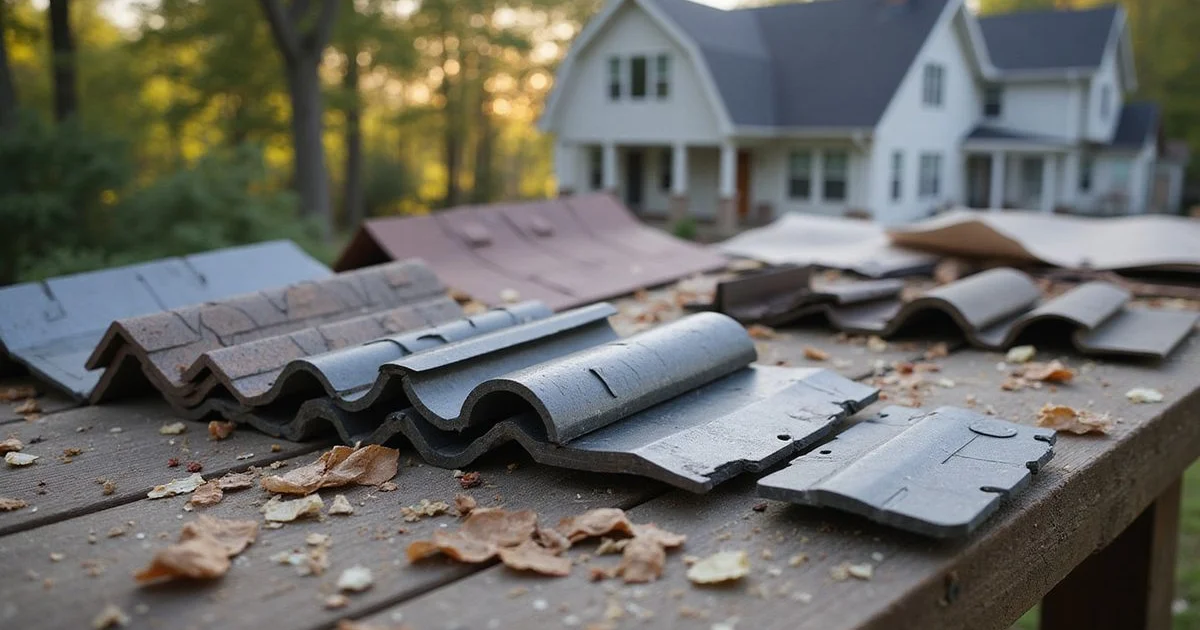
Metal roofing ranges from $15,000 to $30,000 for the same home. The style and material you choose drive the price.
Exposed-fastener steel panels sit at the lower end, around $15,000 to $18,000. They are commonly called agricultural or barn-style panels (see our pole barn roofing guide).
Standing seam metal roofing uses concealed fasteners and interlocking panels. It typically costs between $20,000 and $30,000.
Copper and zinc panels exist at the extreme high end. They are rare on Ohio homes, so most owners never price them.
At first glance, metal roofing costs roughly twice as much. Not the full story. For Ohio homeowners, the long-term math changes the picture once you count lifespan.
Lifespan and Long-Term Value
Lifespan is where metal can pull ahead. The gap is smaller than many sellers claim.
The InterNACHI life expectancy chart lists 3-tab asphalt shingles at 20 years. It lists architectural asphalt at 30 years. It lists metal roofing at 40 to 80 years.
The chart calls these figures a general guideline, not a guarantee.
Real roofs vary. Attic ventilation, installation quality and weather all change how long a roof lasts.
Ohio's freeze-thaw winters and hot summers can stress asphalt shingles. Get the warranty terms in writing for any material you consider.
Cost per year depends on which numbers you use. These examples use this guide's planning estimates.
A $12,000 architectural shingle roof lasting 30 years costs $400 per year. A $24,000 metal roof lasting 50 years costs $480 per year. Shingles that last only 20 years cost $600 per year.
Metal's edge depends on real shingle life and how long you stay.
How Each Material Handles Ohio Weather
Ohio weather is the variable that separates theoretical performance from real-world results. Here is how each material responds to Fairfield County conditions.
Freeze-Thaw Cycles
Ohio winters swing above and below freezing many times. Each cycle forces moisture into micro-cracks in roofing materials. It expands as it freezes and contracts as it thaws.
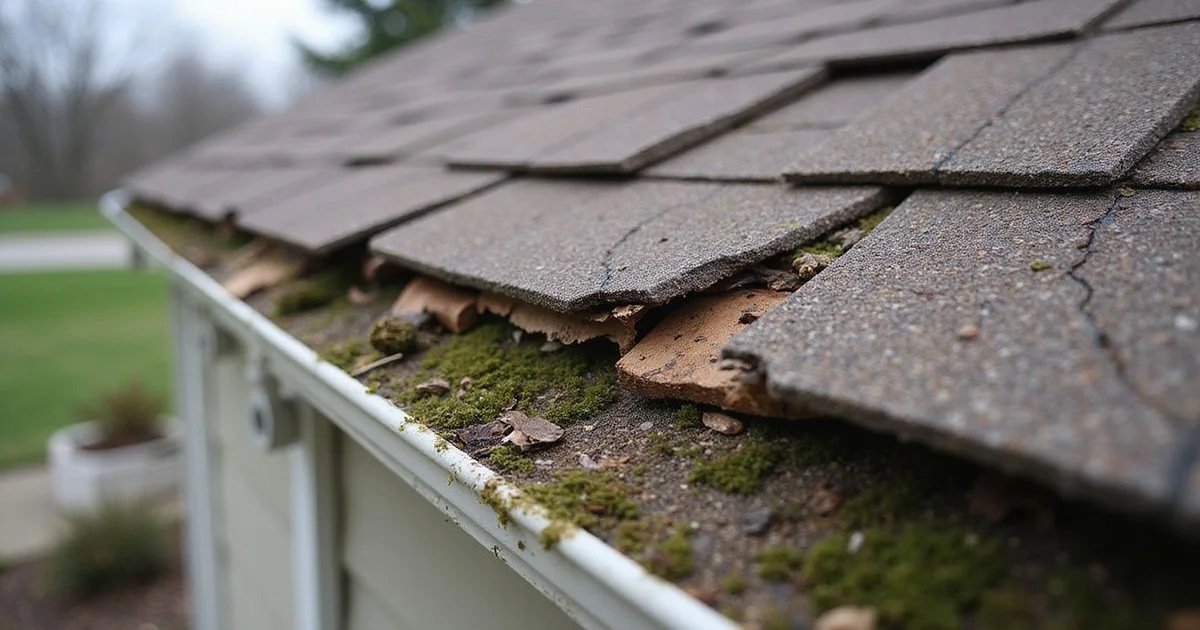
Asphalt shingles absorb small amounts of moisture over time. The repeated expansion speeds up cracking and granule loss, which shortens the roof's life. Metal panels do not absorb moisture at all, so freeze-thaw damage barely touches them.
Wind Resistance
Spring and summer storms bring strong wind gusts to Fairfield County. Shingles are tested under two ASTM methods. In ASTM D3161, Class F is the highest rating.
In ASTM D7158, Class H is the highest (per the Asphalt Roofing Manufacturers Association). Ask which class your shingle carries.
The adhesive strips that bond shingles can weaken with age. Older shingles may fail below their original rating.
Metal wind performance depends on the panel profile and how it is fastened. Ask for the manufacturer's tested wind-uplift rating for the exact system.
Hail Performance
Hail is a real concern in central Ohio. It is also where the comparison gets complicated.
Asphalt shingles take the hit. Hail can crack them or knock granules loose, often unseen from the ground. That hidden damage hurts waterproofing and shortens lifespan.
Metal roofing can dent from large hail. That is cosmetic and does not affect waterproofing. Thicker gauge steel (24-gauge or heavier) and textured finishes resist denting better than thinner panels.
Worried about hail? Ask your contractor about impact-rated metal panels.
For storm damage repair on either material, act fast to prevent secondary water damage. Local frequency data is in the Fairfield County hail frequency analysis.
Snow Load
Design snow load is set by your local building department. Both asphalt and metal roofing can meet it when properly installed on adequate decking.
Metal's key advantage in snow country is shedding. Snow slides off a metal roof rather than piling up. That reduces sustained load and can lower ice dam risk.
Ice dams form when heat escaping the roof melts snow that refreezes at the eaves. They are a leading cause of interior water damage in asphalt-shingled Ohio homes.
Energy Efficiency and Utility Savings
Metal roofing can help with cooling costs, but Ohio's mixed climate limits the benefit.
Light-colored, reflective roofs bounce more sunlight than dark shingles. That can lower summer attic heat. Reflective roofs also give up some free heat gain in winter.
Savings are largest in hot climates. Ask for the product's rated solar reflectance before you count on savings.
In winter, the energy equation depends more on insulation than on roofing material. But metal roofs do not develop the micro-leaks that aging asphalt roofs often do. That helps preserve the R-value of your attic insulation over time.
Wet insulation loses its thermal resistance almost immediately. A roof that keeps moisture out protects your home's energy envelope longer.
The federal 25C energy efficiency credit has ended, according to the IRS. It covered improvements made through December 31, 2025.
Do not count on it in your budget. Ask your utility about current insulation rebates.
Side-by-Side Comparison Table
| Factor | Asphalt Shingles | Metal Roofing |
|---|---|---|
| Upfront Cost (2,000 sq ft home) | $8,500 - $15,000 | $15,000 - $30,000 |
| Typical Lifespan (InterNACHI chart) | 20 years (3-tab), 30 years (architectural) | 40 - 80 years |
| Cost Per Year of Service | ~$400 - $600 (examples above) | ~$480 (example above) |
| Wind Rating | Tested to ASTM D3161 (top Class F) and D7158 (top Class H) | Varies by panel system; ask for the tested rating |
| Freeze-Thaw Resistance | Moderate (degrades over time) | Excellent (no moisture absorption) |
| Hail Resistance | Can crack; hidden damage common | May dent; waterproofing unaffected |
| Snow & Ice Dam Risk | High (snow accumulates) | Low (snow sheds naturally) |
| Energy Savings (cooling) | Dark shingles reflect little sunlight | Varies by color and coating; ask for rated reflectance |
| Maintenance Required | Annual inspections recommended | Minimal; inspect every 2-3 years |
| Insurance Discount Potential | Standard rates | Varies by insurer and state; ask your agent |
| Resale Value Impact | Recoups about 67 - 71% of cost (Remodeling 2025, Columbus) | Recoups about 46 - 50% of cost (Remodeling 2025, Columbus) |
| Recyclability | Mostly landfilled | Recyclable at end of life |
ROI and Resale Value for Ohio Homes
If you are considering selling within five to ten years, resale returns favor asphalt.
Remodeling magazine's 2025 Cost vs Value report covers Columbus. It shows asphalt shingle replacement recouping about 67% to 71% of its cost. Metal roofing recouped about 46% to 50%.
The report prices a larger project than a typical home. Job costs were $26,705 to $31,871 for asphalt and $43,762 to $51,865 for metal.
Your own numbers will differ. Metal's case rests on how long you stay, not on resale value.
Some insurers discount premiums for impact-resistant roofing. State Farm notes that discounts and eligibility vary by state.
It also says qualifying metal products may come with an exclusion for certain damages. Ask your agent for details before you buy.
Which Material Is Right for Your Situation?
There is no universally correct answer. The best choice depends on your specific circumstances.
Asphalt shingles make the most sense if:
- You are planning to sell within the next five years and want to minimize upfront costs
- Your budget is firmly under $15,000 and financing is not an option
- Your home has a complex roof geometry with many valleys, dormers, and penetrations where metal installation labor costs escalate quickly
- You need a roof repair or partial replacement rather than a full system
Metal roofing makes the most sense if:
- You plan to stay in your home for ten years or longer
- You want to reduce ice dam risk, which is common in Fairfield County winters
- Energy efficiency and lower utility bills are a priority
- You prefer a low-maintenance roofing system that will not require replacement during your ownership
- You are willing to invest more upfront for lower lifetime cost
Frequently Asked Questions
How much does a metal roof cost in Ohio?
For a typical 2,000 sq ft home, exposed-fastener steel panels run about $15,000 to $18,000. Standing seam typically costs $20,000 to $30,000.
Asphalt shingles run about $8,500 to $15,000. Prices vary with roof pitch, complexity and tear-off needs.
Is a metal roof worth the extra cost in Ohio?
It depends on how long you plan to stay. Metal costs roughly double upfront.
Charts list metal at 40 to 80 years and asphalt at 20 to 30. Resale data shows metal recouping less at sale than asphalt. Homeowners who stay for decades are the likeliest to come out ahead.
How do metal roofs handle Ohio snow and ice?
Metal roofs do well in Ohio winters. Their smooth surface sheds snow instead of holding it. That lowers the risk of ice dams that plague asphalt shingle roofs.
Snow guards can be installed to control how fast snow sheds, for safety.
Metal panels also handle freeze-thaw better because they do not absorb moisture. That avoids the cracking and granule loss shingles suffer after repeated freezing and thawing.
Can you install a metal roof over existing asphalt shingles?
Sometimes. Some building codes allow metal over one layer of existing shingles. That can save on tear-off and disposal costs.
Ask your local building department what applies.
But the existing roof deck must be inspected for rot or structural damage first. If the decking is compromised, a full tear-off is necessary.
A qualified roofing contractor should evaluate your situation before recommending an overlay.
Are metal roofs louder than asphalt shingles during rain and hail?
This is a common misconception. With solid decking and proper underlayment, metal is about as loud as shingles in rain.
The key is the installation method. Panels fastened directly to open purlins without underlayment are noticeably louder. That method is mostly used on agricultural buildings, not homes.
With standard residential installation, most homeowners report no meaningful difference in noise. That means decking, underlayment and attic insulation.
Sources
- InterNACHI: Standard Estimated Life Expectancy Chart
- Remodeling magazine 2025 Cost vs Value, Columbus, OH (via JLC)
- Asphalt Roofing Manufacturers Association: Asphalt Shingle Product and Test Standards
- State Farm: Impact-Resistant Roofing Materials
- IRS: Energy Efficient Home Improvement Credit
Get Expert Guidance on Your Roofing Decision
Metal or asphalt will affect your home's performance, appearance and value for decades. Fairfield Peak connects homeowners with independent contractors who can quote both options.
A contractor can walk through material options for your roof's geometry and quote both systems. Ask which investment makes sense for your situation.
Weighing metal versus asphalt, or want an assessment of your roof's remaining life? Call 877-367-1885 to ask about availability at your address. Fairfield Peak is a referral service that connects you with an independent contractor.
Need Help with Your Roof?
Get an inspection and estimate from Lancaster's most trusted roofing team.