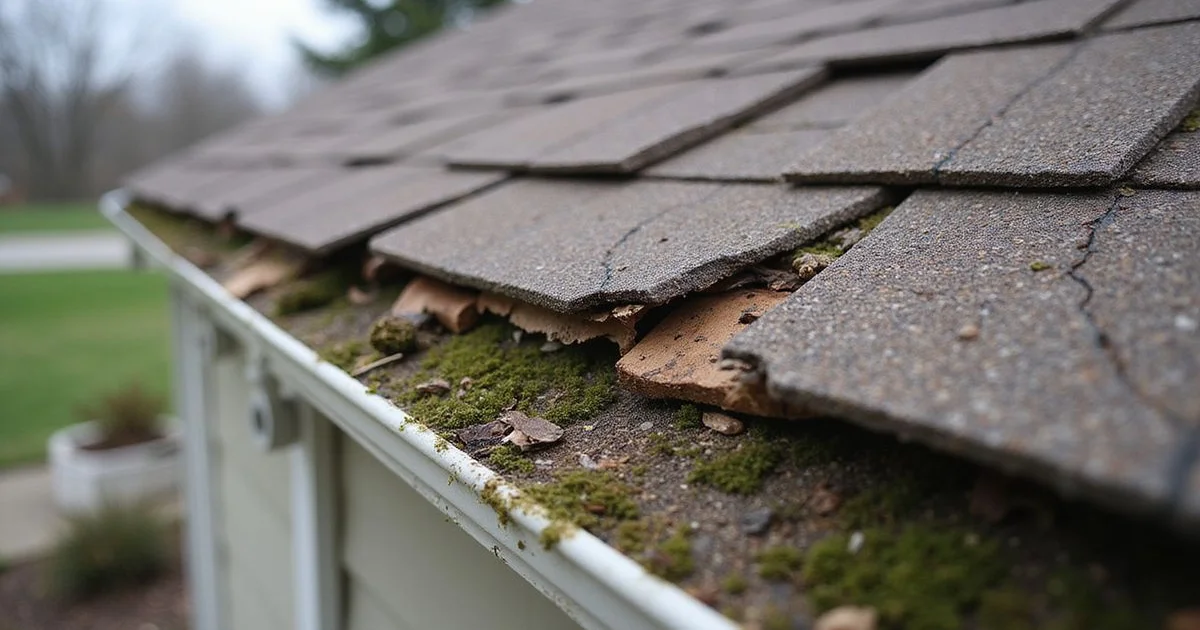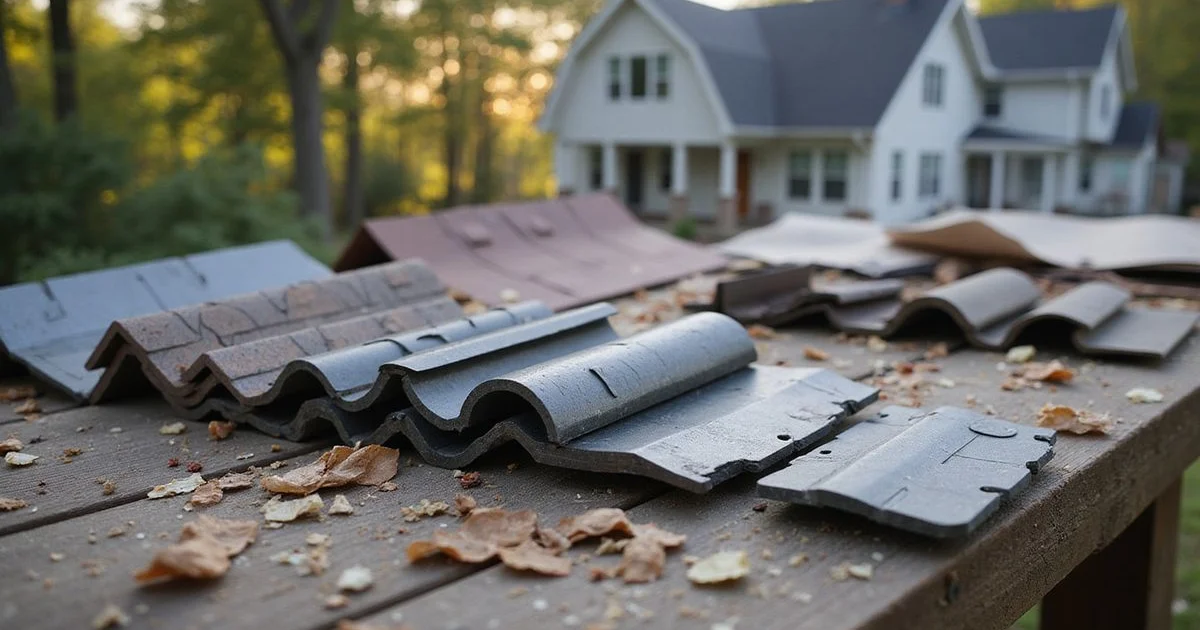
Most homeowners in Lancaster and across Fairfield County think of their roof as a standalone system. Shingles on top, decking underneath, and that is the extent of it. But the reality is that your gutter system is one of the most critical components of your roof's defense against water damage. When gutters fail, the consequences travel upward into the fascia boards, the soffit panels, the roof decking, and eventually into your attic and living spaces below.
Every fall, Ohio's hardwood trees dump thousands of leaves into gutter troughs across the state. Every winter, the freeze-thaw cycles that define our climate turn small gutter problems into major structural failures. And every spring, homeowners discover water stains on their ceilings that could have been prevented with basic gutter maintenance.
In this guide, we are going to walk through the five most common gutter problems we encounter on homes throughout central Ohio, explain exactly how each one leads to roof damage, and give you practical solutions to protect your investment before small issues become expensive emergencies.
1. Clogged Gutters: The Number One Cause of Roof Edge Damage
Clogged gutters are, without question, the most frequent problem we see on Ohio homes, and the one that causes the most avoidable damage to roofing systems.
When leaves, twigs, pine needles, and other debris accumulate in your gutters, water has nowhere to go. Instead of flowing through the downspouts and away from your home, it backs up and pools along the roofline. This standing water saturates the fascia boards, which are the wooden planks your gutters are mounted to. Over the course of a single Ohio autumn and winter season, this constant moisture exposure can cause the fascia to rot from the inside out.
But the damage does not stop at the fascia. Standing water in clogged gutters wicks upward through capillary action into the lower edge of your roof decking. Once moisture penetrates the decking, it weakens the structural support for your shingles and creates an ideal environment for mold and mildew to spread into your soffit panels. We have inspected homes in Lancaster where a single season of neglected gutters led to over $3,000 in fascia and soffit replacement costs that would have been entirely avoided with a simple cleaning.
How to fix it:
- Clean your gutters at least twice per year in Ohio: once in late spring and once in late fall after the leaves have finished dropping.
- If your property has overhanging oak, maple, or walnut trees, add a third cleaning in mid-winter.
- Flush your downspouts with a garden hose after cleaning to ensure there are no hidden blockages.
- Consider installing gutter guards to dramatically reduce debris accumulation and lower your maintenance burden year-round.
2. Sagging Gutters Pulling Away from the Roofline
When you walk around the perimeter of your home and notice a section of gutter that is drooping, bowing in the middle, or visibly pulling away from the fascia board, you are looking at a problem that is already damaging your roof.
Gutters sag for two primary reasons. The first is the sheer weight of debris and trapped water. A single ten-foot section of gutter can hold over 50 pounds of wet leaves and standing water, which gradually bends the hangers and pulls the fasteners out of the wood. The second reason is that the fascia board itself has begun to rot from previous water exposure, meaning the screws and spikes no longer have solid wood to grip.
Once a gutter section pulls away from the fascia, it creates a gap between the gutter trough and the roof edge. Rainwater that should flow into the gutter instead cascades down the exposed fascia board, behind the gutter, and directly onto your foundation. This gap also allows wind-driven rain to reach the underside of your lower shingle courses, which accelerates the deterioration of the roof edge and can void manufacturer warranties on your shingles.
In central Ohio, where spring thunderstorms routinely bring heavy rainfall rates exceeding one inch per hour, even a small gap between a sagging gutter and the fascia can channel hundreds of gallons of water into places it was never meant to go.
How to fix it:
- Inspect gutter hangers and spikes every spring. Replace any that are bent, corroded, or loose.
- Upgrade from spike-and-ferrule hangers to modern hidden hanger brackets, which distribute weight more evenly and resist pulling out.
- If the fascia is soft or spongy when you press on it, the wood must be replaced before reattaching the gutters. Contact a professional for fascia repair and replacement.
- Ensure hangers are spaced no more than 24 inches apart, and no more than 18 inches apart if your roof has a steep pitch that concentrates water flow.
3. Ice Dams Caused by Poor Gutter Drainage
Ohio winters are defined by the freeze-thaw cycle. Temperatures rise above freezing during the day, melt snow on the upper portion of your roof, and then plummet below freezing overnight. When your gutters are not draining properly, this cycle creates ice dams that are among the most destructive forces your roof will ever face.
Here is how it happens. Snow melts on the warmer upper sections of your roof and flows downward toward the eaves. If the gutters are clogged, improperly pitched, or already holding frozen water from a previous cycle, this meltwater has nowhere to drain. It pools at the roof edge and refreezes into a thick ridge of ice. As more meltwater flows down behind this ice ridge, it is forced backward under the shingles, past the ice-and-water shield (if one was installed), and into the roof decking.
The damage from ice dams is severe and often hidden until spring. Water that penetrates the decking soaks into insulation, destroys drywall ceilings, and can cause electrical hazards if it reaches wiring. In Fairfield County, we regularly see storm and ice damage repair bills exceeding $5,000 to $8,000 on homes where the root cause was simply gutters that were not draining before winter arrived.
How to fix it:
- Clean and inspect your gutters thoroughly before the first freeze, typically by mid-November in central Ohio.
- Ensure all downspouts are clear and water flows freely from the outlet.
- Check that your attic insulation meets current Ohio energy code recommendations of R-49, which keeps the roof surface cold and reduces snowmelt.
- Verify that your attic ventilation is adequate. Proper ridge and soffit ventilation equalizes roof surface temperature and minimizes the conditions that create ice dams.
- For homes with chronic ice dam issues, consider installing heated gutter cables as a supplemental solution.
4. Improper Gutter Pitch and Alignment
Your gutters are not supposed to be perfectly level. They need a slight slope, called the pitch, to direct water toward the downspouts. The standard recommendation is a slope of approximately one-quarter inch per ten feet of gutter run. When gutters are installed without the correct pitch, or when the pitch shifts over time due to settling, fastener failure, or storm damage, water pools in low spots instead of draining.
This problem is deceptively hard to spot from the ground. The gutter may look perfectly normal from your driveway, but standing water sitting in a flat or reverse-pitched section does constant, invisible damage. Metal gutters develop rust at the water line. Aluminum gutters corrode at their seams. And the moisture radiating from that standing pool seeps into the fascia board directly behind it, starting the same rot cycle we described earlier.
We frequently encounter improper pitch on homes in older Lancaster neighborhoods where gutters were installed decades ago and have gradually shifted. We also see it on newer homes where gutters were installed by crews that rushed the job or did not account for the home's settling over its first few years.
How to fix it:
- During a rainstorm, walk around your home and observe where water flows. If you see standing water in any gutter section after the rain stops, that section lacks proper pitch.
- A professional gutter service can re-pitch your existing gutters by adjusting the hanger positions without replacing the gutter trough itself.
- When replacing gutters, insist on seamless aluminum gutters that are custom-fabricated on-site to the exact dimensions of your roofline. Seamless gutters eliminate the weak points at joints where leaks and alignment problems most commonly develop.
- Add downspout outlets at both ends of long gutter runs exceeding 40 feet to prevent the volume of water from overwhelming a single outlet.
5. Missing or Inadequate Gutter Guards
If you have been reading this guide and thinking that most of these problems trace back to debris getting into the gutters in the first place, you are absolutely right. The single most effective long-term solution for protecting your gutters and, by extension, your roof is a properly installed gutter guard system.
Not all gutter guards are created equal, and the wrong type can actually make your problems worse. Cheap plastic screen guards sold at hardware stores often collapse under the weight of wet leaves, creating blockages that are harder to clear than an unprotected gutter. Foam inserts trap seeds that sprout into plants growing inside your gutters. And flat mesh screens with openings that are too large still allow pine needles, shingle granules, and small debris through.
The gutter guards we recommend for Ohio homes use a micro-mesh design with surgical-grade stainless steel mesh over an aluminum frame. This design allows water to flow through while blocking even the smallest debris particles. They are engineered to handle the heavy leaf loads from Ohio's abundant oak, maple, and sycamore trees, and they are strong enough to support the weight of snow and ice without collapsing.
Why gutter guards matter for your roof:
| Without Gutter Guards | With Quality Gutter Guards |
|---|---|
| Debris clogs lead to water backup and fascia rot | Water flows freely, fascia stays dry and intact |
| Standing water contributes to ice dam formation | Proper drainage reduces ice dam risk significantly |
| Cleaning required 2-4 times per year | Maintenance reduced to once every 2-3 years |
| Pest nesting in debris-filled troughs | Physical barrier prevents birds, rodents, and insects |
| Granule buildup accelerates gutter corrosion | Granules wash over the guard surface and off the edge |
How to fix it:
- Invest in professionally installed micro-mesh gutter guards that are rated for the debris types common in your area.
- Avoid DIY snap-on guards that can void your gutter warranty or cause improper water flow patterns.
- Have your guards inspected during your annual roof inspection to ensure they remain properly seated and free of surface buildup.
How Gutter Problems Lead to Major Roof Damage
Understanding the chain reaction between gutter failure and roof damage helps explain why we treat gutters as an essential part of every roof inspection we perform.
The progression follows a predictable pattern. First, water backs up due to one of the five problems described above. Second, the backed-up water saturates the fascia and begins to rot the wood that supports both the gutter and the lower edge of the roof. Third, the weakened fascia allows water to reach the roof decking and the soffit, spreading moisture damage to the structural components of the roof system. Fourth, in winter, the drainage failure creates ice dams that force water under the shingles and into the attic space.
Each stage of this progression increases the repair cost dramatically. Cleaning clogged gutters might cost a few hundred dollars. Replacing rotted fascia boards runs $1,500 to $3,500 depending on the extent of the damage. And repairing roof decking, insulation, and interior damage from ice dams or chronic water intrusion can push costs above $10,000.
The most cost-effective approach is always prevention. Regular gutter maintenance, proper installation, and quality gutter guards can eliminate the conditions that start this chain reaction in the first place.
Frequently Asked Questions
How often should I clean my gutters in Ohio?
Ohio homeowners should clean their gutters at least twice per year: once in late spring after the seeds and pollen have finished falling, and once in late autumn after the majority of leaves have dropped. If your property has overhanging oak or maple trees, you may need a third cleaning in mid-winter to clear any remaining debris before the freeze-thaw cycle begins.
Can clogged gutters really cause roof damage?
Absolutely. When gutters are clogged, water backs up under the roofline and saturates the fascia boards and roof decking. Over time, this standing water causes wood rot, mold growth, and deterioration of the shingles along the eaves. In winter, clogged gutters contribute directly to ice dam formation, which can force water under shingles and into your attic, leading to significant storm and water damage.
Are gutter guards worth the investment?
For most Ohio homeowners, gutter guards provide a strong return on investment by dramatically reducing maintenance frequency and preventing the debris buildup that leads to clogs, ice dams, and fascia rot. While they do not eliminate the need for all maintenance, quality gutter guards can reduce cleaning frequency from multiple times per year to once every two or three years.
How do I know if my gutters are causing roof damage?
Look for these warning signs: peeling paint or staining on your fascia boards, visible water marks or mold on soffits, granule buildup inside gutters from shingle deterioration, gutters pulling away from the roofline, and water pooling near your foundation after rain. If you notice any of these, schedule a professional inspection of both your gutters and roof system.
Protect Your Roof by Fixing Your Gutters First
At Fairfield Peak Roofing, we understand that your gutter system and your roof are not separate things. They are interconnected components of a single water management system that protects your home, your family, and your investment. Every roof inspection we perform includes a thorough evaluation of the gutter system because we know that a perfectly shingled roof can still fail if the gutters are not doing their job.
If you have noticed any of the five problems described in this guide, or if it has been more than a year since your last gutter inspection, do not wait for water damage to announce itself on your ceiling. The homeowners who save the most money on roofing are the ones who address gutter problems before they become roof problems.
Our team serves Lancaster, Fairfield County, and communities throughout central Ohio. We will walk you through exactly what we find, explain your options in plain language, and never pressure you into work you do not need.
Worried About Your Gutters and Roof?
Get an inspection and estimate from Lancaster's most trusted roofing and gutter team.