Winter in Lancaster and Fairfield County is not something your roof simply endures. It is an active assault. Ohio's location in the transition zone between the Great Lakes weather systems and the warm air masses from the south means our winters deliver a punishing combination of heavy snowfall, freezing rain, and relentless freeze-thaw cycles that can exploit every small vulnerability in your roofing system. The average winter in central Ohio brings roughly 22 to 28 inches of snow, but the real damage comes from the temperature swings. A single week in January can see temperatures spike from 15 degrees to 50 degrees and back again, causing ice to form, melt, refreeze, and pry apart materials that were perfectly sound in September.
The homeowners we work with in Lancaster who avoid emergency winter repairs are almost always the ones who took action in the fall. Preparing your roof before the first hard freeze is not just smart maintenance. It is the single most cost-effective thing you can do to protect your home from water damage, structural problems, and the kind of five-figure repair bills that nobody wants to see in February.
This guide covers every step of a thorough roof winterization, specific to the climate and building conditions here in Fairfield County.
Why Ohio Winters Are Especially Hard on Roofs
Before diving into the checklist, it helps to understand exactly why roofs in our region take more abuse than those in states with steadier winter temperatures.
The primary threat is the freeze-thaw cycle. When daytime temperatures rise above 32 degrees, snow on your roof begins to melt. That meltwater flows downward and seeps into every crack, gap, and lifted shingle edge it can find. When the temperature drops again at night, that water freezes and expands by roughly nine percent. This expansion acts like a wedge, prying apart shingle seams, widening gaps in flashing, and cracking aged caulk around vents and chimneys. Over the course of a single Ohio winter, your roof can experience 40 to 60 of these freeze-thaw cycles.
The second threat is ice damming. When heat escapes from a poorly insulated attic, it warms the roof deck from below and melts snow on the upper portions of the roof. That meltwater runs down to the eaves, which are colder because they extend beyond the heated living space. The water refreezes at the eave line, forming a ridge of ice that traps subsequent meltwater behind it. This pooled water has nowhere to go but backward, under your shingles, and into your home. Ice dams are the number one cause of winter roof leaks in Fairfield County, and they are almost entirely preventable.
The third factor is wind-driven snow and rain. Winter storms in Ohio regularly produce wind gusts of 40 to 60 mph, which drive snow and sleet horizontally into gaps that would never see moisture during a calm rainfall. This is why the condition of your flashing, soffit, and fascia matters so much heading into winter.
The Complete Winter Roof Preparation Checklist
The following steps represent the full winterization process we recommend for every homeowner in Lancaster and the surrounding Fairfield County area. Ideally, you should complete this checklist between late September and mid-November, before the first sustained freeze.
1. Clean Your Gutters and Downspouts Thoroughly
This is the single most important step in winter roof preparation, and the one most homeowners either skip or do halfway.
Clogged gutters are a direct cause of ice dams. When leaves, twigs, and granule debris block the flow of water, meltwater backs up and freezes in the gutter channel. That ice builds outward and upward until it reaches the roof edge, creating the exact conditions for water intrusion. In Lancaster, where mature oak and maple trees are common, a single autumn can fill your gutters multiple times.
How to do it right:
- Wait until the majority of leaves have fallen, typically late October to mid-November in Fairfield County.
- Remove all debris by hand or with a gutter scoop. Do not just blast it out with a hose, as that pushes material into your downspouts.
- Flush each downspout with a garden hose to confirm water flows freely all the way to the ground outlet.
- Check that downspout extensions direct water at least four to six feet away from your foundation.
- Inspect gutter hangers and brackets for looseness. Heavy ice loads on a loose gutter can pull the entire assembly off the fascia board.
If you are tired of cleaning gutters twice every fall, consider having gutter guards installed. Quality leaf protection systems significantly reduce debris accumulation and help prevent the ice buildup that leads to winter damage.
2. Inspect Your Shingles for Damage and Wear
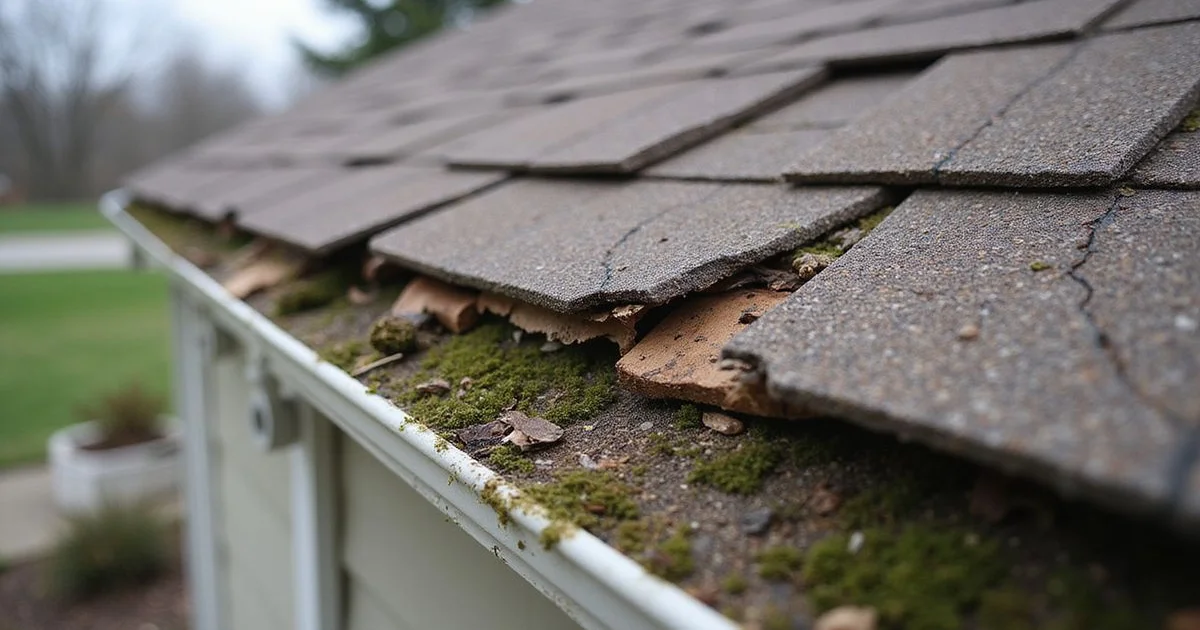
Every shingle that is cracked, curled, loose, or missing is a potential entry point for winter moisture. Use binoculars from the ground to examine every slope of your roof, paying special attention to south-facing slopes that receive the most UV exposure and temperature cycling.
What to look for:
- Curling or cupping shingles: These have lost their adhesive seal and will catch wind and allow water underneath.
- Cracked shingles: Freeze-thaw cycles will widen these cracks throughout winter.
- Missing shingles: Even one missing shingle exposes the underlayment or deck to direct moisture contact.
- Excessive granule loss: If your asphalt shingles show dark, bare patches, the protective coating has worn away and the underlying asphalt will deteriorate rapidly in winter conditions.
- Moss or algae growth: These organisms trap moisture against the shingle surface and accelerate freeze-thaw damage.
If you find more than a few damaged shingles, or if your roof is over 15 years old, schedule a professional roof repair inspection before winter arrives. Small repairs completed in October cost a fraction of emergency leak repairs in January.
3. Check and Repair All Flashing
Flashing is the thin metal material installed at every junction on your roof: around chimneys, along valleys, at vent pipes, around skylights, and where the roof meets a wall. Its job is to redirect water away from these vulnerable seams. When flashing corrodes, lifts, or loses its sealant, those junctions become the first places water enters during winter.
Critical flashing areas to inspect:
- Chimney flashing: Look for rust, gaps between the flashing and the chimney mortar, and cracked or missing caulk.
- Valley flashing: Valleys channel more water than any other part of the roof. Bent, cracked, or corroded valley flashing is a guaranteed leak in winter.
- Vent pipe boots: The rubber boot around each plumbing vent hardens and cracks over time, especially in cold climates. A cracked boot will leak the moment snow begins melting.
- Drip edge: Confirm the metal drip edge along your eaves and rakes is securely fastened and not pulling away from the roof deck.
Flashing repairs are one of the most cost-effective maintenance tasks. A tube of roofing sealant and a new vent boot might cost $30 in materials, whereas the water damage from a single winter leak through a failed vent boot can easily exceed $2,000 in ceiling, insulation, and drywall repairs.
4. Evaluate Your Attic Insulation and Ventilation
Your attic is the control center for winter roof performance. If heat escapes from your living space into the attic, it warms the roof deck and triggers the snowmelt-refreeze cycle that creates ice dams. Proper insulation and ventilation keep your attic temperature close to the outside temperature, which means snow stays frozen on the roof and melts gradually during genuine warm spells rather than from interior heat loss.
Insulation check:
- The Department of Energy recommends R-49 insulation for attics in Ohio's climate zone (Zone 5). That translates to roughly 16 to 20 inches of fiberglass batt or 13 to 14 inches of blown cellulose.
- If you can see the tops of your attic floor joists, your insulation is almost certainly insufficient.
- Check for compressed, water-stained, or displaced insulation. Wet insulation loses nearly all of its thermal resistance.
- Ensure insulation does not block soffit vents. Rafter baffles should be installed to maintain airflow from the soffits to the ridge.
Ventilation check:
- Ohio building code follows the 1:150 rule: you need 1 square foot of net ventilation area for every 150 square feet of attic floor space.
- Balanced ventilation means roughly equal intake at the soffits and exhaust at the ridge or near the peak.
- Signs of poor ventilation include a musty smell in the attic, visible condensation on the underside of the roof deck, frost on roofing nails, and rusty nail tips protruding through the sheathing.
Upgrading attic insulation and ventilation is one of the highest-return investments you can make as a homeowner. Beyond preventing ice dams, proper insulation can reduce your heating bills by 10 to 15 percent through the winter months.
5. Trim Overhanging Tree Branches
Lancaster and Fairfield County homes are often surrounded by mature hardwoods and evergreens that add beauty and shade in summer but become liabilities in winter. Branches that overhang your roof pose three distinct threats when winter arrives.
First, heavy snow and ice loads can snap branches, sending them crashing onto your roof. A falling limb of even moderate size can crack shingles, dent flashing, and puncture the roof deck. Second, overhanging branches deposit leaves and needles directly into your gutters long after you have cleaned them. Third, branches that rub against your roof in the wind act like sandpaper, scraping away granules and wearing through shingle surfaces.
The recommended clearance:
- Cut branches back to at least six to ten feet from all roof surfaces.
- Remove any dead or visibly weak limbs from trees near the home, regardless of their distance from the roof.
- For large trees or branches near power lines, hire a certified arborist. This is not a DIY job when heights and utility lines are involved.
6. Take Active Steps to Prevent Ice Dams
We have mentioned ice dams several times already because they are the most destructive winter roof problem in Ohio. Here is a focused summary of the prevention strategy.
The three pillars of ice dam prevention:
| Strategy | What It Does | Typical Cost |
|---|---|---|
| Attic Insulation (R-49) | Prevents interior heat from reaching the roof deck and melting snow unevenly. | $1,500 - $3,000 |
| Soffit & Ridge Ventilation | Maintains cold attic air temperature so snow melts naturally and evenly. | $400 - $1,200 |
| Ice & Water Shield Membrane | Self-sealing underlayment along eaves prevents water intrusion even if ice dams form. | Included in roof replacement |
If you are planning a roof replacement in the near future, insist that your contractor install ice and water shield membrane at least three feet up from all eave edges. Ohio's building code requires it along the eaves, but extending it further provides additional protection for the valleys and other vulnerable areas that are common trouble spots on Fairfield County homes.
Emergency ice dam response: If an ice dam forms during winter, do not hack at it with a hammer or axe. That approach almost always causes more damage to the shingles than the ice dam itself. Instead, use a roof rake from the ground to remove snow from the first three to four feet of the roof edge after each significant snowfall. This prevents the melt-refreeze cycle from building the ice ridge in the first place.
Seasonal Timing Guide for Lancaster Homeowners
Knowing when to take action is just as important as knowing what to do. Here is the timeline we recommend based on typical Fairfield County weather patterns.
| Month | Action |
|---|---|
| September | Schedule a professional roof inspection. Order materials for any needed repairs. |
| October | Complete shingle repairs, flashing resealing, and vent boot replacement. Trim tree branches. |
| Early November | Clean gutters after leaf fall. Check attic insulation depth and ventilation. |
| Late November | Final gutter check. Install roof rake near the front door for quick access after snowfalls. |
| December - March | Rake snow from eaves after storms exceeding 4 inches. Monitor attic for condensation or leaks. |
The Cost of Prevention vs. Emergency Winter Repair
One of the most common questions we hear from homeowners in Lancaster is whether the cost of fall preparation is really worth it. The numbers make the case clearly.
A comprehensive fall roof winterization, including professional inspection, gutter cleaning, minor shingle and flashing repairs, and an attic insulation check, typically costs between $200 and $600. If insulation upgrades are needed, add $1,500 to $3,000 depending on the size of the attic.
Compare that to the cost of a mid-winter emergency. A single ice dam leak that reaches your ceiling and walls can cause $3,000 to $8,000 in water damage restoration. A collapsed gutter system from ice loading runs $1,500 to $4,000 to replace. Structural damage to the roof deck from prolonged moisture exposure can push a repair into the $5,000 to $15,000 range, often requiring a full roof repair or partial replacement.
The math is simple: every dollar spent on prevention saves five to ten dollars in emergency repairs.
Frequently Asked Questions
When should I start preparing my roof for winter in Ohio?
The best time to start winterizing your roof in Lancaster and Fairfield County is late September through early November, before the first hard freeze. This gives you enough time to schedule professional inspections, clean gutters, and address any repairs before snow and ice arrive. Waiting until December often means contractors are booked and emergency repairs cost significantly more.
How do I prevent ice dams on my roof?
Preventing ice dams requires a three-part approach: proper attic insulation (R-49 minimum recommended for Ohio), adequate soffit and ridge ventilation to keep attic temperatures close to outdoor temperatures, and ensuring your gutters are clear so meltwater can drain freely. Installing ice and water shield membrane along the eaves during your next roof replacement provides an additional layer of protection against ice dam leaks.
How much snow can my roof handle before it becomes dangerous?
Ohio's Residential Building Code requires roofs in Fairfield County to support a ground snow load of approximately 20 pounds per square foot. Fresh snow weighs about 1.25 pounds per square foot per inch, so roughly 16 inches of fresh snow approaches that limit. However, packed or wet snow is much heavier, and ice weighs nearly five times as much as fresh snow per inch. If you see sagging or hear creaking, contact a professional immediately.
What is the average cost to winterize a roof in Lancaster, Ohio?
Basic roof winterization in Lancaster typically costs between $200 and $600, which includes a professional inspection, gutter cleaning, and minor repairs such as resealing flashing or replacing a few damaged shingles. If your attic insulation needs upgrading to meet the recommended R-49 level, that can add $1,500 to $3,000 depending on the attic size. These preventive costs are a fraction of the $5,000 to $15,000 that emergency winter roof repairs and water damage restoration can run.
Protect Your Lancaster Home This Winter
At Fairfield Peak Roofing, we help homeowners throughout Lancaster and Fairfield County prepare their roofs for the demands of Ohio's winters. Our team understands the specific challenges that central Ohio weather creates, from the freeze-thaw cycles that deteriorate shingles and flashing to the ice dams that form on poorly ventilated roofs.
Whether you need a thorough pre-winter inspection, gutter cleaning, shingle and flashing repairs, or a full evaluation of your attic insulation and ventilation, we are here to help. We walk you through every finding with photos so you understand exactly what your roof needs, and we never recommend work that is not necessary.
If you have not winterized your roof yet this season, or if you noticed any of the warning signs described above, reach out to our team today. A small investment in prevention now can save you thousands in emergency repairs when the next Ohio winter storm hits.
Need Help Winterizing Your Roof?
Get an inspection and prepare your Lancaster home for Ohio's toughest season.