Your attic might be the most expensive room in your house right now, and you don't even know it.
We climb into hundreds of attics every year across Lancaster and Fairfield County, and the pattern is always the same.
Homeowners are shocked when we show them the moldy sheathing, the scorching temperatures, or the ice buildup that's been hiding above their heads.
Poor roof ventilation is the silent killer of roofs in Ohio.
It cuts your roof's lifespan in half, drives up energy bills by hundreds of dollars each year, and creates structural damage that insurance often won't cover.
Below, we walk through the five ventilation problems we see most often, why they happen in Ohio specifically, and exactly how to fix them before they cost you thousands.
Why Roof Ventilation Matters in Ohio
Ohio's weather puts extreme demands on roof systems that many other states never experience.
We swing from 95-degree summer days with oppressive humidity to subzero winter nights with heavy snow.
Your attic needs to breathe through all of it.
Proper ventilation does two critical jobs.
In summer, it exhausts the superheated air that bakes your shingles from underneath.
Attic temperatures can hit 150°F or higher on a sunny July afternoon in Lancaster.
That heat radiates down into your living space, forcing your air conditioner to work overtime.
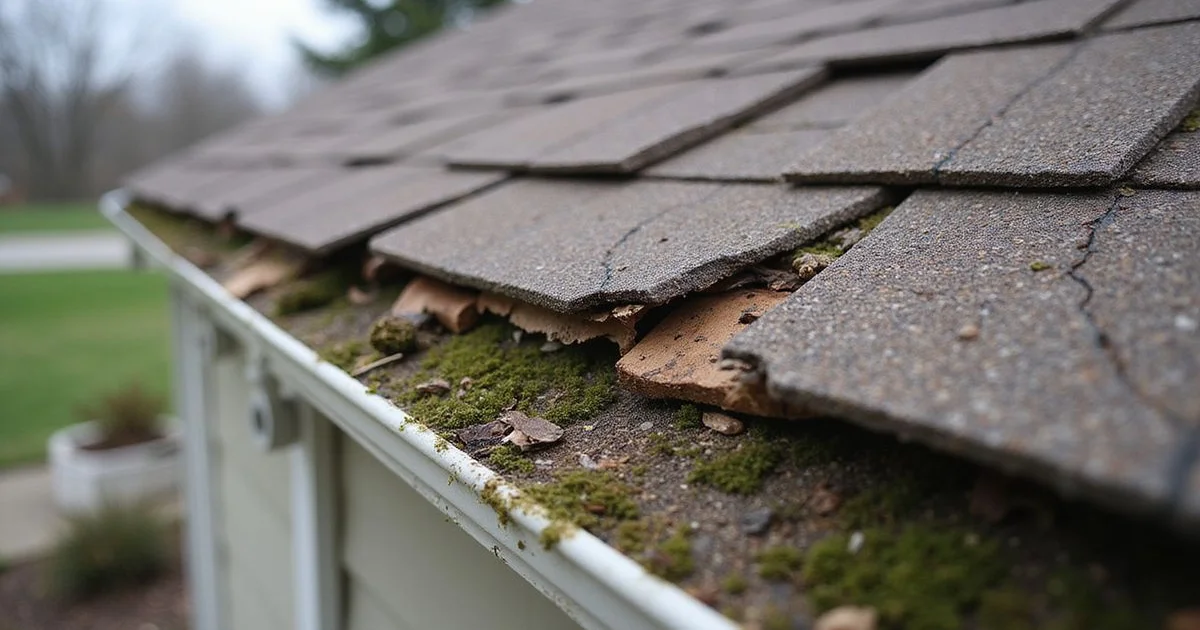
Even worse, it cooks your asphalt shingles from the inside out, causing them to curl, crack, and fail years ahead of schedule.
In winter, ventilation prevents warm, moist air from condensing on cold roof sheathing.
When your heated home air leaks into an unventilated attic, it meets the freezing roof deck.
The moisture condenses into water droplets or frost that soaks into the wood.
Over time, this creates mold, rot, and structural decay.
It also melts the bottom layer of snow on your roof, which refreezes at the eaves and forms destructive ice dams.
Problem 1: Blocked Soffit Vents
This is the most common issue we find during inspections.
Soffit vents are the intake side of your ventilation system.
They pull cool air into the attic from the eaves, which then rises and exits through ridge vents or gable vents at the top.
The problem happens when insulation installers blow in attic insulation without using baffles.
The insulation piles right up against the underside of the roof deck and completely blocks the soffit openings.
We also see homeowners accidentally block soffits when they add more insulation themselves.
How to Check: Stand outside and look up at your soffits. You should see perforated panels or continuous vent strips. Then, go into your attic with a flashlight and look toward the eaves. If you see a wall of insulation blocking light from the soffit area, you have a problem.
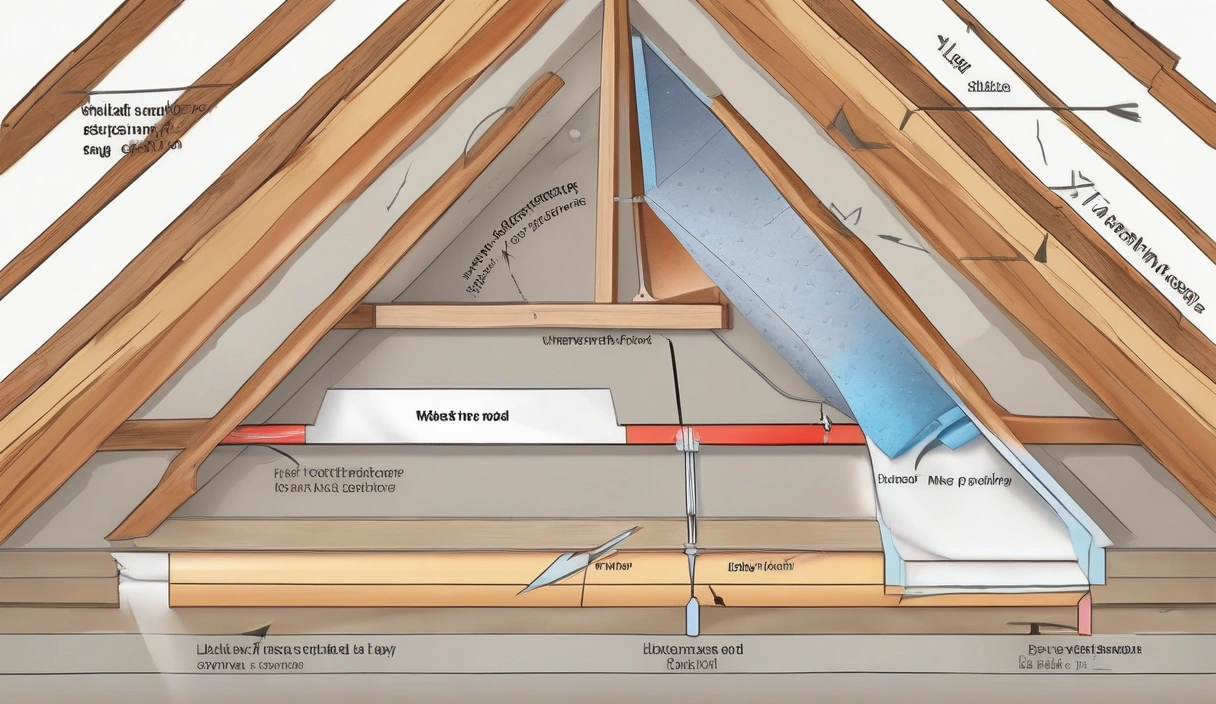
The Fix: Install rigid foam or cardboard baffle vents between each rafter bay. These create a 2-inch air channel from the soffit to the attic space. Then, pull back the insulation so it doesn't block the channel. This is a DIY project if you're comfortable in the attic, or a contractor can do it for $200-$600 depending on attic size.
Problem 2: Insufficient Ridge Ventilation
Ridge vents run along the peak of your roof and serve as the exhaust for your attic ventilation system.
Many older homes in Fairfield County were built with zero ridge vents.
Instead, they rely on a couple of small gable vents or a single turbine vent.
This creates a massive imbalance.
Even if your soffits are clear, the air has nowhere to escape.
The result is stagnant, superheated air that sits in your attic and bakes everything.
The building code standard is simple: you need balanced intake and exhaust.
For every square foot of soffit intake, you need an equivalent square foot of ridge or upper exhaust.
How to Check: Look at your roofline from the street. A proper ridge vent looks like a raised cap running the entire length of the peak. If you don't see this, you probably don't have adequate exhaust ventilation.
The Fix: Adding a ridge vent to an existing roof costs between $800 and $2,500 depending on roof size and accessibility. The contractor cuts a slot along the ridge, installs the vent, and caps it with special shingles. If you're planning a roof replacement soon, this is the perfect time to add it. The cost during a re-roof is minimal, usually $400-$1,200.
Problem 3: Mixing Ventilation Types
We see this constantly: a homeowner has a ridge vent, plus two turbine vents, plus a powered attic fan, plus gable vents.
They assume more is better.
In reality, multiple exhaust systems fight each other for airflow.
A powered attic fan can actually pull air backwards through your ridge vent instead of pulling it up from the soffits.
This creates chaotic air currents that reduce overall efficiency and can even pull conditioned air out of your living space through ceiling penetrations.
How to Check: Count the different types of exhaust vents on your roof. If you have more than one type (ridge vent plus power fan, or ridge vent plus multiple box vents), you likely have a conflict.
The Fix: Simplify your system. The best approach for most homes is a continuous ridge vent paired with soffit vents. Remove conflicting vents and seal the holes properly. If you have a powered attic fan, either remove it or ensure it's on a thermostat set to activate only above 110°F and is positioned to work with, not against, your passive ventilation.
Problem 4: Attic Moisture and Mold Growth
If you see black staining on your roof sheathing, fuzzy white growth on rafters, or rusty nails poking through the deck, you have a moisture problem.
This happens when warm, humid air from your home escapes into the attic.
Common sources include bathroom exhaust fans venting into the attic instead of outside, recessed light fixtures without proper sealing, and gaps around plumbing or electrical penetrations.
Once that moist air hits the cold roof deck in winter, it condenses.
Poor ventilation makes this worse because there's no airflow to carry the moisture out.
How to Check: Go into your attic on a cold winter day. Look for frost on the underside of the roof deck or on nail tips. Check for water stains, dark discoloration, or musty smells. All of these indicate condensation issues.
The Fix: This requires a two-part solution. First, stop the moisture at the source. Make sure all bathroom and kitchen exhaust fans vent to the exterior, not into the attic. Seal around ceiling penetrations with caulk or spray foam. Second, improve ventilation using the methods above. If mold is already established, you may need professional mold remediation and sheathing replacement, which can cost $2,000-$8,000 depending on severity.
Problem 5: Inadequate Ventilation for Complex Roof Designs
Hip roofs, dormers, and cathedral ceilings create ventilation challenges that simple gable roofs don't have.
Hip roofs have very short ridge lines, which limits ridge vent area.
Dormers create separate attic spaces that may not connect to the main attic airflow.
Cathedral ceilings have no attic at all, so ventilation must happen in the narrow space between the insulation and roof deck.
Many builders in Fairfield County don't account for these complications during construction.
The result is isolated pockets of dead air that trap heat and moisture.
How to Check: If you have a complex roof, hire a professional to perform a ventilation assessment. They'll calculate the square footage of your attic space and measure your actual intake and exhaust areas to determine if they meet code requirements.
The Fix: Solutions vary by design. Hip roofs may need additional gable vents or off-ridge vents. Dormers may require individual vents. Cathedral ceilings need continuous soffit-to-ridge airflow channels, which may require adding insulation baffles and additional ridge venting. Professional installation for complex designs typically costs $1,500-$4,000.
The Real Cost of Ignoring Ventilation Problems
Let's add up what poor ventilation actually costs you.
Energy Bills: According to the Department of Energy, proper attic ventilation can reduce cooling costs by 10-15%. For an average Fairfield County home spending $200 per month on summer cooling, that's $20-$30 per month, or roughly $150-$300 annually. Over a 20-year period, that's $3,000-$6,000. The U.S. Department of Energy recommends R-49 to R-60 attic insulation for Ohio's Climate Zone 5, which works in tandem with proper roof ventilation to prevent moisture accumulation and ice dams.
Shortened Roof Life: Asphalt shingles are rated for 25-30 years under ideal conditions. Chronic heat and moisture exposure can cut that lifespan to 15-18 years. Replacing a roof 10 years early means spending $12,000-$18,000 a decade sooner than necessary.
Structural Repairs: Rotted sheathing costs $70-$100 per sheet to replace. If poor ventilation has damaged 20-30 sheets, that's an additional $1,400-$3,000 on top of your roofing project.
Ice Dam Damage: A single severe ice dam can cause $5,000-$15,000 in interior water damage, insulation replacement, and ceiling repair.
When you total these costs, poor ventilation can easily cost $2,000-$2,500 per year in accelerated wear, wasted energy, and damage repairs.
How to Improve Your Attic Ventilation
Start with a professional inspection if you suspect problems.
We evaluate your entire system, check for balance between intake and exhaust, and identify specific issues.
For most homes, the ideal system includes continuous soffit vents paired with a ridge vent.
The general formula is 1 square foot of ventilation per 150 square feet of attic space, split evenly between intake and exhaust.
If you're planning to prepare your roof for winter, now is the time to address ventilation.
Proper airflow prevents the freeze-thaw cycle that creates ice dams and shortens roof life.
Get a Professional Ventilation Assessment
Don't wait until you see mold, ice dams, or premature shingle failure.
A ventilation assessment is quick, affordable, and can save you thousands in future repairs.
At Fairfield Peak Roofing, we provide detailed attic inspections throughout Lancaster and Fairfield County.
We calculate your attic square footage, measure existing ventilation, and give you a clear plan to fix any deficiencies.
Contact us today to schedule your inspection and protect your investment.
Concerned About Your Attic Ventilation?
Get a professional ventilation assessment from Lancaster's roofing experts.