Your contractor quoted you a "30-year architectural shingle." Your neighbor installed the exact same product 22 years ago and is already replacing their roof. Who's right? Both of them — but neither is giving you the full picture. National warranty ratings assume conditions that don't exist in central Ohio. Lancaster sits in a climate zone that punishes roofing materials in ways that homeowners in Arizona or Georgia simply don't face.
This guide gives you the real lifespan numbers for Fairfield County, the three climate factors that most aggressively shorten your roof's timeline, and the specific steps you can take to actually extend it. If you want to know whether your current asphalt shingle roof is on track or already falling behind, this is the article to bookmark.
Ohio vs. National Shingle Lifespan: The Real Comparison
Manufacturer warranties are marketing documents. They describe material defect coverage under ideal installation conditions — not how long a shingle will perform in central Ohio's climate. Here's what the numbers actually look like when you account for local conditions:
| Shingle Type | Manufacturer Warranty | National Average Lifespan | Ohio Realistic Lifespan |
|---|---|---|---|
| 3-Tab (standard) | 25 years | 20–22 years | 15–20 years |
| Architectural (standard) | 30 years | 25–28 years | 22–27 years |
| Architectural (premium) | 50 years | 30–35 years | 25–32 years |
| Impact-Resistant Class 4 | 30–50 years | 28–35 years | 26–33 years |
Note: "Ohio Realistic Lifespan" assumes average storm exposure (about 2 hail days per year in Fairfield County, per NOAA), proper attic ventilation, and professional installation. Roofs without adequate ventilation can lose 20–30% of the expected lifespan shown above.
Ohio consistently underperforms the national average for four compounding reasons:
- Freeze-thaw cycling: Central Ohio logs 40–60 freeze-thaw cycles per year, compared to 10–15 in moderate climates. Every cycle stresses the shingle mat at the microscopic level.
- Hail frequency: NOAA logged hail on about 2 days a year in Fairfield County from 2000 to 2025, with about 1 day a year at 1 inch or larger. Most hail days fall between April and July.
- Attic heat: Lancaster's average July high is 85°F, but attic temperatures regularly exceed 140°F during summer. This is the real enemy of the asphalt oils that give shingles their flexibility.
- UV exposure: Ohio gets less UV than the Southwest, but enough cumulative radiation over 20+ years to degrade granule adhesion and accelerate surface oxidation.
The 3 Climate Stressors That Define Ohio Shingle Life
Stressor 1: Freeze-Thaw Cycling
Fairfield County averages 40–60 freeze-thaw cycles per year. Each cycle expands and contracts the shingle mat — the fiberglass reinforcement beneath the asphalt — by fractions of a millimeter. Individually, those movements are invisible. Cumulatively, over 20 years, they create micro-fractures that compromise the waterproofing layer at the points of greatest stress.
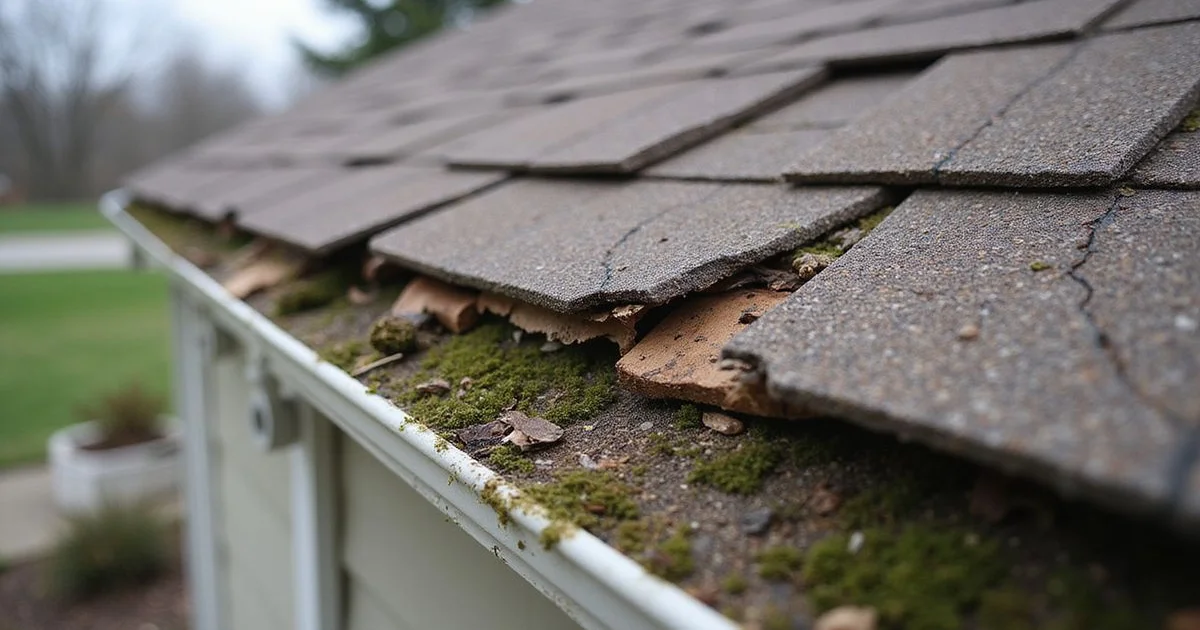
The most visible result is cracking shingles that follow the temperature gradient of the roof slope — typically starting on south-facing planes and working north. By the time cracking is visible from the ground, the underlying waterproofing has been compromised for years.
The fix at installation: proper ice and water shield application at least 24 inches past the interior wall line, as required by Ohio Residential Code Section R905.2.7. This doesn't stop freeze-thaw damage to the shingles themselves, but it does prevent the most common consequence — water infiltration at the eaves.
Stressor 2: Spring Hail Season
NOAA logged hail on about 2 days a year in Fairfield County from 2000 to 2025, and hail of 1 inch or larger on about 1 day a year. Each event that goes uninspected accelerates granule loss. Those ceramic-coated granules are the shingle's UV protection. Once they're stripped away, the asphalt beneath degrades rapidly — you're not looking at a cosmetic problem but at a roof that has had years removed from its effective life in a single afternoon.
The trap most homeowners fall into: a roof hit by two or three moderate hail events may look functional. No holes, no obvious leaks. But the granule loss is real, and the fiberglass mat underneath may have absorbed impact damage that only shows up as premature failure two or three years later.
The fix after any storm: a professional inspection that photographs and documents granule loss and impact bruising — not just visible holes. You need documentation before the insurance statute of limitations expires. In Ohio, that window is typically one year from the date of the weather event.
Stressor 3: Attic Heat Buildup
On a hot Lancaster summer day, attics can exceed 150°F. Shingles are designed for surface temperatures up to roughly 170°F, so they're not failing outright — but repeated thermal cycling at those extremes dries out the asphalt oils that give shingles their flexibility. The result is brittle shingles that crack in cold weather and can't recover their shape after wind deflection. A 25-year-old shingle system on a poorly ventilated attic can behave like a 35-year-old one.
The single most impactful thing you can do for shingle lifespan isn't a maintenance task — it's ensuring your attic has proper intake and exhaust ventilation before the shingles are even installed. A balanced system reduces peak attic temperatures by 20–30°F, which translates directly to years of additional shingle life.
The fix: a balanced ventilation system with at minimum 1 sq ft of net free ventilation per 150 sq ft of attic floor area. Soffit vents for intake, ridge vent or power vent for exhaust. A critical detail that often gets missed: many Ohio homes have soffit vents that were blocked when insulation was added. A $200 inspection and correction can add years to the roof's life. Ask about this specifically when you schedule an inspection.
3-Tab vs. Architectural Shingles in Ohio: Which Is Worth the Extra Cost?
In Ohio's climate, this is not a close call.
3-tab shingles are a single-layer product with a flat, uniform appearance. Wind ratings run 60–70 mph. They're the budget option, and they perform like one in Ohio's freeze-thaw environment. The single-layer construction means less mass to absorb temperature cycling, and the lower wind rating matters in a state where spring storms regularly push gusts past 60 mph. Installed cost in Fairfield County in 2026: $350–$450 per square (100 sq ft).
Architectural shingles (also called dimensional or laminate shingles) are a multi-layer product with a textured, dimensional appearance that mimics wood shake or slate. Wind ratings run 110–130 mph. The laminated construction gives them significantly better freeze-thaw durability — more mass, more flexibility at temperature extremes, and a stronger adhesive bond between layers. Installed cost in Fairfield County in 2026: $450–$650 per square.
The math on a 25-square (2,500 sq ft) roof: the premium for architectural over 3-tab runs roughly $2,500–$5,000. Given that architectural shingles outlast 3-tab by 5–10 years in Ohio's climate, and that the average roof replacement in 2026 runs $12,000 or more, that premium pays for itself before you'd need to reroof again — and that's without accounting for the lower insurance risk that comes with a higher wind rating.
If you're replacing a roof in Fairfield County in 2026, 3-tab is rarely the right call unless budget is the absolute constraint.
Brand Comparison for Ohio's Climate
The major manufacturers all produce products that perform adequately in Ohio. The differences at the margin matter less than installation quality, but they do matter:
- GAF Timberline HDZ: The most widely installed asphalt shingle in Ohio, and for good reason. Excellent granule adhesion, and the WindProven unlimited wind warranty is available when installed by a GAF Certified Contractor. Installed cost: approximately $480 per square.
- Owens Corning Duration: The SureNail Technology nailing strip reinforces wind performance — a meaningful advantage in Ohio spring storms. Solid Ohio track record. Installed cost: approximately $500 per square.
- CertainTeed Landmark: Slightly higher price point, good cold-temperature flexibility ratings, and a strong warranty program. Installed cost: approximately $520 per square.
- Generic or off-brand products: Not recommended for Ohio. Cold-weather flexibility ratings and wind adhesion specifications are often not published or independently verified. The savings at purchase are frequently erased by shortened lifespan.
One thing to keep in mind: brand matters less than installation quality. A well-installed mid-tier product will outlast a poorly installed premium product every time. When evaluating contractors, ask to see the installation crew's experience with the specific shingle — not just the product spec sheet.
How to Extend Your Current Roof's Lifespan
If your roof is under 15 years old and in reasonable shape, these steps can meaningfully extend its service life:
- Attic ventilation check: This is the highest-leverage action on the list. Call for an inspection specifically focused on attic airflow. Blocked soffit vents are common in Ohio homes where insulation was later added to the attic floor. Correcting this costs hundreds, not thousands.
- Annual gutter cleaning: Overflowing gutters back water up under shingles at the eaves, accelerating the exact freeze-thaw damage described above. Clean them in late fall after leaf drop, and again in spring.
- Post-storm visual inspection: After any significant storm, check your gutters for heavy granule accumulation. From the ground with binoculars, note any areas of discoloration or missing shingles. Document with photos.
- Tree trimming: Overhanging branches within 6 feet of the roof deposit organic debris and create shaded areas that stay damp longer — the ideal environment for moss and algae growth, both of which accelerate granule loss and surface degradation.
- Address minor leaks immediately: One unchecked leak can rot a 4x8 sheet of decking. What would have been a $150 repair becomes a $1,200 repair or worse. Don't wait for the drip to get worse.
- Inspect flashing every 5 years: Chimney and wall flashing degrades faster than shingles and is the most common source of leaks in Ohio homes. It's also one of the most cost-effective repairs when caught early.
A professional roof inspection every 3–5 years gives you a documented baseline and catches the kind of issues that are invisible from the ground but well within the repair window.
When to Replace vs. Repair
The decision framework most contractors use comes down to age, damage extent, and cumulative repair costs:
- Under 15 years old, damage isolated to less than 30% of the surface: Repair is likely cost-effective. The shingles still have significant life remaining, and localized damage doesn't justify full replacement.
- 15–20 years old, recurring leaks, or storm damage affecting 30%+ of the surface: The math often favors replacement. You're spending real money on a system that's in the back half of its life, and each additional repair buys less time.
- Over 20 years old: Repair costs frequently approach replacement cost when you factor in the age of surrounding materials. Replacement is usually the smarter financial decision.
- Two layers already on the roof: Replacement is the only legal option. Ohio code prohibits a third layer of shingles — full tear-off is required.
- Visible decking damage: Replacement is required regardless of shingle age. Rotted or structurally compromised decking cannot be patched around.
Frequently Asked Questions
How long do asphalt shingles last in Ohio?
In Ohio's climate, standard 3-tab asphalt shingles typically last 15–20 years. Architectural (dimensional) shingles last 22–30 years with proper maintenance. These figures are lower than national manufacturer averages because Ohio's 40+ freeze-thaw cycles per year, spring hail events, and summer heat stress accelerate shingle degradation compared to milder climates.
Do 30-year shingles actually last 30 years in Ohio?
Rarely. The "30-year warranty" on architectural shingles refers to the manufacturer's material defect warranty under ideal conditions — not an actual lifespan guarantee in harsh climates. In Ohio, expect 22–28 years from premium architectural shingles with good attic ventilation, proper installation, and average storm exposure. Roofs without adequate ventilation can see 25–30% shorter lifespans.
What shortens asphalt shingle lifespan most in Ohio?
The top three factors are: (1) Poor attic ventilation — trapping heat bakes shingles from underneath, causing premature brittleness. (2) Ice dams — repeated freeze-thaw cycles at the eaves force water under shingles and deteriorate the adhesive bond. (3) Hail damage. NOAA logged hail on about 2 days a year in Fairfield County from 2000 to 2025, and each hail day can accelerate granule loss and weaken the fiberglass mat.
What are the signs that asphalt shingles are near end of life?
Shingles approaching end of life in Ohio typically show: curling or cupping edges, widespread granule loss (heavy accumulation in gutters), cracking or splitting along shingle lines, exposed dark asphalt areas where granules have worn away, and a generally weathered appearance compared to a newer roof. If you see three or more of these signs on a roof over 18 years old, replacement is more cost-effective than continued repairs. See our full breakdown of warning signs you need a new roof.
Can I extend the lifespan of my asphalt shingles?
Yes — attic ventilation is the single biggest lifespan lever. A properly ventilated attic keeps shingle temperatures lower in summer and prevents ice dam formation in winter. Cleaning gutters twice a year prevents standing water that backs up under shingles. Promptly repairing small leaks prevents decking damage that spreads and compromises the roof system. Applying zinc strips near the ridge can slow moss and algae growth, which accelerate surface degradation.
Get an Honest Assessment for Your Fairfield County Roof
If your Fairfield County roof is over 18 years old, or if you're unsure whether recent storm damage has shortened its effective life, a professional inspection is the only way to know for certain. At Fairfield Peak Roofing, we photograph the entire roof, document any storm damage, and give you an honest assessment — not a sales pitch. If a repair buys you five more years safely, we'll tell you that. Call 877-367-1885 or schedule an inspection online.
Need Help with Your Roof?
Get an inspection and estimate from Lancaster's most trusted roofing team.