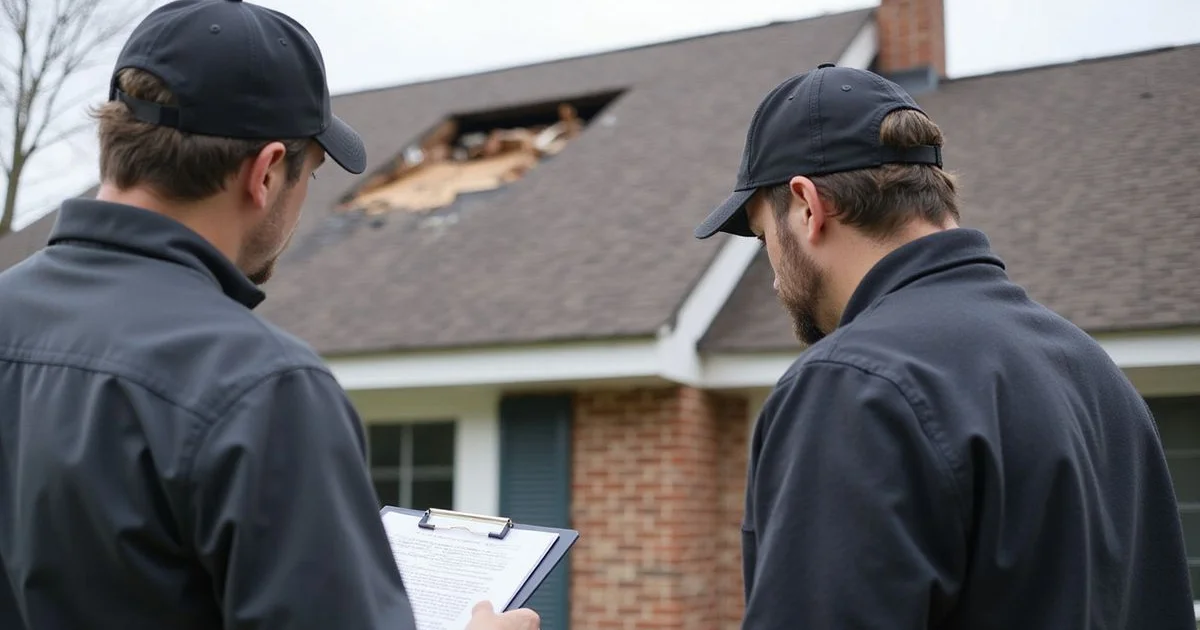
It's midnight. A storm just passed, and you hear dripping from the ceiling. Or you go outside after a severe weather event and find shingles scattered across your yard, with a dark patch on your roof where there used to be coverage.
The next 3 to 6 hours matter more than most homeowners realize. Water intrusion into roof decking begins destroying the structural wood within hours — not days. The moment moisture reaches the OSB or plywood beneath your shingles, rot and mold can begin setting in before the sun comes up.
This step-by-step guide tells you exactly what to do from the moment you discover an emergency: how to protect your interior right now, how to safely assess the exterior, when and how to tarp, how to document everything for insurance, and how to get a licensed Ohio contractor on-site fast.
Step 1 — Immediate Interior Response
Before you go outside, handle what's happening inside the house. Interior water damage can escalate into a serious hazard if you don't address it in the first few minutes.
- Place buckets or containers under any active drips. Use towels or tarps on the floor around each bucket to absorb splash and overflow.
- Move valuables, electronics, and furniture away from the affected area. Electronics and water are a bad combination, and wet furniture can develop mold within 24 hours.
- If you see a ceiling bulging with trapped water, carefully poke a small pencil-diameter hole at the lowest point of the bulge. This allows controlled drainage. A full ceiling collapse is far worse than a managed release hole — it dumps everything at once and can pull down drywall across a wide area.
- Turn off electricity to any rooms with active water intrusion. Go to your circuit breaker or main panel and cut power to the affected zones. Water contacting electrical fixtures or wiring is a life-safety hazard — take it seriously.
- Document with photos and video immediately. Do this before you move anything. Timestamp everything. Your insurance documentation starts the moment you discover the damage.
Important: Do not remove ceiling material until the leak source above is addressed. Opening a ceiling without stopping the leak just redirects water to new interior surfaces and compounds the damage.
Step 2 — Exterior Assessment (Ground Level Only)
Once you've stabilized things inside, assess the exterior — but only from the ground. This is not the time to climb a ladder onto a storm-damaged roof.
Wait until the storm has fully passed. No lightning within 5 miles, no significant wind. If it's dark, use a flashlight or wait for daylight. Walking the perimeter in low visibility increases the risk of missing critical damage.
Walk the full perimeter of your house and look for:
- Shingles on the ground or in your yard
- Exposed black underlayment patches visible from ground level
- Missing ridge cap sections (the capping along the peak)
- Displaced or buckled flashing around the chimney, walls, or pipe penetrations
- Bent, torn, or pulled-away gutters
Binoculars are genuinely useful here. A pair lets you look at flashing details, lifted shingle edges, and exposed fasteners from a safe distance. Take photos of everything you observe — these become your insurance documentation.
Then check your attic from inside. Turn off artificial lights during daylight and look for new points of light coming through. Check the wood framing for fresh water stains or wet spots.
Safety warning: Do not get on the roof yourself during or immediately after a storm event. The structure may be weakened, the surface is wet, and if any wind remains in the area, conditions are actively dangerous. Even an experienced roofer won't go up in those conditions.
Step 3 — Emergency Tarping (When and How)
Tarping is the most important thing you can do to stop ongoing damage while you wait for a contractor. Know when it's necessary and how to do it correctly.
When to tarp:
- Exposed decking is visible from the ground (black tar paper or bare wood)
- Missing shingles covering more than 1 to 2 square feet
- Displaced flashing around a chimney, wall, or penetration
- Rain is forecast within the next 12 hours
How to tarp properly:
- Purchase 6-mil polyethylene tarps at minimum — available at Home Depot, Lowe's, or Menards in Lancaster. Get one that's 20 to 30 percent larger than the damage area.
- From a ladder at the eaves, slide or feed the tarp up and over the ridge so it extends 3 to 4 feet past the ridge onto the far slope. This ensures water sheds away from the damage zone on both sides.
- Do not pull the tarp tight using ropes attached to your gutters. This damages gutters and the tarp will fail at the attachment point in rain and wind.
- On the ridge side: fold the tarp's leading edge over a 2x4 board and screw or nail through both into the ridge decking. The board distributes load and prevents tear-through.
- On the eave side: fold the tarp edge under another 2x4 and secure it to the fascia or decking.
- For side edges: fold and secure with additional 2x4s, screwed or nailed down.
- No duct tape. Duct tape fails within hours in rain. It is not a roofing material.
- Photograph the completed tarp installation from multiple angles for your insurance file.
When to call a contractor instead: If the damage is extensive, the roof pitch is steep (greater than 7:12 pitch), or you have any doubt about structural integrity, skip the DIY and call Fairfield Peak Roofing at 877-367-1885 for professional emergency tarping service.
Step 4 — Documentation for Insurance
Thorough documentation is what separates a smooth insurance claim from a delayed or disputed one. Start documenting before anything changes, and don't stop until the adjuster has visited.
What to capture:
- Exterior: Full perimeter walk video, close-ups of all visible damage, photos of any shingle debris on the ground
- Interior: All water staining, active drip points, any damaged belongings
- Tarp installation: Before and after photos of the tarp placement
- Weather data: Screenshot your local National Weather Service forecast history at weather.gov, or use your weather app's timestamp for the date of the event. NWS storm archives by county are available at weather.gov under past weather. This establishes that a qualifying weather event occurred.
Text or email the photos to yourself immediately. This creates a timestamped evidence record that's independent of your phone's camera roll.
What not to do: Do not throw away damaged materials. Do not discard shingles, sections of flashing, or anything else that came off the roof. Your adjuster may want to inspect them in person.
Call your insurance company to report the event within 24 hours of discovery. You're not filing the full claim yet — you're creating the official record. Ask for a claim number and confirm the date of loss. Write both down.
Step 5 — Getting a Contractor in Ohio During Storm Season
Speed matters, but so does vetting. After a major Ohio storm, unlicensed out-of-state contractors flood the area. Here's how to find someone legitimate fast.
- Start with contractors you already know. Did someone do good work on your roof before? Call them first.
- Fairfield Peak Roofing emergency line: 877-367-1885. Contractors in our network prioritize active emergency calls and maintain same-day tarping availability when conditions allow.
- National Roofing Contractors Association member locator: nrca.net — this is a national directory of credentialed contractors.
- Ohio OPLC license verification: license.ohio.gov — verify any contractor's Ohio registration before they set foot on your roof. This takes 2 minutes and protects you from unlicensed work that won't pass inspection.
During peak spring storm season in Ohio, expect response times of 24 to 72 hours for tarping and 1 to 4 weeks for permanent repair scheduling. This is normal — do not let urgency push you into signing with an unverified contractor.
What to tell a contractor when you call:
- Describe the damage briefly: missing shingles, active leak, exposed decking, or visible structural issues
- Confirm they're Ohio-licensed and insured — ask for their license number
- Ask specifically whether they provide a written scope of damage for insurance documentation
- Get an emergency response quote before they arrive. Verbal agreements don't hold.
Step 6 — What Comes After Emergency Repair
Emergency tarping or temporary repair is not the end of the process. Here's the full sequence from emergency to permanent fix.
- Insurance adjuster visit — typically 3 to 10 days after you report the event. Have your photo documentation ready and be present for the inspection if at all possible.
- Contractor's written scope of damage — have this ready before or during the adjuster visit. A contractor who provides a detailed written scope is a significant asset when negotiating with the insurance company.
- Adjuster's estimate — this is what the insurance company says they'll pay. Review it carefully.
- Supplement filing if needed — if the adjuster's estimate and your contractor's scope disagree significantly, the contractor can file a supplement. This is a standard, legitimate process. It happens regularly on storm damage claims in Ohio.
- Insurance approval and scheduling — once the scope is agreed upon, permanent repair is scheduled.
- Permit acquisition — Lancaster and most Fairfield County municipalities require permits for roof replacement. Budget 3 to 10 business days for permit processing before work can begin.
- Permanent repair or replacement — the final step.
Realistic timeline for spring 2026 storm season in Ohio: emergency to permanent repair runs 3 to 8 weeks total, depending on damage extent and contractor availability.
Temporary Repairs That Won't Cost You Your Claim
A common fear is that doing anything before the adjuster visits will hurt your claim. That's not how it works. Your policy has a "duty to mitigate" clause — it actually requires you to take reasonable steps to prevent further damage.
What you can do freely:
- Interior leak management (buckets, towels, ceiling drain holes) — always appropriate, always documented
- Tarping the damaged area — expected, covered, and documented
- Moving furniture and covering belongings — expected and appropriate
- Removing loose debris from accessible areas (fallen branches, scattered shingles from the ground)
What to avoid before the adjuster visits:
- Do not attempt shingle repairs with roofing cement or tar without contractor guidance. Improper patch repairs can be cited by an adjuster to limit further claims.
- Do not install replacement shingles yourself before the adjuster has documented the damage. It changes the visible damage picture and can complicate the claim.
- Do not allow any contractor to begin permanent work before you have the insurance adjuster's written estimate in hand. Once permanent repairs begin, the documented damage picture is gone.
Frequently Asked Questions
What do I do if my roof is leaking right now?
Immediately: place buckets under active drips to protect flooring. Move furniture and valuables away from the leak area. If water is pooling on a flat ceiling, carefully poke a small hole at the lowest point of the bulge to drain it in a controlled stream — this prevents ceiling collapse. Then go outside when safe and identify the leak source, looking for missing shingles, displaced flashing, or obvious damage. Call a licensed Ohio roofing contractor for emergency repair. If conditions are safe and you have experience working at heights, temporary tarping can buy time until the contractor arrives.
How much does emergency roof repair cost in Ohio?
Emergency roof repairs in Ohio typically range from $300 to $1,500 for minor repairs — sealing a flashing failure, replacing 2 to 5 missing shingles, or re-securing a lifted ridge cap. Major storm damage repairs run $2,000 to $8,000 or more. Emergency tarping by a contractor runs $200 to $800 depending on roof size and damage extent. After-hours response (nights and weekends) often carries a $150 to $300 premium over normal business hours rates. If the damage is storm-related, most of these costs should be covered by your homeowners insurance minus your deductible.
Can I do emergency roof repairs myself?
Minor temporary repairs are within most homeowners' capabilities: interior leak management (buckets, towels, ceiling drain hole) and ground-level documentation (photos, video). Tarping from a ladder is manageable for physically capable homeowners with the right materials. However, getting on a damaged roof is dangerous — the structure may be compromised, especially after wind events. For any repair that requires stepping onto the roof surface, a licensed contractor with proper safety equipment is the safer choice and often the more cost-effective one, particularly for insurance documentation purposes.
How fast can I get an emergency roofer in Ohio?
During normal conditions, most licensed Ohio roofing contractors respond to a genuine emergency within 2 to 6 hours for tarping and within 1 to 3 business days for permanent repair. During active storm seasons — spring in Ohio — response times extend to 24 to 72 hours for tarping and 2 to 4 weeks for permanent repair. Fairfield Peak Roofing maintains emergency response availability at 877-367-1885. If you need help during peak storm season, your insurance company may also have an emergency contractor network that can accelerate response.
Will emergency roof repairs affect my insurance claim?
No. Emergency repairs that protect your home from further damage are covered and expected by your insurance policy. Your policy's "duty to mitigate" clause actually requires you to take reasonable steps to prevent further damage. Keep all receipts from emergency materials and labor, and document everything with photos before, during, and after temporary repairs. This documentation supports your claim — it doesn't undermine it.
Roof Emergency? Call Us Now.
Fairfield Peak Roofing handles emergency repairs throughout Lancaster, Pickerington, Reynoldsburg, Canal Winchester, and all of Fairfield County. We answer emergency calls, provide same-day tarping when available, and give you a written scope of damage for insurance purposes.