Central Ohio's Second Windstorm in Three Weeks Tests Repaired Roofs
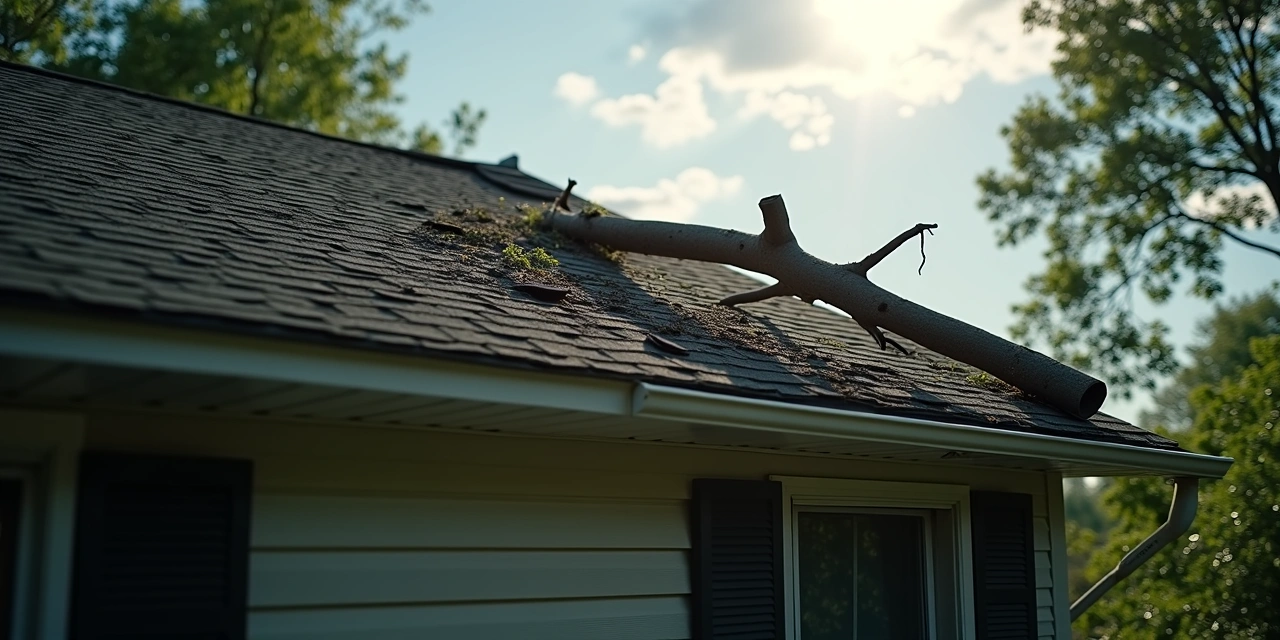
Central Ohio got hit again. Wind gusted to 82 mph at John Glenn Columbus International Airport on August 11, 2026. The National Weather Service confirmed the reading, per WOSU Public Media.
A second, separate round hit the same areas that afternoon.
AEP Ohio outages nearly doubled that day. The utility reported around 190,000 customers out after the first round. That climbed past 290,000 once the second round hit, per 10TV.
The utility named Crooksville, Columbus, Newark, and Lancaster as its hardest-hit areas. In Lancaster, a tree fell onto the second story of a home. A tarp now covers the damage.
This Wasn't Central Ohio's First Storm This Summer
Three weeks earlier, a microburst tore the roof off a Newark church. We covered that July 21 event in detail. The roof had been replaced about a year before the storm hit.
Age was not the failure point that day. A gap in fastening or flashing was enough for wind to peel the roof back. That lesson matters more now, because the same region just took a second hit.
Why the Second Storm Is the Dangerous One
Wind does not need to fully remove a shingle to cause damage. A strong gust can lift a shingle at a ridge or roof edge. It breaks the factory seal strip underneath.
The nails holding it down loosen too. Then the wind drops. The shingle settles back into roughly its original position.
From the ground, that roof looks untouched. No missing shingles. No obvious gap.
But the bond that keeps it watertight is already broken. A visual check from the driveway will not catch it.
That is the mechanism worth understanding after two wind events in three weeks. A roof exposed to the July storm and never inspected went into August already weakened. The second storm did not need to work as hard to finish the job.
How an unrepaired first hit sets up a second one to fail. Roofs that get inspected after Storm 1 hold. Roofs that don't sit exposed until Storm 2 finds the same weak point.
The Flooding Was a Separate, More Severe Disaster
Not every part of central Ohio dealt with wind that day. Southeastern Ohio saw the worst of it.
Perry and Muskingum counties took on 5 to 8 inches of rain. Flooding hit towns including Roseville, Crooksville, and New Lexington.
Governor Mike DeWine declared a state of emergency for those two counties. He activated 40 Ohio Army National Guard members, according to Watchers.News.
One person died in Roseville. The death happened during a medical emergency. Flooded roads kept first responders from reaching them in time.
Signs Your Roof Took the First Hit Without You Knowing
If your roof sat under either storm, look for a few specific things this week. A ridge cap that looks slightly uneven or shifted, even by an inch. Shingles near a roof edge sitting a little proud of the row beside them.
Check gutters for a heavier-than-usual amount of granules. That is a sign a seal has already broken loose somewhere above. Flashing around a chimney or vent pipe that looks nudged out of line counts too.
None of these read as dramatic from the ground. That is exactly the point.
What an Inspection Actually Checks For
A roof inspection after a repeat storm event is different from a routine one. An inspector is not just scanning for missing shingles. They test seal strips by hand and check ridge cap fastening.
They also look at flashing seams a homeowner would never climb up to check. That is how you catch wind damage early instead of during the next heavy rain.
Two storms in three weeks add up. An inspection now costs far less than the water damage a third storm could cause.
Next Move
Don't wait for a leak to tell you something is wrong. Walk your yard this week.
Look up at your roofline from a few different angles. Check the ridge and both edges facing the street.
Were you in the path of either the July or August storms? Get a same-week inspection before the next system moves through central Ohio.
Get a Free Roof Inspection: 877-367-1885
Prefer to schedule online? Check Availability or submit a Request Estimate form and we'll follow up within 24 hours.
Related articles:
Newark Church Roof Torn Off: Your 72-Hour Storm Damage Checklist
How Wind and Hail Damage Cut an Ohio Roof's Lifespan Short
Emergency Roof Repair Guide for Ohio Homeowners
Sources:
WOSU Public Media: High winds knock out power to thousands, cause extensive damage across central Ohio
10TV WBNS: Severe storms cause widespread damage across central Ohio on Tuesday
Watchers.News: State of emergency declared in Perry and Muskingum counties after flooding leaves one dead, Ohio
Fairfield Peak Roofing: Newark Church Roof Torn Off: Your 72-Hour Storm Damage Checklist