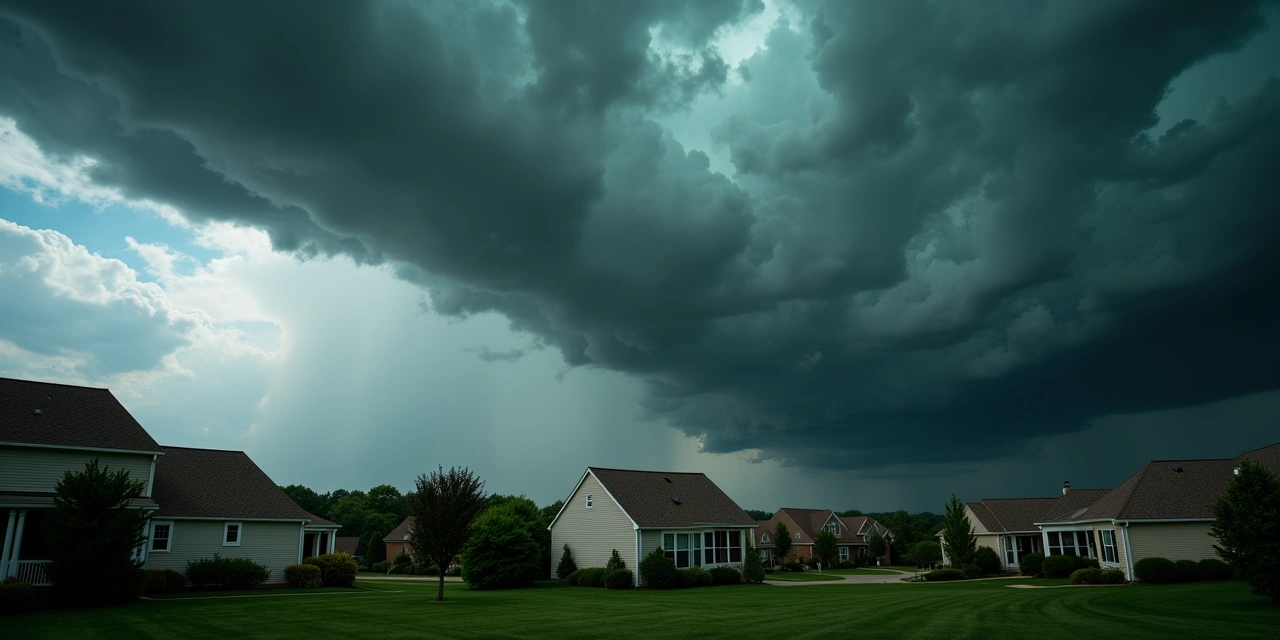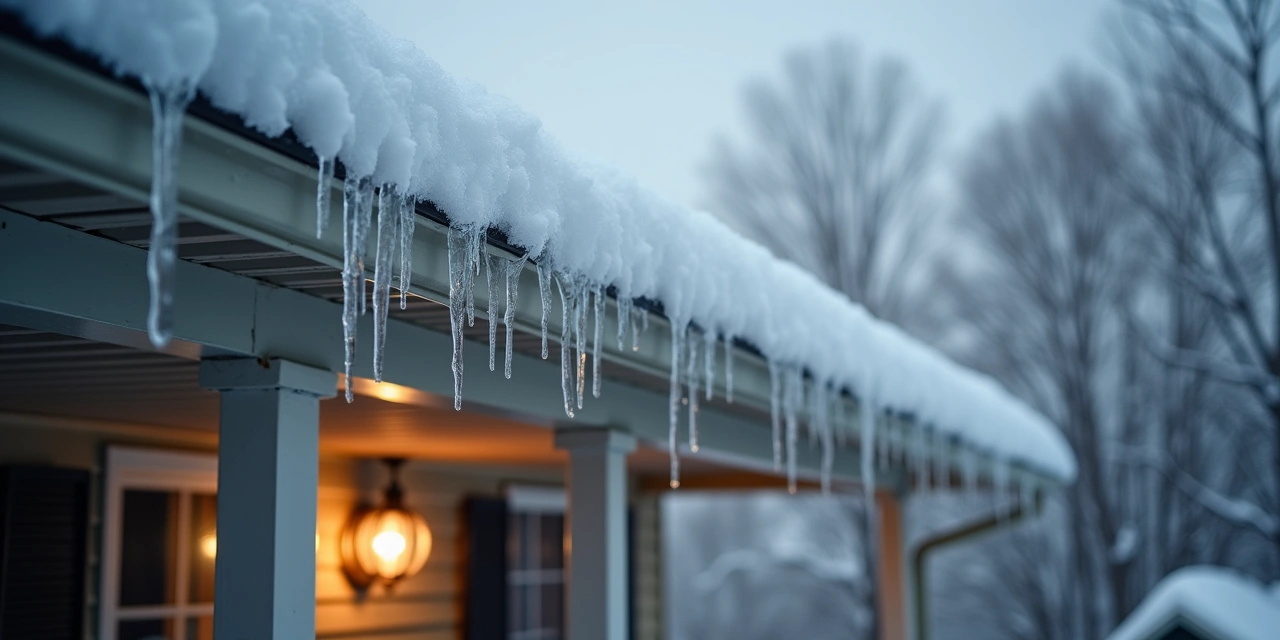
Fairfield County gets 40 to 55 freeze-thaw cycles per year according to NOAA climate data. That number surprises most homeowners. People assume the real roof killers are blizzards or extreme cold. They're not. It's the repeated cycling — freezing at night, thawing by afternoon, freezing again — that cracks shingles, separates flashing, and sets up the conditions for ice dams that drive water into the structure. Lancaster, Granville, Pataskala, and Reynoldsburg all sit in the same climate band. Every home in this region faces the same mechanical stress every winter.
This guide explains exactly what's happening to your roof in Ohio winters, what to inspect before cold sets in, and what a complete fall prep checklist looks like for Fairfield County homeowners.
Why does Ohio's freeze-thaw cycle damage roofs more than just cold weather?
Sustained cold temperatures are actually gentler on roofing materials than repeated cycling. When a roof stays frozen, water in any existing cracks or gaps simply sits as ice. When a roof repeatedly freezes and thaws, that water expands and contracts with each cycle — and each cycle widens the opening a little more.
Asphalt shingles become brittle in cold temperatures. The granule surface that protects against UV and mechanical wear starts to shed faster when the binder beneath it cycles between rigid and flexible. Over several winters, this accelerates the granule loss that signals the end of a shingle's useful life.
Flashing is the most vulnerable component. Metal expands and contracts with temperature. Flashing joints at chimneys, skylights, and valleys flex with every cycle. Over years, this works the sealant and caulk loose at the seams — creating entry points for water that weren't there when the roof was new.
The underlayment beneath the shingles provides a secondary barrier, but it has its own lifespan. Older felt underlayment becomes brittle and cracks. Synthetic underlayment holds up better across temperature extremes, which is why it's now the standard on new Ohio installations.
One degree of temperature difference matters more than you'd think. A 1°F shift in average attic temperature can move the freeze-thaw frequency at the roof deck by roughly 20%, meaning that small improvements in attic insulation can meaningfully reduce the number of damaging cycles your shingles experience each winter.
What is an ice dam and why does it happen in Fairfield County?
An ice dam is a ridge of ice that forms at the eave edge of the roof and prevents meltwater from draining off. Here's the chain of events that creates one.
A warm attic heats the roof deck from below. Snow on the upper roof melts, even when outdoor temperatures are below freezing — because the deck is above 32°F from the heated air below it. That meltwater flows down the slope until it reaches the eave overhang, which sits above unheated soffit space and is much colder. There it refreezes into a ridge of ice.
As more meltwater arrives and can't get past the ice ridge, it backs up behind the dam. It searches for any path through the roofing system: under lifted shingles, through cracked flashing, past inadequate underlayment. Once it penetrates the deck, it can cause $10,000 or more in interior damage — ceiling collapse, insulation saturation, mold, and structural rot — before the homeowner notices anything from inside the house.
Fairfield County's 40 to 55 freeze-thaw cycles per year and 22 to 28 inches of annual snowfall in the Lancaster area create exactly the conditions for ice dams to form repeatedly. Homes with older insulation, poor attic ventilation, or roofs installed without proper ice and water shield are especially vulnerable.
What should you inspect and fix before Ohio winter sets in?
A fall inspection catches the problems that turn into winter emergencies. Do this every October in Fairfield County. You can do the ground-level checks yourself. The roof surface and attic need a professional eye.
From the ground:
- Walk the perimeter and look for missing, curled, or cracked shingles visible from the ground.
- Check gutters for separation from the fascia, visible sagging, or sections pulling away.
- Look at the flashing around any chimneys, skylights, or dormers from the ground if visible — rust staining or lifted edges are warning signs.
- Check the drip edge for rust or bent sections, especially at corners.
From the attic:
- Look for daylight penetrating through the roof deck — any pinhole of light is a water entry point.
- Check for water staining on rafters or sheathing from last winter's ice dam events.
- Verify insulation is evenly distributed and not blocking soffit vents — blocked soffit vents are a leading cause of poor attic ventilation.
- Look for condensation signs: frost on the deck in cold weather, dark staining on wood members.
Professional inspection items:
- Flashing integrity at all penetrations and valleys.
- Condition of underlayment at visible edges and exposed areas.
- Shingle granule loss assessment — beyond what's visible from the ground.
- Ridge and soffit ventilation calculation to confirm adequacy for attic square footage.
For professional inspection services in Lancaster and across Fairfield County, see our roof repair page or schedule through our contact form.
How do you prevent ice dams on a Fairfield County roof?
Ice dam prevention comes down to two things: keeping the attic cold and keeping water out when ice does form.
Keep the attic cold through proper insulation and ventilation. The goal is to keep attic temperature below 30°F at the roof deck during cold weather — cold enough that the deck doesn't melt snow from below. This requires adequate insulation between the living space and the attic floor, plus balanced ridge and soffit ventilation that continuously flushes warm air out before it can accumulate.
Ventilation is the part homeowners most commonly neglect. Soffit vents blocked by insulation, ridge vents packed with debris, or inadequate net free area for the attic volume all compromise the system. An attic that's 10-15°F warmer than it should be will generate ice dams on almost any roof.
Install or verify ice and water shield at the eaves. Ohio Building Code requires ice and water shield extending at least 24 inches from the eave edge on all new residential roofing. This self-sealing membrane is the last line of defense when an ice dam forms and water backs up behind it. Homes that had roofing installed before this was a code requirement may not have it. If your home is more than 20 years old and hasn't had a full replacement, this is worth checking.
Keep gutters clear. Clogged gutters accelerate ice dam formation at the eave zone. Water that can't drain pools at the gutter, wicks back under the shingle edge, and freezes. Clean gutters after the last major leaf drop of fall — typically late October to mid-November in the Lancaster and Fairfield County area. For the full range of ways failing gutters damage a roof beyond ice dams, see our gutter problems guide.
Consider roof heat cables as a last resort. Plug-in heat cables zigzagged along the eave line prevent ice from accumulating in problem zones. They're not a substitute for proper insulation and ventilation — they treat the symptom rather than the cause — but they can protect a problematic eave zone while you address the underlying issues.
What is the fall roof prep checklist for Ohio homeowners?
Run through this list every October. It takes a few hours and prevents problems that can cost thousands to fix.
October / Early November:
- Clean gutters after the last major leaf drop. This is the single most neglected fall maintenance item in Fairfield County.
- Check downspout extensions to ensure they're directing water at least 6 feet from the foundation.
- Trim any overhanging tree branches that are within falling distance of the roof — ice and snow loads break limbs that otherwise wouldn't fall.
- Inspect attic insulation for even coverage and confirm soffit vents are not blocked.
- Check attic ventilation is functioning by confirming airflow at ridge and soffit on a mild day.
Before First Freeze:
- Walk the ground perimeter for visible shingle damage, missing granules in gutters, and flashing issues.
- Confirm the ice and water shield zone at the eaves is in good condition (requires accessing the roof edge or having a professional check).
- Check all skylight and chimney flashing seals. These are the most common winter leak entry points.
- Stock a roof rake rated for your roof pitch if you have low-slope sections (under 6/12 pitch) that accumulate heavy snow loads.
During Winter:
- After major snow events, use a roof rake to remove snow from the lowest 3 to 4 feet of the slope. Only do this from the ground on slopes under 6/12. Never get on a snow-covered roof.
- Watch for icicles forming at gutters — they signal a developing ice dam condition.
- If interior ceiling staining appears mid-winter, treat it as an active leak and call a professional.
When should you call a professional for winter prep?
Call a roofing professional before winter if any of the following apply.
Your roof is more than 15 years old and hasn't been professionally inspected in the past two years. Shingles approaching end-of-life are more susceptible to freeze-thaw cracking, and a professional can tell you how much service life is left.
You had visible ice dams or interior ceiling staining last winter. That's evidence the current insulation and ventilation system isn't adequate. A professional can assess the attic conditions and recommend corrections before the next season.
You see granule accumulation in gutters during the summer or fall. Heavy granule loss signals shingles that are nearing failure and won't survive another winter in good condition. This is worth addressing before freeze-thaw stress accelerates the damage.
You notice lifted, curled, or missing shingles. A single missing shingle before winter can lead to decking damage, rot, and interior water damage over one season. Spot repairs in fall are far cheaper than emergency calls in February. See our roof repair signs guide for what to look for.
Any flashing at chimneys or skylights shows rust, separation, or caulk cracking. Water follows the path of least resistance — and deteriorated chimney flashing is the most common source of winter leaks in Fairfield County homes.
Frequently Asked Questions
How many freeze-thaw cycles does Lancaster, Ohio get per year?
According to NOAA data, Fairfield County averages 40 to 55 freeze-thaw cycles per year. This is significantly higher than regions that stay frozen for extended periods. The repeated cycling is what drives progressive shingle cracking, flashing separation, and ice dam formation on Central Ohio roofs.
What causes ice dams on Ohio roofs?
Ice dams form when heat escaping from a warm attic melts snow on the upper roof. That meltwater flows down to the colder eave overhang, which sits above unheated space, and refreezes into a ridge of ice. Water backing up behind the dam forces under shingles and into the structure. The root cause is inadequate attic insulation and ventilation. Ice dams are preventable with proper attic thermal management.
Is ice and water shield required in Ohio?
Yes. Ohio Building Code requires ice and water shield extending at least 24 inches from the eave edge on all new residential roof installations. This provides a self-sealing membrane barrier at the most vulnerable zone for ice dam intrusion. Homes with older roofs that predate this requirement may not have it — a professional inspection can confirm.
When should I clean my gutters in Ohio for winter prep?
Clean gutters after the last significant leaf drop in your area — typically late October to mid-November in the Lancaster and Fairfield County area. Clogged gutters cause water to back up at the eave zone and contribute directly to ice dam formation. A second cleaning in spring after winter storm debris is also recommended.
Need Help with Your Roof?
Get a free, itemized estimate from Fairfield County's trusted roofing team.
— see below