The most expensive mistake Ohio homeowners make with their roofs isn't ignoring damage. It's misreading it — either replacing a roof that had years of life left, or patching one that needed replacing and spending good money to delay the inevitable. Getting the repair-vs-replace call right saves between $5,000 and $15,000 on a typical Fairfield County home.
This guide gives you the specific signs to look for, organized by where they appear and what they mean. It also gives you the cost benchmarks and age-based rules that contractors use internally to make this call honestly.
What Are the Signs a Roof Needs Repair Rather Than Replacement?
A roof under 15 years old with damage affecting less than 20% of its surface area is almost always a repair candidate. The damage is isolated, the rest of the system is healthy, and the cost of repair is far lower than the cost of replacement. Here are the specific signs that point toward repair.
1. A single failed pipe boot. Rubber pipe boot flashing around plumbing vent pipes cracks from UV exposure after 10 to 15 years. A cracked boot is one of the most common repair items on any roof in this age range. It's also one of the easiest fixes — $75 to $200 installed — and has zero bearing on the rest of the roof's condition. This is a repair, full stop.
2. Lifted or missing shingles in a small area. Wind damage that lifts a handful of shingles on a roof otherwise in good shape is a repair job. The surrounding field is intact, the underlayment is sound and there's no reason to replace what works. Spot repairs in this category run $150 to $400 depending on how many shingles are involved and the pitch of the roof.
3. Flashing failure at one location. Step flashing that has lifted at a dormer wall, or chimney counter-flashing that has separated from its reglet, is a repair. The failure is localized and the fix is mechanical — re-securing the metal and re-bedding the sealant. This costs $200 to $600 at most locations. Flashing failure is behind 42% of Ohio roof repair calls, and nearly all of those are repairable without touching the shingle field.
4. Valley damage from ice or debris. An isolated section of ice dam damage or debris impact in a valley — where two slopes meet — can often be repaired by replacing the affected valley section and the surrounding courses of shingles. If the decking beneath is dry and sound, repair is viable. The decking replacement question is what distinguishes a manageable repair from one that starts approaching replacement cost.
5. Minor granule loss after a hail event. Light granule loss on a newer roof (under 12 years) after a small hail event may not require immediate repair at all. Schedule a professional inspection, document the condition for insurance purposes, and monitor. If the hail was under 1 inch and the loss is minor, the roof may still have 10-plus years of life ahead. Don't let a salesperson turn a monitoring situation into a replacement sale.
What Interior Warning Signs Point to Roof Damage?
Most leaks announce themselves inside the home before you find visible damage on the roof. The interior signs matter because they tell you whether the water entry is active and how long it's been going on.
Ceiling stains after rain. A new water stain that appears after heavy rain — brownish or yellowish discoloration on drywall or plaster — indicates active water entry. The stain location doesn't always correspond to the leak location on the roof. Water follows rafters and structural members before dripping. Don't just patch the ceiling without identifying the roof entry point.
Attic moisture and mold. Frost on the underside of roof decking in winter, or mold on rafters and the underside of OSB, indicates sustained moisture infiltration or a serious attic ventilation problem. Frost means warm, moist attic air is hitting cold decking — a ventilation issue. Mold on rafters near a specific location usually points to a slow leak that's been running for months. Either finding needs a contractor on-site fast.
Daylight in the attic. If you can see daylight through the roof deck from inside the attic, you have a gap somewhere that's letting in water on every rain event. This is an immediate repair situation regardless of the roof's age.
Dripping during or after ice dam season. Interior dripping in late winter or early spring, particularly near exterior walls or around ceiling fixtures, often traces to ice dam infiltration rather than a shingle failure. Ice dam water gets under shingles at the eave, travels along the decking and finds interior paths. The fix often involves improving attic insulation and ventilation rather than just repairing the shingle surface. Our roof lifespan guide covers ice dam prevention in detail.
Cost of ignoring a known interior leak: the average Ohio homeowner spends $4,000 to $12,000 in interior repair costs when a small roof leak is left unaddressed for more than 6 months. Drywall, insulation, framing and mold remediation add up fast. A $300 roof repair that prevents a $7,000 interior damage claim is not a close call.
What Exterior Damage Is Repairable vs. a Replacement Trigger?
Not all visible exterior damage is equal. Here's how to read what you're seeing from ground level and from a ladder.
Repairable exterior damage:
- Missing shingles in a confined area (less than one square, or 100 sq ft)
- Lifted ridge cap shingles along a section of the ridge
- Cracked or lifted flashing at a single chimney, skylight or vent
- A failed pipe boot (cracked rubber around a plumbing vent)
- Granule loss limited to one slope after a hail event on a younger roof
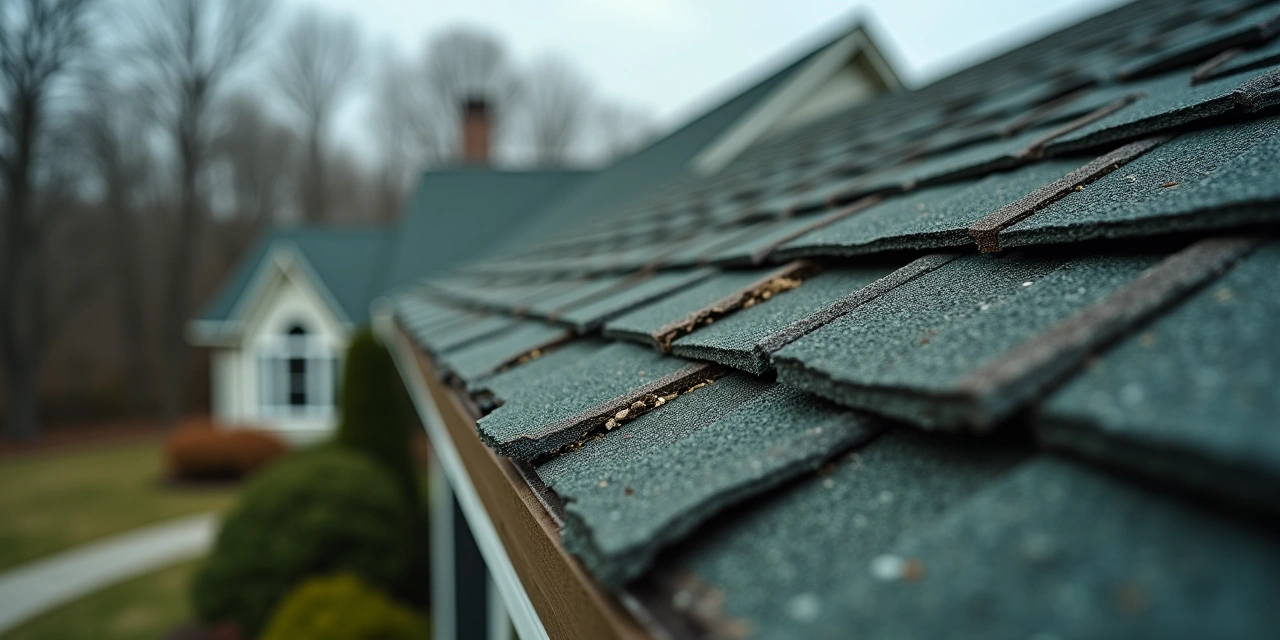
- Small areas of curling or cracking on an otherwise sound field
Replacement triggers:
- Curling or cracking affecting more than 25 to 30% of the shingle field
- Multiple areas of granule loss across all slopes
- Widespread hail damage with measurable granule displacement across the full roof
- Visible sagging or soft spots anywhere on the roof plane
- Sheathing rot or soft decking found in multiple locations
- More than two layers of existing shingles (Ohio code allows a maximum of two)
The roofing square is the unit contractors use to measure damage extent — one square equals 100 square feet. When a contractor says "you have 4 squares of damage," they mean 400 sq ft. On a 2,000 sq ft roof, that's 20%. Under 20% on a young-to-mid-age roof: probably repair. Over 30% on any roof: the repair cost starts approaching replacement cost and replacement wins on ROI.
How Does Roof Age Affect the Repair-vs-Replace Decision?
Age is the single most important variable in the repair-vs-replace calculation. The same repair that makes perfect sense on a 10-year-old roof can be throwing money away on a 22-year-old one.
Here's the age-based decision framework used by experienced Fairfield County contractors:
| Roof Age | Damage Level | Recommendation | Reasoning |
|---|---|---|---|
| Under 15 years | Under 20% of surface | Repair | Roof has substantial life remaining; repair cost is a fraction of replacement |
| Under 15 years | Over 30% of surface | Insurance claim + repair or replace | Widespread damage on a young roof usually means a weather event; file before repairing |
| 15–20 years | Isolated failure | Repair, monitor | Good remaining life if rest of roof is sound; get a full inspection before deciding |
| 15–20 years | Multiple areas | Plan replacement | Multiple failure points signal the roof is aging out; repair cost vs. remaining life math rarely works |
| Over 20 years | Any significant damage | Replace | At 20+ years on architectural shingles, you're past the expected service life; repair buys months, not years |
The 20-year threshold isn't arbitrary. Most Ohio homeowners replace architectural shingles at 22 to 28 years. At 20, the adhesion strips are losing grip, the granule layer has thinned, and the flashing caulk has been through 20 cycles of freeze-thaw. When one thing goes, others usually follow within 2 to 3 years. Spending $1,500 to repair a roof with 3 years left is almost never the right answer.
What Does a Roof Repair Cost in Fairfield County?
Repair costs in the Fairfield County market fall into three categories based on scope.
Spot repairs ($150 to $600): Single-point failures like a pipe boot, a handful of missing shingles, a lifted flashing section at one penetration, or a small section of lifted ridge cap. These are the most common repair calls and the easiest to scope accurately. Most contractors can quote these on a single visit.
Section repairs ($600 to $2,500): Larger areas of shingle damage from wind or hail, valley repairs, multiple flashing replacements, or repairs involving limited decking work. Section repairs may require a few hours to a full day on-site and often involve coordinating material delivery. The upper end of this range starts to compete with the budget for a proactive partial replacement on specific slopes.
Major repairs ($2,500 and above): Repairs that approach or overlap with replacement in cost — typically those involving significant decking replacement, extensive re-flashing of a chimney or multiple penetrations, or addressing damage that spans a full slope. At this cost level, the repair-vs-replace conversation becomes real. A contractor who quotes $3,000 in repairs on a 19-year-old roof should also be giving you a replacement quote so you can compare.
The four most common sources of Ohio roof repairs, based on claim patterns, break down like this: flashing failure (42%), pipe boot failure (28%), shingle lifting (18%), valley failure (12%). The first two together account for 70% of all repair calls. Both are inexpensive to fix when caught early. Both become expensive interior damage sources when ignored. A professional inspection catches both routinely.
For anyone working through repair pricing and wondering what a full replacement would cost by comparison, the roof area calculator gives you a square footage estimate you can use to get ballpark replacement numbers, and our Ohio roof replacement cost guide provides the current per-square pricing for all material types.
Red Flags That Mean Replacement Is the Only Option
Some conditions take repair off the table entirely. These aren't judgment calls — they're situations where repair either can't address the underlying problem or the cost makes replacement the obvious choice.
Two existing layers of shingles. Ohio building code allows a maximum of two shingle layers on a roof. If your home already has two layers, no tear-off repair is possible — the next job is a full tear-off and replacement. Many contractors won't apply a second layer at all because it voids some manufacturers' warranties and hides existing damage beneath.
Soft or rotted decking across multiple areas. When a contractor pushes on the decking and feels soft spots in more than one or two locations, the moisture infiltration has been systemic. Replacing isolated boards is a repair. Replacing 30% or more of the deck is effectively a re-roof, and the labor for a partial replacement often approaches full replacement cost anyway.
Structural sagging. Visible sagging in the roof plane — from the ground or from inside the attic — indicates that the structural load has been exceeded somewhere, either from weight (ice, standing water) or from rot that has compromised framing members. This is a replacement and potentially a structural repair project, not a surface fix.
More than 30% of shingles showing active failure. When the inspector documents widespread curling, cracking and sealing strip failure across the majority of slopes, there's no surgical fix. The roof is aging out uniformly. Targeting one bad area leaves the surrounding field to fail within 12 to 18 months, and you're back on the schedule for another repair. Budget for replacement and schedule it before an emergency forces the timeline.
Active mold in the attic with no isolated source. When attic mold is widespread — not limited to a specific rafter or area near a known penetration — it indicates the roof assembly has been allowing moisture infiltration across a large area for an extended period. Mold remediation plus repair rarely resolves the underlying condition. Replacement with proper ventilation correction typically does.
For a broader view of roof condition signs and what they mean for your timeline, see our article on signs you need a new roof. If you're weighing a repair quote against material options for a full replacement, the roofing material comparison guide gives you current cost and lifespan data side by side. Check the glossary for any technical terms that come up in contractor reports — understanding what you're being told is half the battle in making a good decision.
Frequently Asked Questions
How much does a roof repair cost in Fairfield County, Ohio?
Roof repair costs in Fairfield County range from $150 to $600 for minor spot repairs — a failed pipe boot, a small flashing gap or a handful of lifted shingles. Section repairs covering larger areas of damage typically run $600 to $2,500 depending on scope. Repairs involving decking replacement or extensive flashing work at a chimney can reach $3,000 or more. Getting a written, itemized quote before authorizing any repair work is standard practice. Contact us for a roof repair estimate anywhere in Fairfield County.
Can a 20-year-old roof be repaired instead of replaced?
A 20-year-old roof can be repaired, but the math usually doesn't favor it unless the damage is isolated and the rest of the roof is in solid condition. At 20 years on architectural shingles, you're at the upper end of the typical Ohio lifespan. A repair that costs $1,500 to $2,500 on a roof with 3 to 5 years of remaining life often produces worse ROI than putting that money toward a planned replacement. The exception is when damage is truly isolated — a single failed flashing or pipe boot on a roof in otherwise good condition.
What is the most common cause of roof leaks in Ohio?
Flashing failure is the most common source of roof leaks in Ohio, accounting for roughly 42% of repair calls. Pipe boot failure (cracked rubber boots around plumbing vents) accounts for about 28%. Shingle lifting at edges or after wind events accounts for 18%, and valley failure covers the remaining 12%. Most of these are repairable at low cost when caught early. Left unaddressed, each one can cause $4,000 to $12,000 in interior damage from sustained water infiltration.
How do I know if my roof leak is serious enough to call for emergency repair?
Call for emergency roof repair the same day if: water is actively entering the living space during or after rain, you see a visible hole or structural damage to the roof deck, a tree or large branch has made contact with the roof, or you can see daylight from inside the attic. A slow drip at a ceiling stain after heavy rain is urgent but not an emergency — schedule within a few days. Water following a rafter and appearing far from the actual entry point is common. A professional needs to trace the leak path rather than simply patching where the ceiling shows the stain.
Need Help with Your Roof?
Get a free, itemized estimate from Fairfield County's trusted roofing team.