Most Ohio homeowners choose a roofing material the same way they buy a car: they pick whatever they had before, or whatever the first contractor recommended. That's fine until you realize you just committed $10,000 to $80,000 to a decision you spent 20 minutes on. The material your neighbor used may be exactly right for you, or it may be the wrong call entirely, depending on your timeline, budget and structure.
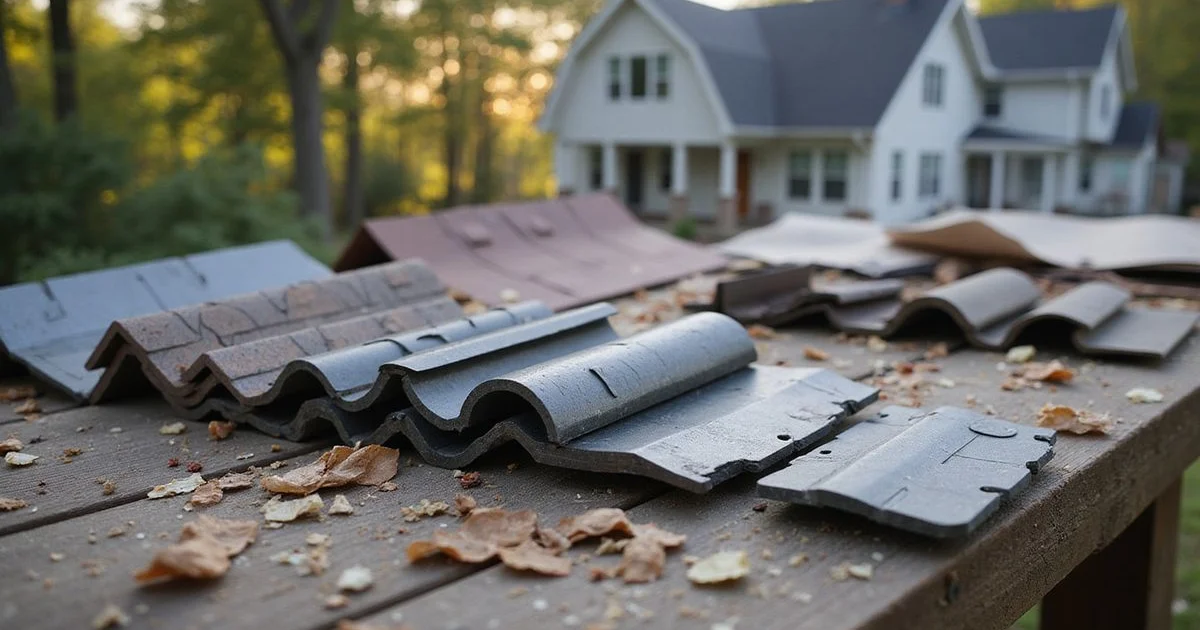
This guide puts the three main roofing materials — asphalt shingles, metal roofing and slate — side by side with real Ohio cost data, lifespan numbers and climate performance so you can make the call with actual information.
How Do Asphalt, Metal, and Slate Roofing Compare in Cost?
Installed cost per square foot is the most direct comparison point. Here's where each material lands in the current Fairfield County market, with the key attributes that explain the price differences.
| Material | Installed Cost/sq ft | Lifespan (Ohio) | Weight/sq ft | Best For |
|---|---|---|---|---|
| Three-tab shingles | $3.50–$4.50 | 15–20 yrs | 2.5 lbs | Budget replacement |
| Architectural shingles | $4.50–$6.50 | 25–30 yrs | 3.5 lbs | Most Ohio homes |
| Metal panels (exposed fastener) | $7–$11 | 40–70 yrs | 1.5 lbs | Long-term investment |
| Standing seam metal | $12–$18 | 50–70 yrs | 1.5 lbs | Premium builds |
| Natural slate | $25–$50 | 75–125 yrs | 10–15 lbs | Historic/premium homes |
A few things stand out in that table. Metal is lighter than asphalt per square foot, which surprises most homeowners. Slate is in a different weight category altogether — 4 to 6 times heavier than asphalt — which is why structural assessment matters before any slate project. And three-tab shingles are getting hard to justify economically: for $1 more per square foot, architectural shingles last 10 years longer and carry substantially better warranties.
For a deeper look at what these costs translate to on a full job in Fairfield County, see our guide on roof replacement costs in Ohio.
Which Roofing Material Lasts Longest in Ohio's Climate?
Slate wins on raw lifespan. A properly installed natural slate roof lasts 75 to 125 years — which means a slate roof installed today could outlive every other structure on the property. The issue isn't whether slate is durable. It's whether your home can support it and whether you want to pay the premium to get there.
For most Ohio homeowners, the practical comparison is between architectural shingles (25 to 30 years) and standing seam metal (50 to 70 years). That 20 to 40 year gap is real. A 30-year-old homeowner who installs metal today likely never replaces the roof again. The same homeowner on architectural shingles faces one more replacement in their 50s and possibly a second in their 70s.
Ohio's climate creates specific lifespan stressors for each material. The freeze-thaw cycle hits asphalt hardest, cracking the mat along granule lines over repeated thermal cycles. Metal handles freeze-thaw best because it's designed to expand and contract — especially standing seam, where panels float rather than being nailed rigid. Slate handles freeze-thaw well but is vulnerable to hard hail impact, which can chip or crack tiles.
For the full breakdown on how Ohio's climate specifically ages each material, our roof lifespan guide goes into the detail on freeze-thaw cycling, ice dams and precipitation load.
What Does Each Material Weigh and Why Does It Matter?
Weight matters because your roof deck and structural framing have a load limit. Going over that limit isn't a theoretical risk — it causes sagging, racking and eventually structural failure over time. The heavier the material, the more scrutiny the structure needs before installation.
Asphalt shingles run 2.5 to 3.5 pounds per square foot. Standard residential framing handles this easily. Adding a second layer of shingles over an existing layer (allowed up to two layers under Ohio code) is generally fine structurally.
Metal roofing runs about 1.5 pounds per square foot. It's the lightest option in the comparison table. This makes metal a good choice for homes with older or lighter framing, or for structures where adding weight is a concern. Metal can often be installed directly over existing shingles without a tear-off, which reduces labor cost and keeps the old layer as additional insulation and underlayment.
Natural slate runs 10 to 15 pounds per square foot. That's 3 to 6 times heavier than asphalt. Homes built before 1950 in central Ohio were commonly designed for slate and have the framing to handle it. Post-1970 construction with standard dimensional lumber typically needs a structural engineer's assessment before slate is specified. The cost of that assessment and any reinforcement work should be built into the budget from the start. Skipping this step and discovering a framing problem mid-project is how slate projects get expensive fast.
Which Roofing Material Handles Ohio Winters and Spring Storms Best?
Ranking the three materials for Ohio's specific conditions — wet winters, freeze-thaw cycling, spring hail and high winds — produces a clear order.
Standing seam metal is the top performer across all of Ohio's seasonal challenges. It sheds snow cleanly, which reduces ice dam formation at the eaves. The floating panel system tolerates freeze-thaw cycling without cracking. Hail causes surface denting on metal but doesn't compromise waterproofing the way granule loss compromises asphalt shingles. Wind ratings on standing seam systems run to 140 mph and above. For a home with a long ownership horizon in central Ohio, metal is the best weather performer, full stop.
Architectural shingles with Class 4 impact rating are the second-tier performer and the most practical choice for most homeowners. Standard architectural shingles handle Ohio winters well when properly installed with ice and water shield at the eaves and valleys. Class 4 impact-resistant versions (UL 2218 rated) add meaningful hail resistance and often qualify for homeowners insurance discounts — sometimes enough to offset the slight material premium over standard shingles.
Slate handles cold, moisture and freeze-thaw well because stone doesn't absorb water the way asphalt does. The vulnerability is hard hail: slate tiles can chip or crack from direct hail impact at the corners and edges, and replacement requires matching the original slate variety, which gets complicated on old installations. Ohio's spring hail events make slate a slightly higher maintenance material than its 100-year lifespan suggests.
The synthetic underlayment specification also matters here. In Ohio's climate, a quality synthetic underlayment under any material — versus 15 lb felt — is worth the extra $0.15 to $0.25 per square foot. It handles moisture exposure and freeze-thaw far better than felt-based products, which absorb water, wrinkle and degrade under ice dam conditions.
Asphalt vs Metal: The Real Long-Term Cost Comparison
The upfront cost difference between architectural shingles and standing seam metal on a typical 2,000 sq ft Fairfield County home is approximately $15,000 to $25,000. That's real money, and it's the main reason most homeowners choose asphalt.
The long-term math is where the comparison flips. Over a 60-year ownership horizon:
- Architectural shingles: Two full replacements plus ongoing repair costs in years 20 to 28 and years 48 to 56. Total system cost over 60 years: $35,000 to $55,000 in today's dollars, not accounting for inflation in material and labor costs.
- Standing seam metal: One installation, maintenance only. Total system cost over 60 years: $24,000 to $36,000 installed, plus minor maintenance. Metal wins by $10,000 to $20,000 on a long horizon.
The break-even point on metal vs. asphalt is typically around year 18 to 22 of ownership. If you're planning to sell within 10 years, asphalt makes more financial sense — you're unlikely to recoup the metal premium in resale value. If you're staying 20-plus years, metal is the better investment on a cash-flow basis.
Financing options can make the upfront gap more manageable.
When Does Slate Roofing Make Sense in Ohio?
Slate roofing makes sense in Ohio for a specific set of circumstances. Outside those circumstances, it's usually the wrong tool for the job.
Historic homes in Lancaster's downtown districts are the clearest case. Many pre-1940 homes in central Ohio originally had slate roofs. When these roofs fail, restoring with matching or compatible slate is often the architecturally correct choice and may be required in historic preservation districts. Replacing a slate roof with asphalt on a historic home can hurt resale value and, in some districts, requires variance approval.
Premium new construction or high-value renovation projects are a second case. A homeowner building a custom home in Granville or Pickerington who plans to stay 40-plus years and wants the highest possible material quality has a legitimate case for slate. The structural framing gets spec'd for the load from day one, the installation cost is rationalized over a 100-year life, and the aesthetic result is genuinely superior to any asphalt product.
Partial slate replacements on existing slate roofs are worth doing rather than converting to asphalt. If a 60-year-old slate roof has healthy tiles and just needs a section replaced or flashing work, maintaining the slate is almost always cheaper than a full tear-off and replacement with a new system. Slate roof repair by a contractor experienced with the material preserves decades of remaining useful life.
What slate doesn't make sense for: standard residential replacement on a home that has never had slate, homes with framing that isn't engineered for the load, or homeowners planning to sell within 10 years who won't recover the premium in the transaction. Use our roof area calculator to get your square footage before requesting quotes on any material — contractors work from the same measurements and knowing yours prevents pricing surprises.
Frequently Asked Questions
Is metal roofing worth it in Ohio?
Metal roofing is worth it in Ohio for homeowners planning to stay 15 or more years and who want to avoid a second replacement. The upfront cost is 2 to 3 times higher than architectural shingles, but metal lasts 40 to 70 years versus 25 to 30 for asphalt. Metal also handles Ohio's freeze-thaw cycle and spring hail events better. On a 50-year horizon, metal typically costs less in total than two asphalt replacements plus the maintenance costs that accumulate in the final years of a shingle roof.
Can my Ohio home's structure support a slate roof?
Natural slate weighs 10 to 15 pounds per square foot — 3 to 6 times heavier than asphalt shingles. Most Ohio homes built before 1950 were originally designed for slate and have the structural framing to support it. Homes built after 1970 with standard dimensional lumber typically require a structural engineer's assessment before slate is installed. The cost of a structural review and any needed reinforcement should be factored into the project budget from the start. Check the glossary for terms like pitch and roofing square that come up in structural assessments.
How do I choose between architectural shingles and metal for my Ohio home?
The decision comes down to your time horizon and budget. If you're planning to sell within 10 years, architectural shingles give you the best cost-to-value ratio. If you're staying long-term and want the last roof you'll ever buy, metal is the better investment. Metal costs $7 to $18 per square foot installed versus $4.50 to $6.50 for architectural shingles. Both perform well in Ohio's climate, but metal performs better in severe hail and wind. Modern Class 4 impact-resistant shingles close that performance gap significantly for the hail-specific concern.
What roofing material is best for Ohio's hail and ice storms?
Metal roofing and Class 4 impact-resistant architectural shingles perform best in Ohio's hail and ice storm conditions. Standing seam metal is the top performer: it sheds snow cleanly, resists ice dam formation and withstands hail better than any shingle product. Among asphalt options, Class 4 impact-resistant shingles (UL 2218 rated) offer significantly better hail resistance than standard shingles and often qualify for insurance premium discounts. Natural slate performs well in ice but is vulnerable to hard hail impact at tile edges. See our spring storm prep guide for how to assess your roof's readiness before storm season.
Need Help with Your Roof?
Get a free, itemized estimate from Fairfield County's trusted roofing team.
1. What is your total roofing budget?
2. How long do you plan to stay in this home?
3. What is your top priority?
4. Does your HOA restrict roofing materials or colors?