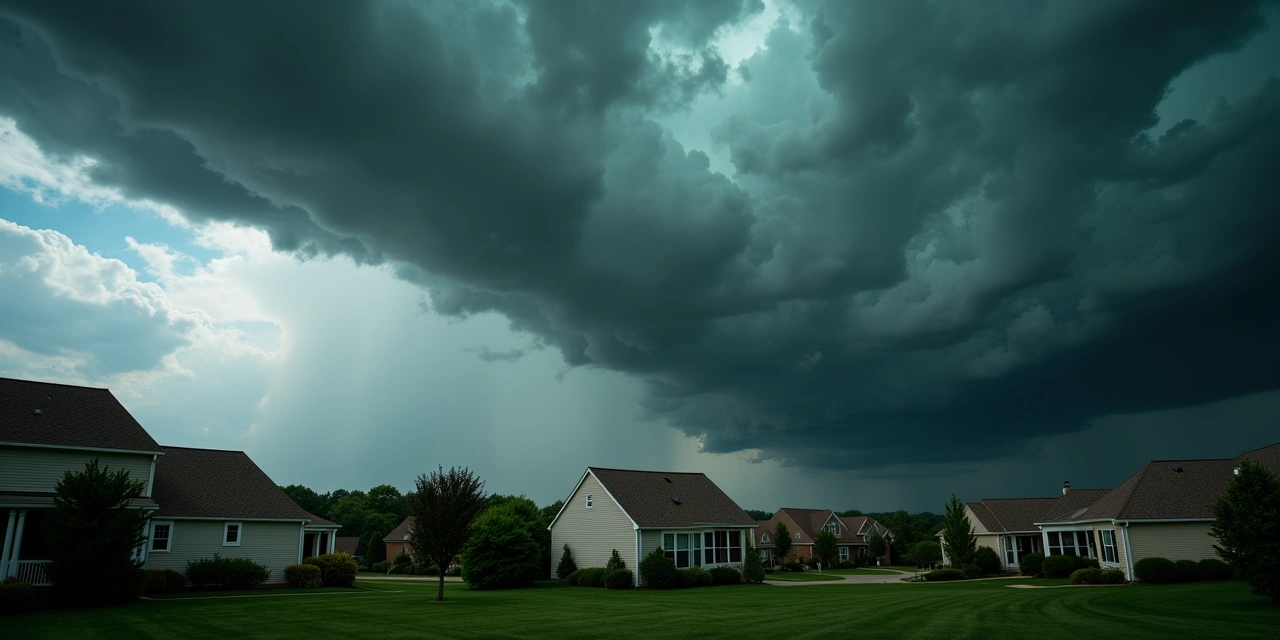
NOAA's Storm Events Database logged hail on about 2 days a year in Fairfield County from 2000 to 2025, and 87% of those hail days fell between April and July. If you're reading this in spring, you're heading into the highest-risk stretch of the year for hail in Fairfield County. Prep work you do now — before a storm hits — costs a fraction of what reactive repairs cost after one.
This guide covers what Ohio spring storms actually do to roofs, what a proper pre-season inspection looks at, how to document damage for an insurance claim and when you need a professional on-site fast.
When Is Ohio's Spring Storm Season and What Damage Should You Expect?
March through May accounts for roughly 60% of Ohio's annual hail events, with peak activity in April and May when warm Gulf air collides with cold Canadian fronts over the Midwest. Fairfield County has seen 3 major derecho events since 2020 — straight-line wind systems that move fast and cause widespread damage across hundreds of miles. Derechos aren't tornadoes, but sustained winds over 60 mph produce comparable roof damage in terms of shingle loss and structural stress.
Here's what the main storm types do to roofs in this area:
Hail. Hail larger than 1 inch in diameter causes structural hail damage to shingles — granule displacement that exposes the asphalt mat to UV and moisture. Hail at 1.5 inches (quarter size) or larger dents metal components: flashing, gutters, ridge caps and exhaust vents. The damage isn't always obvious from the ground but shows clearly in a close inspection. Most Ohio hailstorms produce stones in the 0.75 to 1.5 inch range.
Wind. Wind over 60 mph can lift shingles with 15 or more years of age because the sealing strips on aging shingles lose adhesion. Newer shingles with intact seals handle 60 to 70 mph reasonably well. What wind actually does is create negative pressure on the leeward side of the roof — it's suction pulling shingles up, not just wind pushing them sideways. This is why ridge cap shingles and perimeter courses go first.
Ice dams in late winter and early spring. Ice dam damage affects approximately 30% of Ohio homes annually in winter and early spring. The freeze-thaw cycle that drives this typically runs from January through March in Fairfield County. Water backed up behind ice dams works under underlayment and into decking, causing damage that often shows up as interior ceiling stains weeks after the ice melts.
The combined risk window is roughly February through June for Fairfield County. The narrow prep window that actually matters is January through early March, before the first severe storm events of the year.
What Does a Pre-Storm Roof Inspection Cover?
A pre-season roof inspection covers six areas that have the highest probability of failing under storm stress. Here's what a thorough inspection checks:
1. Shingle condition and adhesion. The inspector checks for curling, lifting at edges, missing tabs, cracking and granule loss patterns. Shingles that have lifted even slightly are a wind liability. Any shingle that moves under hand pressure has lost its sealing strip and will lift in a storm. On older roofs, the inspector notes what percentage of the field is compromised — that percentage directly affects the repair-vs-replace math.
2. Flashing at all penetrations. Chimney flashing, pipe boot flashing, skylight curbs, dormer walls and valley metal all get examined for lifting, cracking sealant and corrosion. Flashing is the number-one leak entry point. Storm pressure at a compromised flashing joint drives water into places it takes months to find.
3. Ridge and hip cap condition. Cap shingles on the ridge and hips are the most exposed to wind. They also cover the most structurally critical seams on the roof. Missing or loose cap shingles after any wind event should be addressed within days, not weeks.
4. Gutter attachment and condition. Full or damaged gutters contribute to ice dam formation and fascia rot. The inspector checks gutter hangers, slope, debris buildup and whether downspouts are discharging water at least 4 feet from the foundation.
5. Attic ventilation and moisture signs. A quick attic check looks for daylight gaps at the ridge or soffits, frost on the underside of decking (a sign of condensation from poor ventilation), water stains on rafters and any signs of existing ice dam infiltration. Good ridge vent coverage and unblocked soffit vents matter before winter ends — they prevent the conditions that create ice dams in the first place.
6. Drip edge and fascia condition. Drip edge keeps water from running behind the gutter and rotting the fascia. Gaps or missing sections let water under the first shingle course. This is cheap to fix before a storm and expensive to ignore.
A professional inspection with a written report typically runs $150 to $350 in the Fairfield County area. Many contractors do them free in spring as part of estimating potential work. Either way, the written report matters — it documents pre-storm condition if you need to prove damage occurred in a specific event.
Which Roof Components Fail Most Often in Ohio Spring Storms?
Based on claim patterns in Ohio, the components that fail most often in order of frequency are: ridge and hip cap shingles, step flashing at dormer walls, pipe boot flashings, valley metal and perimeter shingle courses. Each of these has a specific reason it's vulnerable.
Ridge and hip caps take the most wind exposure and have the fewest fasteners relative to their surface area. They're also the last thing installed and the first to show age-related adhesion loss.
Step flashing at dormers fails when caulk cracks or when the metal corrodes. Storm wind drives rain horizontally into the dormer-wall joint at angles that the original flashing wasn't designed to handle continuously.
Pipe boot flashings are rubber boots around plumbing vent pipes. The rubber cracks with UV exposure after 10 to 15 years. A cracked boot in a heavy rain is a guaranteed leak. They're one of the most common repair items on a 15-year-old roof and cost $75 to $200 to replace.
Valley metal concentrates water runoff from two slopes. If the valley metal is improperly lapped or has lifted at seams, storm-volume water pushes under it. Woven valleys (shingles crossing through) are more durable than open metal valleys on older installations in this regard.
For a complete look at what different storm types do to roofs and how to file a claim, see our article on 2026 Ohio storm season roof protection. Our storm damage repair page also walks through the insurance process step by step.
How Do You Document Roof Damage for an Insurance Claim?
Documentation is what turns a covered storm event into an actual insurance payout. Most denied claims aren't denied because the damage isn't real — they're denied because the homeowner can't prove the damage happened in the specific storm event they're claiming. Here's how to do it right.
Before the storm: Take a photo walkthrough of your roof from the ground every spring. Date-stamped photos showing the pre-storm condition of your shingles, gutters and visible flashing give you a baseline. If your phone backs up to cloud storage with automatic timestamps, that's sufficient. A contractor's pre-season inspection report with photos is even better.
Immediately after the storm: First, check for any active leaks or interior ceiling stains. Then do a ground-level exterior check. Look for: missing shingles (you'll see gaps or bare decking spots), dented gutters or downspouts, debris on the roof, granules washed into the driveway or gutters. Photograph everything. Do this within 24 to 48 hours while the storm event is still timestampable.
Filing the claim: Most Ohio homeowners insurance policies allow one year from the storm date to file a claim. Don't wait. Contact your insurer promptly, report that you believe the storm caused roof damage and ask them to send an adjuster. You have the right to have your own contractor present during the adjuster's inspection — and it's worth exercising that right. Contractor and adjuster measurements sometimes differ significantly.
What to document specifically: NOAA weather data for your zip code on the storm date (shows wind speed, hail reports), photos of any identifiable hail stones or damage patterns, any neighbor claims or community-wide damage visible in the neighborhood, and a written inspection report from a licensed contractor. The glossary has definitions for claim-related terms like ACV, RCV and depreciation if you're navigating insurance documents for the first time.
What Temporary Repairs Can You Make After Storm Damage?
Temporary repairs exist to stop additional water infiltration while you wait for a professional repair appointment. They're not permanent fixes and shouldn't delay getting a contractor on-site.
Tarping. For a puncture, missing shingle section or any area where decking is exposed, a heavy polyethylene tarp (6 mil or heavier) weighted and secured at the edges is the standard temporary fix. Run the tarp over the ridge if possible so wind can't catch the uphill edge. Use sandbags, 2x4s screwed together or purpose-made tarp weights — not bricks on a wet roof. Don't use staples or roofing nails that will create additional holes.
Roof cement for minor gaps. If a shingle has lifted at one corner but is otherwise intact, roof cement applied under the lifted tab and pressed down is an acceptable temporary hold. Use a putty knife, apply generously and press the shingle flat. This won't hold in another storm but prevents immediate water entry while you get on the schedule.
What not to do: Don't walk a storm-damaged roof without knowing the decking condition beneath you — hail impact and water infiltration can weaken boards in ways that aren't visible from the surface. Don't attempt to re-nail ridge caps on a steep roof without proper fall protection equipment. For any active leak with interior water entry, the temporary fix is catching the water indoors while you call for emergency roof repair.
When Should You Call a Professional After Storm Damage?
Call a professional the same day — not the same week — if any of these conditions apply:
- Active water entering the home through ceiling or walls
- Visible structural damage: sagging, displaced decking, large sections of missing shingles
- A tree or large branch has made contact with the roof
- You can see daylight from inside the attic after the storm
- Hail of 1 inch or larger hit your area and your roof is more than 10 years old
Call within 1 to 3 days if:
- You found granules in gutters after a hailstorm
- A few shingles are visibly missing from the ground
- You notice new ceiling stains after rain that weren't there before
- Flashing is visibly displaced or cap shingles are missing
Spring is peak season for Ohio roofers and contractor schedules fill fast after major storm events. Calling promptly is how you get on a schedule before the two-week wait list hits. If there's active water entry, ask specifically for emergency roof repair service — most contractors keep some emergency capacity for exactly this situation.
For the full picture on what storm prep looks like at the material and system level, see our roof lifespan guide on how Ohio's climate ages roofing materials. If you're weighing whether a storm has pushed your roof into replacement territory, our guide on signs you need a new roof lays out the decision criteria clearly.
Frequently Asked Questions
When is Ohio's spring storm season?
Ohio's most active storm period runs from March through May, with peak hail and severe wind activity in April and May. March through May accounts for roughly 60% of Ohio's annual hail events. Thunderstorm frequency also climbs sharply in June. Homeowners should complete pre-season roof prep by early March at the latest to stay ahead of the first damaging events.
How long do I have to file a roof insurance claim after storm damage in Ohio?
Most Ohio homeowners insurance policies require claims to be filed within one year of the storm date, though some policies run shorter windows. The exact timeline is in your policy's declarations page under "Duties After Loss." Document damage as soon as safely possible after a storm and contact your insurer promptly. Waiting months after a storm to file is the most common reason claims are denied or reduced.
What hail size causes real roof damage?
Hail larger than 1 inch in diameter causes structural shingle damage — it knocks granules loose and can crack or puncture the asphalt mat. Hail 1.5 inches or larger dents metal components like flashing, gutters and ridge caps. If you see hail 1 inch or larger, schedule a professional inspection even if your roof looks intact from the ground. Hail damage to shingle granules isn't visible from street level.
Can I do temporary repairs myself after storm damage?
Minor temporary repairs like covering a puncture with a tarp or applying roof cement to a small lifted shingle area are reasonable if you can do so safely from a ladder without walking the roof. Do not walk a damaged roof after a storm — decking replacement may be needed in areas where water infiltrated. For any active leaking or structural concerns, call a professional for emergency roof repair rather than attempting the repair yourself.
Need Help with Your Roof?
Get a free, itemized estimate from Fairfield County's trusted roofing team.

