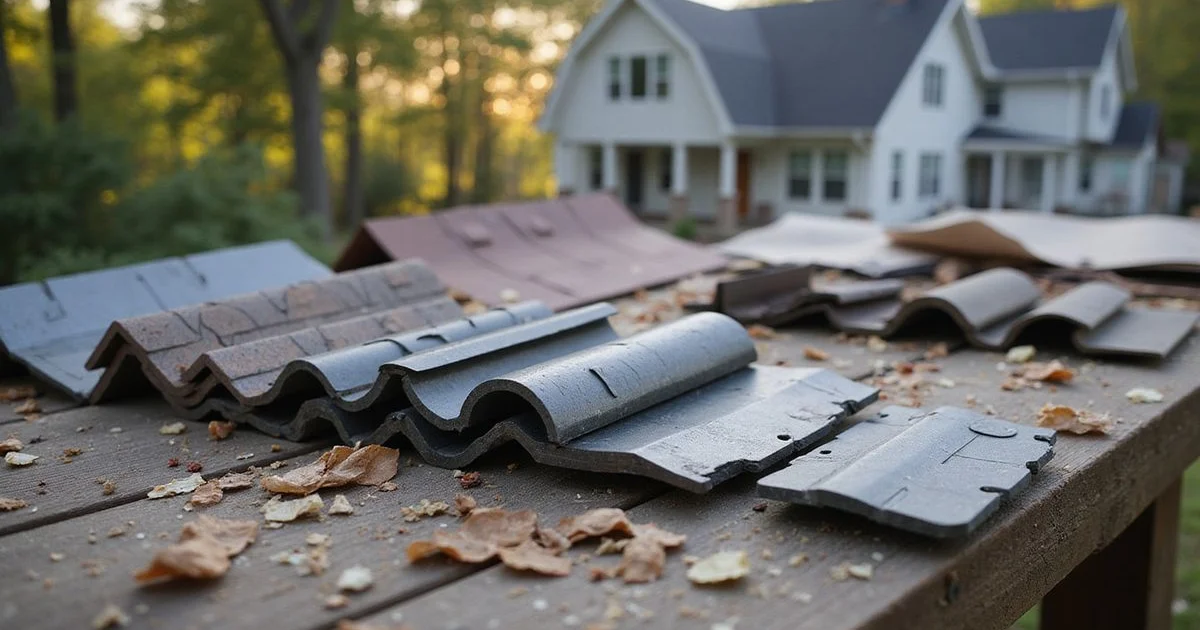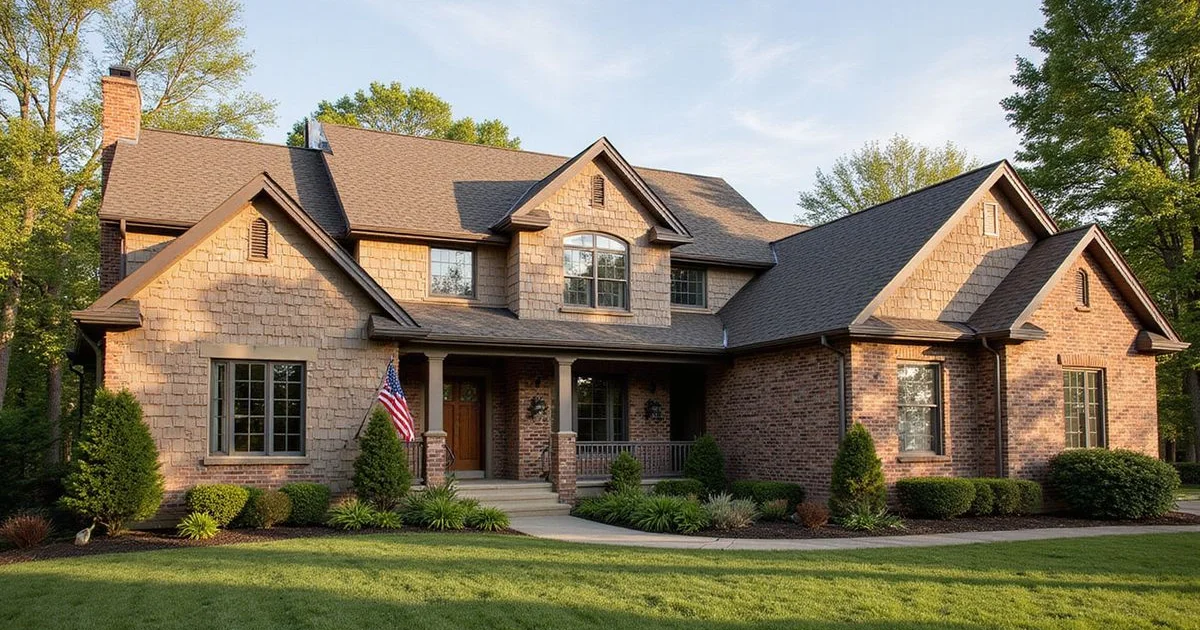
Replacing your roof in an HOA community is not the same as replacing a roof on a standard residential property — your material choices, contractor, and color are subject to CC&R review and architectural control committee approval. This guide walks through what Ohio HOA homeowners need to know before they sign a contract.
Does Your HOA Cover Roof Replacement or Is It Your Responsibility?
In Ohio, HOA governing documents define this explicitly — check your CC&Rs (Covenants, Conditions & Restrictions) and your Declaration before assuming anything about who owns the roof over your head. The answer varies significantly depending on your HOA type.
Condominium HOAs typically treat the building envelope — including the roof and exterior walls — as common area that the HOA owns and maintains. Unit owners contribute to roof replacement through their monthly dues, and the HOA board initiates and manages the project. Individual unit owners generally do not contract separately for roof work in a condo HOA structure.
Single-family HOAs operate differently. In almost every single-family HOA in Ohio, each homeowner is individually responsible for maintaining and replacing their own roof. The HOA's role is limited to controlling aesthetics — approving materials, colors, and contractors — not paying for the work. You own the roof; the HOA controls what it looks like.
Townhome HOAs are the most variable. Some townhome associations cover roofs collectively as part of shared building maintenance. Others require individual owners to maintain their own roof sections. Review your specific CC&Rs carefully, and if you are unsure, request the governing documents from your property management company before making any plans.
Master-planned communities with individual detached homes follow the same pattern as single-family HOAs — the homeowner pays and maintains, but the ARC controls aesthetic compliance.
Getting HOA Approval for Your Roof Replacement
For single-family and most townhome HOA situations in Ohio, you will need Architectural Review Committee (ARC) approval before work begins. Skipping this step carries serious consequences. Here is the process in order.
Step 1 — Request the ARC application. Contact your HOA management company and ask for the Architectural Review Committee application form. Some HOAs post this on a resident portal; others require you to request it by email or phone. Get it in writing so you have documentation of your request date.
Step 2 — Review the approved materials list. Most Ohio HOAs maintain a list of approved shingle manufacturers, product lines, and acceptable color palettes. Review this list before contacting any contractors, so you are shopping within the boundaries the ARC has already set. Proposing a material that is clearly off the approved list will delay your approval and may require a variance process.
Step 3 — Submit your ARC application with complete documentation. A complete application typically includes the contractor's name and license number, the proposed material specifications (manufacturer, exact product name, and color code), and estimated start and completion dates. Incomplete applications are a common source of delays — the ARC clock often does not start until all required documents are received.
Step 4 — Wait for written approval before signing a contractor contract. This is the step most homeowners skip to their detriment. Approvals typically take 7 to 30 days depending on HOA bylaws and whether the ARC meets on a fixed schedule. Do not sign a contractor contract, pay a deposit, or schedule a start date until you have written ARC approval in hand.
Step 5 — Provide your contractor with the written ARC approval. Give your contractor a copy of the approval letter before work begins. A reputable contractor experienced with HOA work will want to see it — it confirms they are installing exactly what was approved and protects them from liability if an HOA dispute arises later.
Step 6 — Confirm the contractor will pull all required permits. Building permits are required for most full roof replacements in Ohio jurisdictions. Confirm with your contractor whether permits are required in your municipality — this applies to Franklin County, Fairfield County, Licking County, and others as applicable. Some HOAs require a copy of the permit and the final inspection certificate as part of ARC closeout.
What Materials Are Typically Approved in Ohio HOAs?
Most Ohio HOAs were established with architectural standards that favor visual consistency over individual expression. When it comes to roofing materials, that typically means the following.
Architectural (dimensional) asphalt shingles are the dominant approved material in Ohio HOA communities. Most CC&Rs written in the last two decades specify dimensional shingles over 3-tab shingles, reflecting the industry shift toward heavier-weight products with more visual texture. If your existing roof is 3-tab, check whether your HOA now requires a dimensional upgrade at replacement.
Common approved manufacturers in Ohio HOA communities include the GAF Timberline series, Owens Corning Duration series, and CertainTeed Landmark series. These are the three most widely specified manufacturers in residential HOA governing documents. If your HOA's approved list references a specific manufacturer, use that manufacturer — substitutions require separate ARC approval even if the product appears equivalent.
Color restrictions are common and strictly enforced. Many Ohio HOAs require earth tones — browns, grays, and charcoals — or specify an exact color palette from which homeowners must choose. Before finalizing any contractor bid, confirm the exact approved color code with the ARC in writing. Getting the wrong color installed is an expensive mistake that the ARC can require you to correct at your own expense.
Metal roofing is increasingly permitted in Ohio HOAs, but it typically requires separate ARC review and often has specific requirements around panel profile (standing seam is most commonly approved) and color. If metal roofing is not explicitly on your HOA's approved list, submit a variance request rather than assuming it is prohibited — many ARCs will approve metal if the application includes manufacturer specs, photos of comparable installations in similar communities, and a written justification for the aesthetic compatibility.
Variance requests are available for materials not on the approved list. A well-prepared variance request includes the manufacturer's technical specifications, samples or photos of the material in installed condition, photos of comparable homes where the material has been used in an HOA context, and a written argument for why the material meets or exceeds the community's aesthetic standards. Variance approval is not guaranteed, but it is a legitimate path when your preferred material falls outside the standard approved list.
What Happens If You Replace Without HOA Approval?
Ohio courts have consistently upheld HOA enforcement of CC&R provisions, and roofing violations are among the most commonly litigated HOA disputes because the evidence is visible to the entire community. If you proceed without written ARC approval, you face real and significant consequences.
Fines are the most immediate consequence. Depending on your HOA's enforcement schedule, fines for CC&R violations typically run from $25 to $200 per day until the homeowner comes into compliance. A replacement project that triggers 60 days of fines at $100 per day results in $6,000 in fines on top of the cost of corrective action.
Mandatory tear-off and reinstallation is the most severe outcome. Ohio courts have ordered homeowners to remove and replace unapproved roofing materials at their own expense. If you installed an unapproved color or material, the ARC can require you to redo the entire roof with approved materials — and you absorb the full cost of both the original installation and the corrective replacement.
Liens on the property are available to HOAs in Ohio as an enforcement mechanism for unpaid fines and assessments. An HOA lien can complicate a home sale, refinance, or equity line of credit.
Insurance complications are a less obvious but real risk. If a future claim arises on a roof installed with unapproved materials, your homeowners insurance carrier may scrutinize the claim more carefully. An unapproved installation that was not permitted may give the insurer grounds to dispute a claim or reduce a payout.
Retroactive approvals are possible but not guaranteed. In some cases, the ARC will issue retroactive approval if the installed material happens to meet their standards — but this requires the ARC to agree, and many ARCs will not reward a homeowner who bypassed the process by simply ratifying the result. Never count on retroactive approval as a fallback strategy.
HOA Roof Assessment: Who Owns, Who Pays, Who Approves
| HOA Type | Who Owns the Roof | Who Pays | Approval Required |
|---|---|---|---|
| Condo HOA | HOA / Association | Shared via dues | HOA initiates project |
| Single-family HOA | Individual homeowner | Individual owner | ARC approval required |
| Townhome HOA | Varies by CC&Rs | Per governing docs | Per governing docs |
| Master-planned community | Individual homeowner | Individual owner | ARC approval required |
Insurance Claims and HOA Roofs
Storm damage that triggers a full roof replacement is common in Ohio, and the insurance claim process intersects with your HOA obligations in ways many homeowners do not anticipate.
For single-family HOA homes, the insurance claim process works the same as it does for any individually owned property — your insurer pays you, the homeowner, not the HOA. You then use those insurance proceeds to fund the replacement through a contractor you select. The HOA is not a party to the insurance transaction, but it retains full authority over the materials you install with those funds.
Some HOAs impose a timeframe requirement on insurance-funded replacements. A common provision requires that replacement work be completed within 90 to 180 days of an insurance payout. This is designed to prevent deferred maintenance — situations where a homeowner collects insurance proceeds but delays replacement, leaving a damaged roof that affects the community's appearance and potentially triggers additional damage. Review your CC&Rs for any such timeframe requirement before accepting a settlement.
The practical workflow for an insurance-triggered replacement in an HOA is: file your claim with your insurer, receive the adjuster's scope of work, submit that scope of work to your ARC for approval along with the material specifications your contractor proposes, and do not sign a contractor contract or schedule work until you have both insurance settlement confirmation and written ARC approval. Coordinating both simultaneously rather than sequentially saves significant time.
Under ORC 3901.832, your Ohio insurer is required to acknowledge receipt of your claim within 10 days and to take action on the claim within 21 business days of receiving proof of loss. If your insurer is not meeting these timelines, contact the Ohio Department of Insurance.
Choosing a Contractor for an HOA Replacement
Not every roofing contractor has experience working within HOA frameworks. Selecting a contractor who understands the documentation requirements and compliance steps specific to HOA work saves time and prevents costly mistakes.
Verify the contractor is licensed with the Ohio Secretary of State. Some HOAs require documentation of Ohio business registration as part of the ARC application. Even when not required, a licensed Ohio business with a verifiable registration history is a meaningful indicator of an established, accountable contractor.
Confirm insurance coverage that satisfies HOA requirements. Many Ohio HOAs require contractors working within the community to carry a minimum of $1 million in general liability insurance and workers' compensation, with the HOA named as an additional insured on the certificate. Ask your HOA management company for the specific insurance requirements before soliciting contractor bids, and include those requirements in your requests for proposal so contractors can confirm compliance upfront.
Select a contractor with HOA experience. An experienced HOA contractor knows how to document color compliance, cross-reference installed materials against the ARC approval letter, photograph the completed installation for ARC closeout documentation, and submit permit completion certificates to the property management company. These administrative steps are straightforward for an experienced contractor and unnecessarily complicated for one who has never worked in an HOA context.
Get the exact approved material in the contract before signing. Your written contractor contract should specify the exact manufacturer name, exact product name, and exact color code that was approved by the ARC — not a generic description like "architectural shingles, charcoal gray." If the delivered materials differ from the contract, you have a written basis to require correction before installation begins. Inspect the material delivery against the contract before allowing the crew to start work.
Frequently Asked Questions
Does my Ohio HOA have the right to control what color shingles I choose?
Yes. Ohio courts have consistently upheld HOA authority to enforce aesthetic standards under validly recorded CC&Rs. As long as the restriction is reasonably related to community appearance and uniformly enforced, courts treat it as binding. Color restrictions on roofing materials are among the most commonly enforced and least successfully challenged CC&R provisions in Ohio HOA case law.
How long does HOA architectural review take in Ohio?
Most Ohio HOA governing documents require the ARC to respond within 30 days of a complete application. If the ARC fails to respond within the stated timeframe, some documents treat silence as automatic approval — but this varies significantly by HOA. Review your specific CC&Rs for the stated response window and the consequence of a non-response before relying on any automatic approval provision.
Can an HOA force me to replace my roof before it fails?
Yes, under most Ohio CC&Rs, the HOA has authority to require maintenance and replacement when the roof reaches a condition that affects curb appeal or community standards — even if the roof is not yet actively leaking. This typically requires written notice from the HOA and a reasonable cure period (commonly 30 to 90 days) before fines begin. If you receive such a notice, respond in writing and begin the ARC approval process promptly.
What happens if my contractor uses the wrong shingle color?
The ARC can require corrective action at the homeowner's expense. This means tear-off and reinstallation of the correct material — a cost that falls entirely on you, not the contractor, unless your contract specifies the exact approved color code and the contractor deviated from it. Always get the exact approved shingle color code in writing from the ARC before signing a contract, and confirm the delivered materials match before installation begins.
Does the HOA need to be named on my roofing permit in Ohio?
No — the permit is issued to the property owner or the licensed contractor pulling the permit, not the HOA. However, some HOAs require a copy of the issued permit and the final inspection/completion certificate as part of ARC closeout documentation. Ask your ARC or property management company whether permit documentation is required for closeout before work begins.
Who is responsible for gutters in an HOA community?
In single-family HOAs, gutters are almost always the homeowner's individual responsibility even when they are attached to the building exterior and visible from the street. In condo and townhome associations, the responsibility depends on whether gutters are classified as part of the common building envelope or as limited common elements assigned to individual units. Check your CC&Rs — gutters attached to shared roof structures in condo associations are often HOA responsibility.
Need Help with Your HOA Roof Replacement?
Contractors in our network have experience navigating HOA approval requirements across central Ohio. Get an inspection and written estimate.