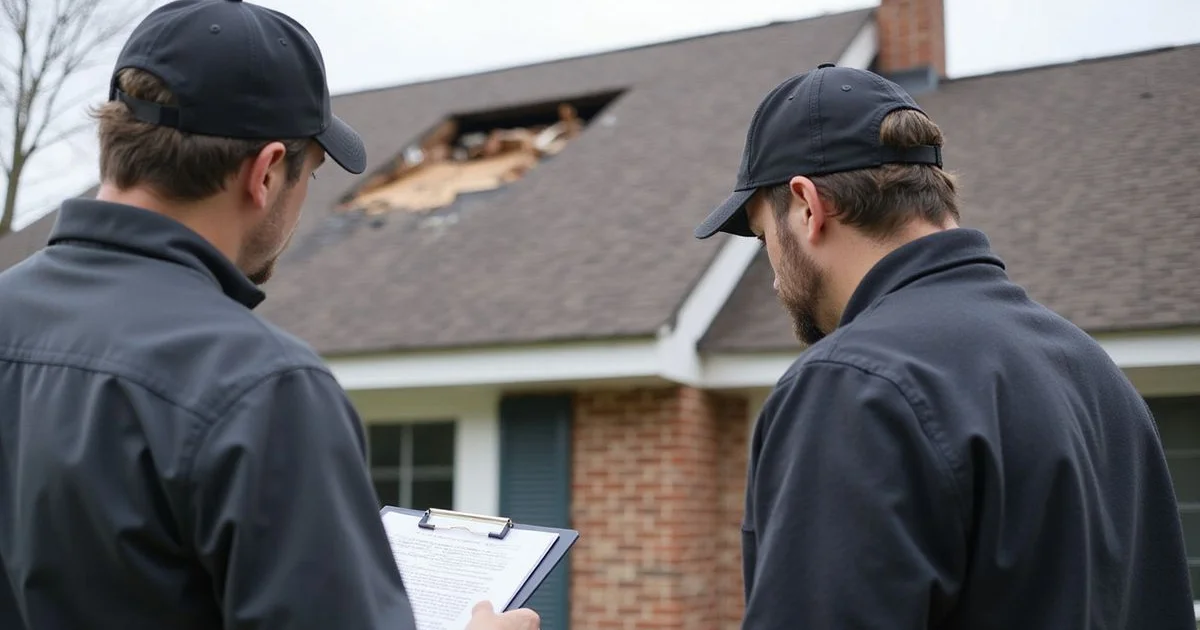
Right now — as of this writing in April 2026 — the storm-chaser crews are already loading their trucks. Giant hail hit parts of Ohio on April 17. Tornado threats followed on April 18 and 19. These crews monitor the same National Weather Service storm reports you do, and they know exactly which counties took the worst damage. They know that anxious homeowners are most vulnerable in the 24 to 72 hours after a storm, when the shock of seeing damaged shingles or a punctured roof is still fresh and the impulse to fix it immediately is strongest.
This guide is written specifically for that moment. It is not a general overview of contractor fraud — it is the version you need right now, before someone knocks on your door with a clipboard and a story about your neighbor's roof.
What Storm Chasers Do and How They Find You
Storm chasers are itinerant roofing crews — often legitimate, skilled roofers in their home states — who follow major weather events across the country as a business model. They are not necessarily fraudsters in the traditional sense. Many of them can actually install a roof. The problem is structural: their business depends on volume over quality, and they are gone before warranty work comes due.
Here is how the operation works. After a significant hail or wind event, these crews monitor NWS storm damage reports, insurance industry data feeds, and local news coverage to pinpoint the affected areas. They load up trucks, drive into the region within 24 to 48 hours, and begin canvassing door-to-door in the hardest-hit neighborhoods — often before local contractors have even cleared their voicemails from existing customers calling in.
Their business model depends on speed and volume. A typical storm-chasing crew aims to sign contracts on 30 to 50 homes in a two-to-three week window, complete the installs using temporary local labor, and move on to the next weather event. The math works in their favor as long as nothing goes wrong. If a flashing fails six months later, or a skylight leaks after the first heavy rain, the number they gave you may be disconnected and the company name may no longer exist.
That said, not every out-of-state contractor is a scammer. Some larger regional roofing companies legitimately expand operations after major storms to serve demand that local contractors genuinely cannot meet. The red flags below are what separate the two categories.
The 9 Red Flags — Specific to Ohio Storm Events
These are not generic warning signs copied from a consumer protection pamphlet. They are the specific behaviors that show up in Fairfield County and across central Ohio in the days following a major weather event.
1. Door-knocking within 48 hours of the storm. A legitimate local contractor does not need to canvass your neighborhood. They get inbound calls from existing customers and referrals. When someone shows up at your door unsolicited the day after a hailstorm, that is a business model that depends on catching you before you have time to research them — which is itself a reason to slow down.
2. "I was just doing your neighbor's roof." This is a social proof manipulation tactic designed to lower your guard. Before it changes how you respond, go knock on your neighbor's door and ask directly whether they hired this company. You will have your answer in about 90 seconds.
3. Offering to waive or "cover" your deductible. This is not a discount — it is a crime in Ohio. Ohio Revised Code 3929.07 explicitly prohibits any contractor from waiving, absorbing, or rebating an insurance deductible. If a contractor offers this, they are either planning to inflate the insurance scope to cover the difference (also fraud, and you could be implicated), or they are planning to cut corners on the actual work to make up the margin. Either way, this offer alone is disqualifying. Walk away and report them to the Ohio Department of Insurance at 1-800-686-1526.
4. Out-of-state license plates with no physical Ohio business address. Ohio requires residential contractors doing work over $5,000 to register with the Ohio Professional Licensing Commission (OPLC). Storm chasers who are not registered will sometimes list a Columbus P.O. box or a virtual office address to create the appearance of a local presence. Ask for a physical street address and verify it exists before you sign anything.
5. "Today only" or high-pressure close pricing. Any contractor who cannot give you 48 hours to review a contract worth $10,000 to $20,000 is deliberately trying to prevent you from checking them out. That is the only reason that tactic exists. A legitimate contractor's pricing does not expire at midnight.
6. Requesting more than 30% deposit before work begins. Contractors legitimately need materials money upfront — up to 30% is standard and acceptable in the industry. Requests for 50%, full payment, or payment before a permit is pulled are setups for a contractor who may never return to your job site.
7. Unwilling or unable to provide their Ohio OPLC registration number. This number is public record and every registered residential contractor knows it. If they claim they are exempt from Ohio licensing requirements, they are not — all residential contracting work over $5,000 requires registration. If they cannot produce the number on the spot, they are not licensed in Ohio.
8. "I'll work directly with your insurance company." This sounds like a convenience, but it is a significant red flag in a post-storm context. When a contractor takes over insurance communications, it often means they are inflating line items on the supplement to maximize the payout — which constitutes insurance fraud, and your signature on that contract can make you a participant. Your insurance adjuster should always be communicating with you, not only with the contractor.
9. No local Ohio references. Ask for three completed Ohio jobs from within the last 12 months, with names and phone numbers you can call today. Legitimate contractors have these ready. A contractor who cannot produce even one verifiable local reference has not been working in Ohio long enough to stand behind their work.
Ohio Laws That Protect You — What You Need to Know
Ohio has real, specific legal protections for homeowners in exactly this situation. Knowing them gives you leverage and a clear path to recourse if something goes wrong.
Ohio Home Solicitation Sales Act (ORC 1345.21–1345.28)
If a contractor came to your home unsolicited and you signed a contract at your door, you have three business days to cancel without penalty or obligation. This right of rescission is mandatory — the contractor is required by law to give you written notice of this right at the time you sign. If they did not provide that written notice, your right to cancel may extend well beyond three days. If you signed under pressure and have doubts, you can cancel. Do it in writing, keep a copy, and send it via certified mail.
Ohio Consumer Sales Practices Act (ORC 1345.01)
This law prohibits deceptive acts and practices in consumer transactions. It covers misrepresentation, false urgency, bait-and-switch tactics, and failure to perform as promised. Violations can be reported to the Ohio Attorney General's consumer protection office at 1-800-282-0515. The AG's office has actively pursued roofing fraud cases following major Ohio storm events — your complaint is not going into a void.
ORC 3929.07 — The Deductible Prohibition
This statute makes it a criminal offense — not merely a civil matter — for a contractor to waive, absorb, or rebate an insurance deductible, or to inflate an insurance scope to effectively cover a deductible. Homeowners who knowingly participate can also face liability. If a contractor made this offer to you, document it (text message, note of verbal conversation with date and time) and report it to both the Ohio Department of Insurance and the AG's office.
Ohio OPLC Contractor Registration
All residential contractors doing work valued over $5,000 must register with the Ohio Professional Licensing Commission. Verify any contractor at license.ohio.gov. To file a complaint against an unlicensed contractor or a licensed contractor who has violated Ohio law, use oplc.ohio.gov/complaints.
How to Verify a Contractor in Fairfield County
This is the five-step process. It takes about 20 minutes and it is worth every minute of it before you sign a contract for a five-figure repair.
Step 1: Ask for the Ohio OPLC registration number and verify it. Go to license.ohio.gov, enter the contractor's name or registration number, and confirm their license is active and has no disciplinary actions. If they cannot give you a number, stop there.
Step 2: Request certificates of insurance — not verbal assurances. You want a certificate of general liability insurance (at minimum $1 million per occurrence) and a workers' compensation certificate. Call the insurance company directly using the number on the certificate — not a number the contractor provides — to confirm the policy is current. This protects you from liability if a worker is injured on your roof.
Step 3: Research the company name independently. Search the company name plus "reviews" plus "Ohio" in Google. Look for a consistent history going back at least three years — not a cluster of five-star reviews from the past two months, which can be manufactured. Check the Better Business Bureau for the Lancaster/Fairfield County area and search the Ohio Attorney General's consumer complaint database.
Step 4: Check complaint history with the Ohio AG. The Ohio Attorney General maintains a searchable database of consumer complaints at ohioattorneygeneral.gov. A company with multiple roofing-related complaints is not a company you want on your roof.
Step 5: Call the references they provide. Ask for two or three completed Ohio jobs from the last 12 months with names and phone numbers. When you call, ask specifically: Did the crew show up on schedule? Were there any issues after completion, and how did the company handle them? Would you hire them again? A contractor with nothing to hide will have customers who are glad to talk.
What Legitimate Storm-Related Roofing Looks Like
It helps to know what the process looks like when a contractor is operating properly after a storm event, so you can recognize the contrast.
A legitimate local contractor's first call after a major storm is to their existing customer base — people they have worked with before who know them and trust them. They do not need to knock on strangers' doors. When they do come to your home for an inspection, they provide a written report with photographs before they ask you to sign anything. They tell you what they found and what it means.
Critically, a reputable contractor will tell you to wait for your insurance adjuster's estimate before you commit to a scope of repairs. They want to see what the insurance company covers, and they will price their work to align with that scope. Legitimate supplements to an insurance estimate — for items the adjuster missed or undervalued — are a normal part of the process. Massive markups that bear no relationship to the adjuster's scope are not.
A trustworthy contractor is also transparent about who will actually be on your roof. If they subcontract labor, they tell you that upfront and explain how that labor is supervised and how the warranty applies. You should never discover three days into the job that the crew on your roof has no connection to the company you signed with.
The Emergency Response Version — When You Need Tarping Fast
Sometimes the situation does not allow for a full vetting process. If you have an active leak, exposed decking, and rain in the forecast, you need help immediately. Here is how to move fast without skipping the most critical safeguards.
First, call your insurance company's emergency contractor network. Most Ohio homeowners' policies include access to a vetted emergency contractor list — your insurance company has an interest in using reliable contractors, so this list is usually a reliable starting point. Call the number on your policy's declarations page.
Second, call the Lancaster Chamber of Commerce. Member contractors have agreed to a code of conduct and have a local business relationship to protect. This is not a guarantee, but it filters out the crews with no local accountability.
Third, use the National Roofing Contractors Association member locator at nrca.net/roofing-contractor-locator. NRCA membership requires adherence to professional standards.
Even in a genuine emergency, ask anyone who shows up at your property for proof of current Ohio OPLC registration and an insurance certificate before they go on your roof. This takes five minutes, and it protects you from liability if anything goes wrong during the emergency work.
Frequently Asked Questions
- How do I identify a storm chaser roofing contractor in Ohio?
Storm chasers typically show up door-to-door within 24 to 48 hours of a major weather event. Red flags include out-of-state license plates, no local business address (just a phone number or P.O. box), high-pressure "today only" pricing, offering to waive your deductible (which is insurance fraud in Ohio), asking for a large deposit before starting work, not having Ohio contractor registration, and being unwilling to provide references from local Ohio jobs they completed in the past 6 to 12 months.
- Is it illegal for an Ohio roofing contractor to waive my deductible?
Yes — it is illegal under Ohio Revised Code 3929.07. A contractor who agrees to waive, absorb, or rebate your insurance deductible is committing insurance fraud. The same law prohibits contractors from overinflating the insurance scope to cover the deductible. If a contractor offers this, walk away and report them to the Ohio Department of Insurance at 1-800-686-1526.
- How do I verify an Ohio roofing contractor is legitimate?
In Ohio, residential contractors are required to register with the Ohio Professional Licensing Commission (OPLC). You can verify a contractor's license status at license.ohio.gov. Also verify that they carry general liability insurance and workers' compensation by asking for certificates and calling the insurer directly, that they have a physical Ohio business address, that they have operated under the same name for at least three years, and that they can provide three to five local references from completed Ohio jobs.
- What protections do Ohio homeowners have against contractor fraud?
Ohio homeowners have several protections. The Ohio Home Solicitation Sales Act (ORC 1345.21–1345.28) requires a three-day right of cancellation on contracts signed at your home — the contractor must give you written notice of this right. The Ohio Consumer Sales Practices Act (ORC 1345.01) prohibits deceptive sales practices and violations can be reported to the Ohio Attorney General at 1-800-282-0515. Ohio Revised Code 3929.07 prohibits deductible waiver schemes as a criminal offense. And Ohio OPLC registration requirements mean unlicensed contractors can be reported to the state licensing board.
- What should I look for in a roofing contract before signing?
A legitimate roofing contract should include exact materials with brand, product line, color, and weight; scope of work covering tear-off layers, new flashing details, and decking repair protocol; total price broken down by line item; a payment schedule with no more than 30% due upfront; estimated start and completion dates; warranty terms for both labor and manufacturer coverage; and the contractor's Ohio OPLC license number. If any of these elements are absent, ask for them before signing. A contractor who refuses to provide them is a contractor you should not hire.
One Last Thing
Fairfield Peak Roofing has operated in the Lancaster area for years. We do not knock on doors after storms. We answer our phone during storm events and schedule inspections in the order calls come in. The contractors we connect you with are licensed in Ohio through the OPLC, carry full general liability and workers' compensation insurance, and provide written warranties on all completed work.
If you need a storm inspection or repair after the recent weather events, call us at 877-367-1885. If you have already signed with a contractor and something about it does not feel right, call us for a second opinion before any work begins. A second set of eyes on a contract costs you nothing and could save you thousands.
Need Help with Your Roof?
Get an inspection and estimate from Lancaster's most trusted roofing team.