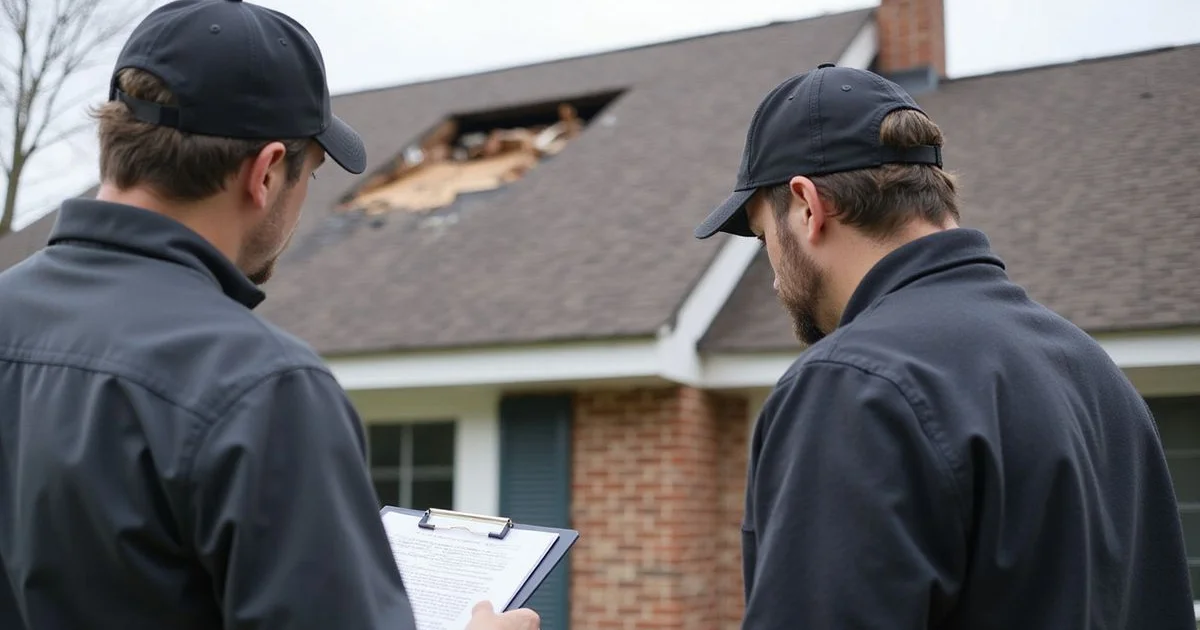
As of April 18, 2026, the National Weather Service issued tornado warnings across parts of Ohio, with severe wind threats extending through central and northeast Ohio. If a warning touched your county, your roof took a stress test last night — whether you know it yet or not. Tornadoes don't need to make a direct hit to cause serious damage. The wind field around a tornado extends well beyond the visible funnel, and the straight-line winds from the accompanying squall line can reach 70–90 mph across a path many miles wide.
The 72 hours after a severe wind event are the most critical window for protecting your home from secondary water damage. Every hour of delay with exposed decking or missing shingles is an invitation for the next rain system to move in and turn a $3,000 shingle repair into a $15,000 interior water damage job. This guide is the action plan for those 72 hours.
Understanding Wind Damage vs. Hail Damage
These two types of storm damage look completely different on a roof, and after a combined tornado-and-hail event — which is standard in Ohio spring storms — you'll likely be dealing with both at once.
Wind damage is structural and directional. It shows up as missing shingles (especially along the ridgeline, rake edges, and gable ends where wind gets the best leverage), lifted shingle sections where the adhesive seal has broken, torn or exposed underlayment, ridge caps that have cracked or blown off entirely, flashing that has pulled away from chimneys or wall transitions, and in severe EF1+ events, cracked decking boards or visible displacement of structural members.
Hail damage is impact-based and often subtle from the ground. It creates circular bruise marks, accelerates granule loss on the impact zones, and dents soft metals like ridge caps, flashing, and gutters. Hail damage is real damage — it compromises the waterproofing layer of your shingles — but it typically doesn't create immediate structural exposure the way wind damage does.
The EF scale gives you a frame of reference for what happened to your area. EF0 events (65–85 mph) can strip shingles from roofs with compromised adhesive seals or older installations. EF1 events (86–110 mph) commonly lift significant sections of roofing, damage ridge systems, and begin to stress structural connections. EF2 and above (111+ mph) causes structural damage to roof framing itself. Most Fairfield County tornado events land in the EF0–EF1 range — enough to cause serious damage, not enough to make the national news.
Here's how to read what you're seeing from the ground:
| Damage Type | What You See | Urgency |
|---|---|---|
| Missing shingles (1–3) | Exposed black underlayment patches | Schedule repair within 1 week |
| Missing shingles (large area) | Bare decking visible | Emergency — tarp immediately |
| Lifted but intact shingles | Shingle edges raised, may lie flat again | Repair within 2 weeks (will re-lift in next wind) |
| Ridge cap missing | Bare ridge board visible | High — direct water entry point |
| Structural sagging or crack | Visible roof line deformation | Emergency — vacate affected area |
The 72-Hour Action Plan
Work through this in order. The sequence matters.
Hours 1–4: Safety First
Do not exit the structure until the storm has fully passed and the NWS has lifted the warning for your county. Tornadoes can produce multiple cells, and the all-clear matters.
Once the storm passes, check for gas leaks before anything else. If you smell rotten eggs anywhere in the house, get everyone out immediately and call 911 from outside. Do not use light switches or phones inside the structure.
Scan for downed power lines before stepping outside. Stay a minimum of 30 feet away from any downed line and call AEP Ohio at 1-800-277-2177 to report it. A line lying still on the ground can still be energized.
Go into your attic and listen. Any cracking, creaking, or visible displacement of rafters under normal standing weight means you need to exit and call a structural engineer before anyone else enters. This is rare but it happens in EF1 events on older homes.
Take exterior photos from the ground only. Do not attempt to access the roof. You have enough information to work with from ground level and a pair of binoculars.
Hours 4–24: Documentation
Walk the entire perimeter of your home in daylight. Photograph every piece of debris: shingle fragments in the yard, dented gutters, bent vents, displaced ridge caps. If shingles are in the street, photograph them there too — they're evidence of where they came from.
Record a continuous video walking around the full perimeter. The timestamp on a video file is harder to dispute than a photo timestamp.
Return to the attic with a flashlight and look for new water intrusion, light coming through gaps you hadn't noticed before, or any change in structural alignment. Dark water stains on rafters or decking confirm the roof was breached.
Pull out your homeowners insurance policy. Locate two things: your wind and tornado deductible amount, and your insurance company's claims phone number. These are often different from the general customer service number.
Call your insurance company to establish a date of loss. You are not filing a full claim yet — you are creating a record that the event occurred and you reported it promptly. This protects you if processing takes weeks.
Hours 24–72: Response
Call a licensed Ohio roofing contractor for an emergency inspection and written damage assessment. The written scope is your primary evidence for the insurance adjuster. Without it, you're negotiating against the adjuster's estimate alone.
If you have exposed decking and rain is in the forecast, arrange emergency tarping. A contractor can do this, or you can do it yourself using the instructions in the next section. Either way, document it with photos before and after.
Do not sign a full repair contract with any contractor until you have the insurance adjuster's estimate in hand. Tarping-only work is fine to authorize immediately. Full replacement contracts signed before the adjuster visit can create complications if the scope of work needs to change.
Do not allow any contractor to negotiate directly with your insurance adjuster without your active involvement in those conversations. This is your claim and your home.
How to Tarp Your Roof Safely
If you have bare decking showing and rain is coming, temporary tarping is the right move. Done correctly, it will hold through typical Ohio spring weather until permanent repairs can be scheduled.
- Purchase 6-mil polyethylene tarps sized to cover the damaged area plus at least 3 feet of overlap on all sides. Lightweight tarps (1.5 mil, 2 mil) will not survive Ohio wind and rain.
- From a ladder positioned at the edge of the roof — not from the roof surface itself — slide the tarp up and over the peak so it extends past the ridge by at least 4 feet on the undamaged side.
- On the downslope side, fold the tarp's leading edge around a 2x4 board and staple or nail through both layers into the decking. The board distributes the tension and prevents the tarp from tearing away.
- On the ridge side, lay a second 2x4 lengthwise across the tarp at the peak and secure it to prevent the wind from getting under the tarp and lifting it.
- Do not use duct tape, zip ties, or bungee cords as your primary fastening method. They will fail in the first sustained wind and you'll be back on the ladder in the rain.
- Photograph the completed tarp installation for your insurance file. This documents that you took reasonable mitigation steps, which can be relevant to your claim.
When not to DIY tarp: If the damage covers more than a quarter of the roof, the pitch is steep (above 8:12), or you can see visible sagging in the decking, call a contractor for emergency tarping instead. An emergency roof repair call is worth it — a fall from a compromised roof is not a recoverable situation.
What Your Insurance Adjuster Will Look For
Be present during the adjuster's inspection. This is not optional. An adjuster working alone on your roof will produce a scope based on what they find — with no advocate for damage they might miss or minimize.
Have your contractor's written damage scope ready to hand to the adjuster at the start of the inspection. If the numbers differ significantly, that conversation happens on-site, not after the fact.
Adjusters are specifically looking for wind-pattern damage: directional shingle loss that follows the wind path, broken or lifted adhesive seals, missing fasteners where shingles were ripped rather than slid off, and structural load path integrity. This is what confirms a wind event rather than age-related wear.
What adjusters sometimes undercount: pre-existing granule loss that's unrelated to the storm (they'll use it to argue the roof was already deteriorating), damage in locations that are hard to access, and secondary damage that's only visible from the attic side. Push back with your documentation if something is missed.
If the adjuster's estimate doesn't reflect the full scope of damage, you have options. You can request a reinspection. You can hire a licensed Ohio public adjuster to represent your claim — their fee is typically 10–15% of the final settlement, and for significant damage, it often pays for itself. Ohio's Department of Insurance consumer helpline is 1-800-686-1526 if you have a dispute you can't resolve directly.
Protecting Your Roof Before the Next System
Ohio gets severe weather in waves. What hits central Ohio on April 18 may be followed by another system a week later. These steps reduce your exposure going forward.
Schedule a post-season roof inspection every spring (April–May) and every fall (October–November). Most wind damage that causes roof failure during a storm started as a compromised seal that went unnoticed for a year or two. Catching it early costs far less than the emergency repair.
When you do replace the roof, ask specifically about Class 4 impact-resistant shingles. These are rated under UL 2218 testing to withstand 110 mph winds and 2-inch diameter hail impacts. In Ohio's storm environment, the upgrade cost is almost always recovered in insurance premium discounts alone within a few years — check with your carrier before installation to confirm the discount they offer.
Make sure your attic ventilation is adequate. Roof systems with proper intake and exhaust ventilation handle thermal stress better, which means the shingle adhesive seals stay intact longer. A roof that has been heat-damaged from the inside is more vulnerable to wind lift, not less.
Trim back any tree branches within 10 feet of your roofline every few years. An overhanging branch that breaks in 80 mph winds doesn't just leave a dent — it can puncture decking, tear off flashing, and give water a direct entry point that a tarp won't fully cover.
Secure your gutters annually. A gutter that's been pulling away from the fascia for two seasons doesn't just leak — in a tornado-level wind event, it becomes a lever that can take adjacent flashing with it when it tears off.
Frequently Asked Questions
How much wind speed does it take to damage a roof in Ohio?
Standard asphalt shingles begin to lift and blow off at sustained winds of 60–70 mph or gusts above 90 mph. Most Ohio spring tornadoes are EF0 or EF1 events (65–110 mph wind speeds), which is enough to strip sections of shingles, damage flashing, and break or displace ridge caps. Impact-resistant Class 4 shingles can withstand higher wind speeds and are worth considering at next replacement.
What does tornado damage look like on a roof vs. hail damage?
Wind damage typically shows as missing shingles (especially along ridges, rakes, and valleys), lifted shingle sections, torn underlayment, displaced or cracked ridge caps, and in severe cases, structural damage to decking or rafters. Hail damage creates circular impact dents, accelerated granule loss, and bruising that may not be visible from the ground. After a tornado or severe wind event, you can have both simultaneously.
Does homeowners insurance cover tornado damage to roofs in Ohio?
Yes — tornado damage is a covered peril under virtually all standard Ohio homeowners policies. The key is documentation and timeliness: photograph all damage before any cleanup or repair work, get a contractor's written inspection report, and file your claim as soon as possible. Ohio policies generally require claims within one year of the event, but filing within 30 days is strongly recommended.
Should I do emergency repairs myself after wind damage?
If you have exposed decking or significant missing shingles and rain is forecast, temporary tarping is appropriate and encouraged. Use 6-mil poly tarps, secure with 2x4s, and never walk on a potentially damaged roof if you are not trained. Leave permanent repairs to a licensed contractor. Attempting unauthorized repairs can actually complicate your insurance claim if not documented properly.
How long does it take to get a roof repaired after a tornado in Ohio?
Emergency repairs (tarping, securing loose materials) can be done same-day. Permanent repairs typically take 1–2 days for standard homes. During active storm season, local contractors may be booked 1–3 weeks out. Out-of-state storm chasers may promise faster timelines but often lack Ohio licensing and local accountability. Working with a licensed local contractor is always worth the wait.
Get Help Now
Fairfield Peak Roofing is currently accepting emergency storm inspections throughout Lancaster, Pickerington, Reynoldsburg, Canal Winchester, and all of Fairfield County. Contractors in our network document wind and tornado damage for insurance purposes, provide certified written assessments, and coordinate directly with your insurance adjuster. Same-day emergency response is available for significant damage — we're not booking out weeks when homes have exposed decking.
Call 877-367-1885 or schedule online at our contact page. Don't wait on this one.
Storm Damage? We're Available Now.
Same-day emergency inspections for Lancaster and all of Fairfield County. Contractors in our network document damage for insurance and get you protected fast.