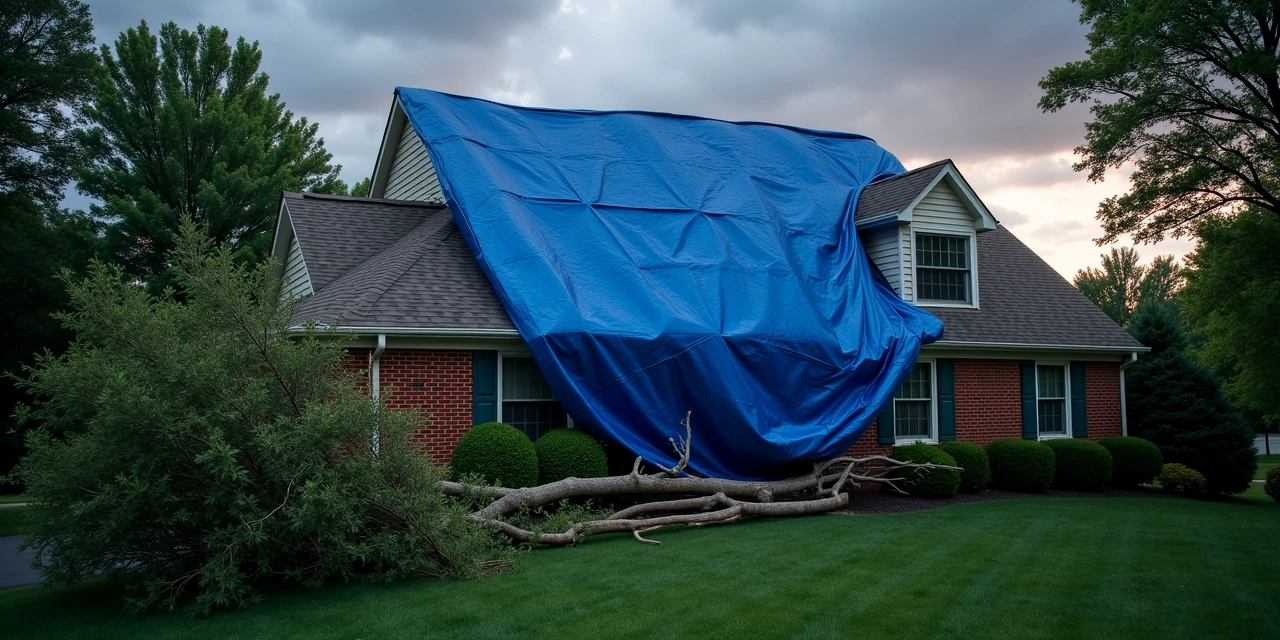
NOAA's Storm Events Database logged hail on about 2 days a year and thunderstorm wind on about 5 days a year in Fairfield County from 2000 to 2025. Those are reported events, so real counts run higher. Hail, straight-line winds, and tornado activity hit this region hard enough that most homeowners here will deal with roof storm damage at least once in the life of their home. When it happens, the first 48 hours matter more than most people realize. Interior water damage from an unprotected roof opening averages $4,000–$12,000, and a lot of that is preventable with fast action.
This guide covers what to do immediately, how to protect your home while you wait for repairs, how to document the damage properly, and how to avoid the wave of fraudulent contractors that follows every major storm in Ohio.
What Should You Do Immediately After Storm Damage to Your Roof?
Stop the bleeding first. Interior protection comes before anything else.
1. Stay out of the attic during active rain. If water is actively entering, the attic presents real electrical and slip hazards. Wait until the storm passes.
2. Move valuables, furniture, and electronics away from any area showing ceiling stains or active dripping. Ceiling drywall can hold water weight for a while, then let go all at once. Don't stand under it.
3. Place buckets and lay down plastic sheeting to protect flooring. Document everything you're doing with timestamps on your phone. Insurance adjusters look for evidence that you mitigated further damage after discovering it.
4. Do not climb onto the roof yourself to assess damage. A wet roof after a storm is extremely dangerous. Wait for daylight and dry conditions, or let a professional do the inspection. More people get hurt climbing on damaged roofs than the roof itself harms.
5. Photograph the exterior from the ground. Get photos of the yard debris, damaged gutters, missing shingles visible from ground level, and any impact marks on siding or flashing. This is your first documentation pass.
6. Call your insurance company to open a claim. You don't need a full damage assessment to open a claim. Open it now, then gather documentation. Most Ohio policies require you to notify the insurer promptly after discovering damage.
How Do You Do Emergency Tarping to Prevent Interior Damage?
Emergency tarping is the single most effective thing you can do to prevent water from turning a roof repair into a full structural and interior renovation.
A tarp purchased or rented runs $50–$200 depending on size. Professional emergency tarping by a contractor runs $300–$800. Measured against the average interior water damage cost of $4,000–$12,000, this is straightforward math.
If you're doing it yourself (only on a dry, safe roof with a helper present):
- Use a heavy-duty polyethylene tarp rated at least 6 mil thick
- Cover the damaged area plus at least 4 feet of intact roof on all sides
- Run the tarp over the ridge to anchor it on the downwind side
- Secure edges with 2x4 boards and screws, not just bricks or sandbags — wind will lift anything that isn't mechanically fastened
- Never use staples alone on a wet or granule-covered surface
If you're calling a contractor for emergency tarping: verify they are Ohio-registered before anyone gets on your roof. Get a written receipt that includes the square footage covered and the materials used. Some contractors who do emergency tarping will use that access to photograph damage for your insurance claim, which is valuable.
For professional emergency roof repair in Fairfield County, call 877-367-1885. We do emergency tarping and can be on-site quickly after a major storm event.
What Roof Storm Damage Looks Like and How to Document It
Hail damage on architectural shingles shows up as circular impact marks where granules have been knocked off, exposing the dark mat underneath. You'll see a "bruised" appearance. On metal components like flashing, gutters, and pipe boots, hail leaves visible dents.
Wind damage shows as lifted, creased, or missing shingles. Look for shingles that are still attached but have the seal strip broken — these will leak even if they look okay from the ground. Step flashing and chimney flashing can also be lifted and bent by wind without being visually obvious from below.
How to document it properly:
- Date and time-stamp all photos before uploading anywhere
- Get wide shots showing context, then close-ups of each damage point
- Photograph your gutters for granule accumulation — this is strong evidence of shingle impact damage
- Photograph any damaged fencing, vehicles, or outdoor furniture to establish the severity of the storm event
- Save or screenshot NOAA storm reports and local news coverage for the specific date
- Get a written inspection report from a licensed contractor before the insurance adjuster visits
That last point matters a lot. When an insurance adjuster arrives, they're assessing on behalf of the insurer. Your contractor's written inspection gives you an independent record to compare against the adjuster's findings. Discrepancies are common and having your own documentation gives you the basis to dispute a low assessment.
How Do You Find a Trustworthy Emergency Roofer in Fairfield County?
After every major storm in Ohio, fraudulent contractor activity increases roughly 300%. Storm chasers arrive within 24–48 hours, going door to door offering free inspections and same-day repairs. Some are legitimate. Many are not.
How to vet an emergency contractor fast:
Ohio OPLC registration. Every roofing contractor in Ohio must be registered with the Ohio Office of Professional Licensure and Certification. You can verify in two minutes at the OPLC website. If a contractor can't give you their registration number, stop there.
Proof of insurance. Ask for a certificate of liability insurance and worker's compensation coverage. A legitimate contractor will have this ready. If someone gets hurt on your roof and the contractor doesn't have worker's comp, you may be liable.
Local presence. A contractor with a local Lancaster or Fairfield County address and verifiable reviews on Google or BBB is far preferable to a crew with out-of-state plates who appeared two days after the storm.
Red flags that indicate fraud:
- Offering to waive or absorb your deductible — this is insurance fraud under Ohio law
- Asking you to sign an Assignment of Benefits (AOB) before any work is agreed upon
- Requesting full payment before work begins
- High-pressure same-day signing tactics
- No physical address or only a P.O. box
Take at least 48 hours before signing any repair contract. Legitimate contractors will respect that. The ones who won't are telling you something important.
How Do You File an Insurance Claim for Storm Damage in Ohio?
Filing correctly is as important as filing quickly. A poorly documented claim gives insurers room to underpay.
Step 1: Open the claim immediately. Call your insurer or open the claim through their app. You only need to report that damage occurred on a specific date — you don't need a complete damage assessment yet. Ohio claims windows are typically one year from the storm date, but notify your insurer promptly regardless.
Step 2: Get a contractor inspection before the adjuster visit. Having a written contractor report in hand before the insurance adjuster arrives gives you documentation to compare against. This is especially important for hail damage, which adjusters can undercount.
Step 3: Understand your deductible type. Ohio percentage deductibles for wind and hail can run 1–3% of your home's insured value. On a $250,000 home with a 2% deductible, your out-of-pocket is $5,000 before insurance pays anything. This is often a surprise to homeowners who only know their flat dollar deductible for other claims.
Step 4: Review the adjuster's estimate carefully. The insurer uses Xactimate software to calculate repair costs. These figures are a starting point, not a final verdict. If the estimate seems low, you have options. A public adjuster can review the claim and negotiate on your behalf, typically charging 10–15% of the final settlement increase. Many homeowners find this worthwhile on larger claims.
Step 5: Know the appraisal clause. If you disagree with the insurer's assessment and can't resolve it through negotiation, most Ohio policies include an appraisal clause that allows each party to hire an independent appraiser. The two appraisers then select a neutral umpire. This process can get you to a fair number without litigation.
For a full walkthrough of the claims process, see our guide to filing a roof insurance claim in Ohio.
How Long Do Emergency Repairs Typically Hold?
A properly installed emergency tarp on a well-secured section of roof can hold for 30–90 days without significant degradation, provided it wasn't installed during active wind or debris conditions. UV exposure breaks down standard poly tarps over time, and Ohio spring weather can push any tarp to its limits.
Temporary patches with roofing cement or modified bitumen material hold somewhat better than tarps but are still not substitutes for proper repair. They can handle moderate rain for several weeks before edge adhesion begins to fail.
The real answer is that emergency repairs exist to bridge the gap between the storm and proper repair scheduling, not to serve as long-term solutions. Most insurance companies won't pay interior water damage claims that occur because you delayed repairs past a reasonable window. Get the permanent repair scheduled within 30 days of the emergency fix wherever possible.
Spring storm season 2026 has been active across central Ohio. If you haven't had a roof inspection since the last major hail or wind event in your area, now is the time. Damage that isn't visible from the ground can show up quickly when the next storm hits.
Frequently Asked Questions
How fast do I need to tarp my roof after storm damage?
As fast as possible. Every hour of rain through an open roof adds to interior damage costs. Average interior water damage from a roof leak runs $4,000–$12,000. Professional emergency tarping costs $300–$800 and is cheap insurance against that exposure. If conditions are unsafe for DIY tarping, call a contractor rather than waiting.
How do I tell if my roof has storm damage if I can't see anything from the ground?
Hail damage and wind damage are often invisible from street level. Signs to look for from safe vantage points: lifted or missing shingles, granules washing into gutters, dents on gutters or metal flashing, and interior ceiling stains. A professional inspection after any significant storm event is the only way to document damage accurately for an insurance claim.
How long do I have to file a roof insurance claim in Ohio?
Most Ohio homeowner policies allow one year from the storm date to file a claim. Some policies have shorter windows. Don't assume you have unlimited time. Notify your insurer promptly after discovering damage even if you're still in the documentation phase. Missed deadlines mean forfeited claims.
How do I spot a storm chaser or fraudulent roofing contractor?
Fraudulent contractor activity increases roughly 300% after major storm events. Key warning signs: out-of-state presence, pressure to sign same day, offers to waive your deductible (insurance fraud in Ohio), requests for full upfront payment, and no verifiable Ohio OPLC registration. Take 48 hours before signing any contract. Legitimate contractors will wait.
Need Help with Your Roof?
Get a free, itemized estimate from Fairfield County's trusted roofing team.


