NOAA's Storm Events Database logged hail on about 2 days a year and thunderstorm wind on about 5 days a year in Fairfield County from 2000 to 2025. Those are reported events, so real counts run higher. A single hailstorm over Lancaster or Reynoldsburg can affect thousands of homes in an afternoon. What you do in the hours and days immediately after storm damage determines whether your insurance claim goes smoothly, whether your home stays dry, and whether you end up working with a legitimate contractor or a fraudulent one.
This guide is written specifically for Fairfield County homeowners — Lancaster, Pickerington, Canal Winchester, Reynoldsburg, and surrounding communities. It covers the first hour, who to call, how to document for a claim, what the Ohio insurance process looks like, and how to protect yourself from the contractor fraud surge that follows every major storm.
What to do in the first hour after storm damage to your Fairfield County roof
The first hour after a storm is about safety and documentation — not repairs. Follow this sequence.
Step 1: Stay off the roof. A wet or storm-damaged roof surface is significantly more dangerous than a dry one. Hail impact creates slippery dimpling on shingles. Wind damage can leave sections of decking partially detached. Do not get on the roof. Your initial assessment happens from the ground.
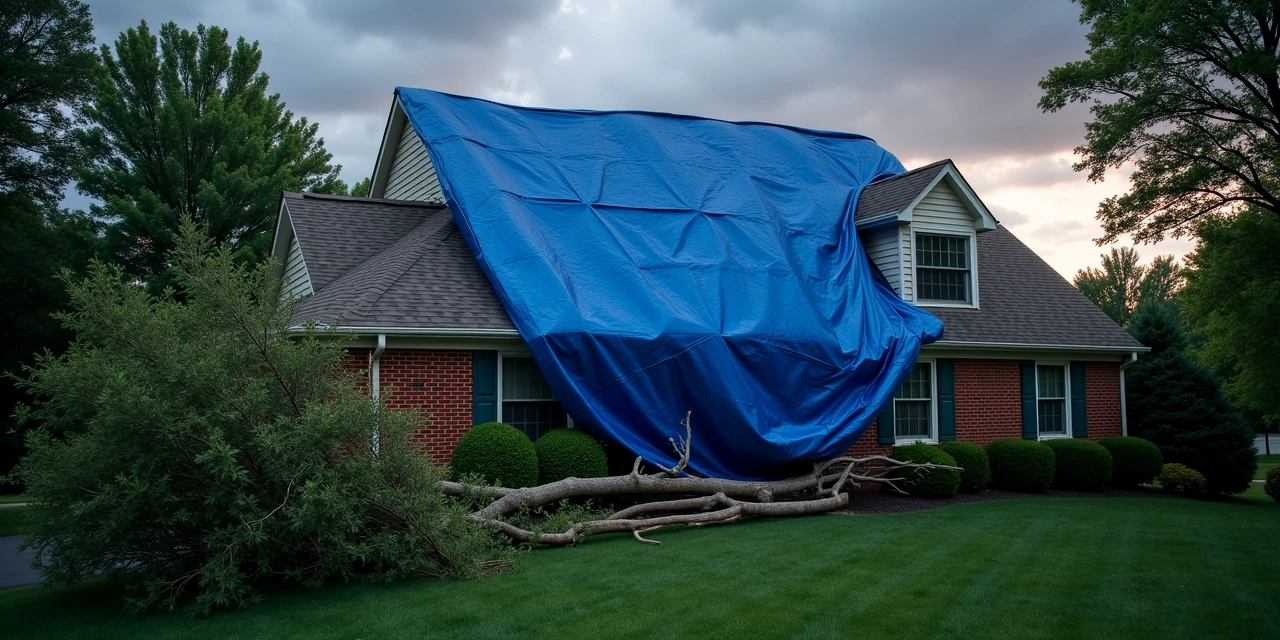
Step 2: Check for immediate structural threats. Walk the perimeter of the house from the ground. Look for: large sections of missing shingles, fallen trees or branches on the roof, structural collapse of any overhangs, or visible holes in the roof surface. If you see a tree through the roof, the interior below is your next priority — not the roof itself.
Step 3: Protect the interior from further water damage. If water is actively entering the home, move furniture, electronics, and valuables away from the affected area. Place buckets or containers. Put down towels or plastic sheeting on floors. Water damage from an untreated roof breach averages $4,000 to $12,000 in interior repairs — much of which can be prevented with fast action on the first day.
Step 4: Document everything before touching anything. Photograph and video the damage from every angle accessible from the ground before any cleanup begins. Include: the overall roofline, gutters, downspouts, any debris on the roof, dents on HVAC equipment, damage to siding, and anything else the storm affected. Date-stamped phone photos are acceptable for insurance documentation. The timestamp is critical — it establishes the event date.
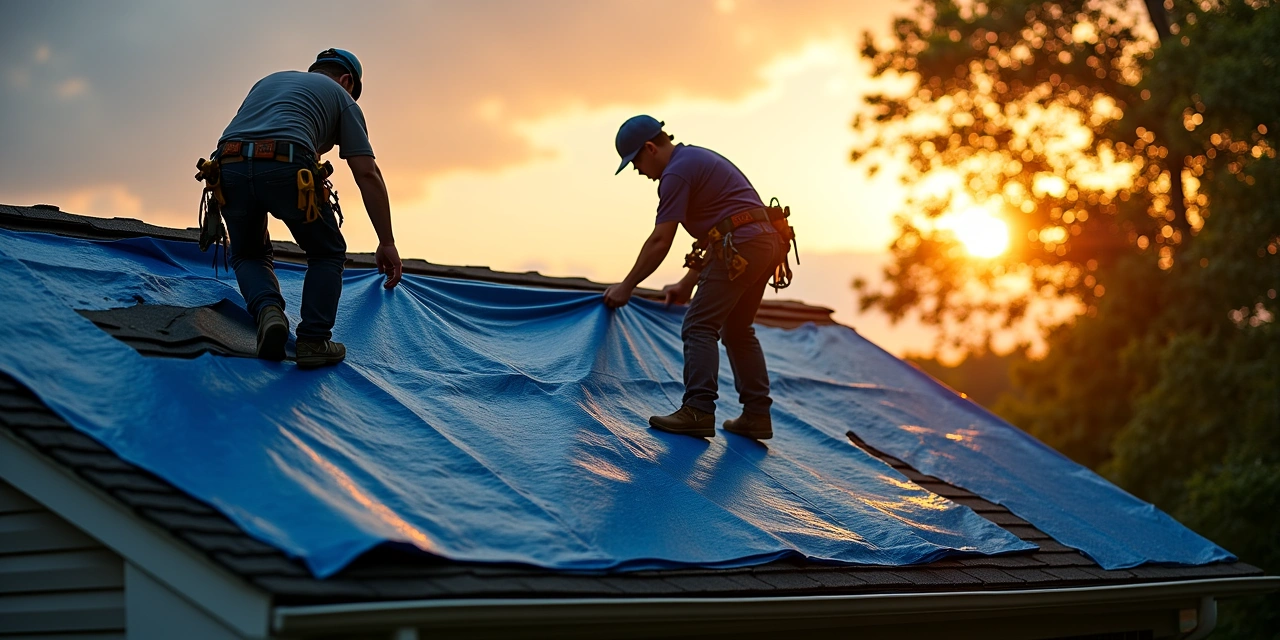
Step 5: Call for emergency tarping if there is an active breach. If the roof has a hole or significant missing section, call a licensed local contractor for emergency tarp installation. This costs $300 to $800 in the Fairfield County market and is typically reimbursable under your insurance claim as a mitigation expense. Keep all receipts. For emergency roof repair services, contact Fairfield Peak Roofing at 877-367-1885.
Step 6: Call your insurance company to open a claim. Call — don't wait for the online portal or a scheduled callback. Opening the claim immediately establishes the date and gets an adjuster on your calendar. Most Ohio insurers dispatch adjusters within 3 to 7 business days after a claim is opened. After a major regional event like a significant hailstorm in Lancaster or Reynoldsburg, that window can extend to 2 to 3 weeks.
Which local emergency roofing services serve Fairfield County, Ohio?
In the immediate aftermath of a storm, you need a contractor who is already working in Fairfield County — not one who is driving from Columbus or beyond after seeing a news alert.
Fairfield Peak Roofing provides emergency roof repair and tarping throughout Fairfield County, including Lancaster, Pickerington, Canal Winchester, Reynoldsburg, Newark, Heath, Granville, Pataskala, Baltimore, and Thornville. We respond to active breach calls the same day when conditions allow. Reach us at 877-367-1885.
For permit-related questions after a storm — including whether emergency repairs require a permit — contact the Fairfield County Building Department at 740-652-7080. Emergency tarping generally does not require a permit. A full roof replacement after storm damage does.
For our full storm damage repair and roof inspection services, see the dedicated pages.
One important note on post-storm contractor selection: after every significant storm event in Fairfield County, fraudulent contractor solicitations increase by roughly 300 percent. Door-knockers who "noticed your damage while driving by," crews operating out of out-of-state trucks, and contractors who offer to waive your deductible are all red flags. Verify any contractor at elicense.ohio.gov before signing anything. For a full vetting guide, see our Fairfield County roofing contractors guide.
How do you document storm damage for an Ohio insurance claim?
Documentation quality directly affects claim outcomes. A well-documented claim moves faster, receives less scrutiny, and is harder to dispute. Here's what to capture.
Photos and video from the ground:
- Full roofline from each corner of the property, showing the overall condition
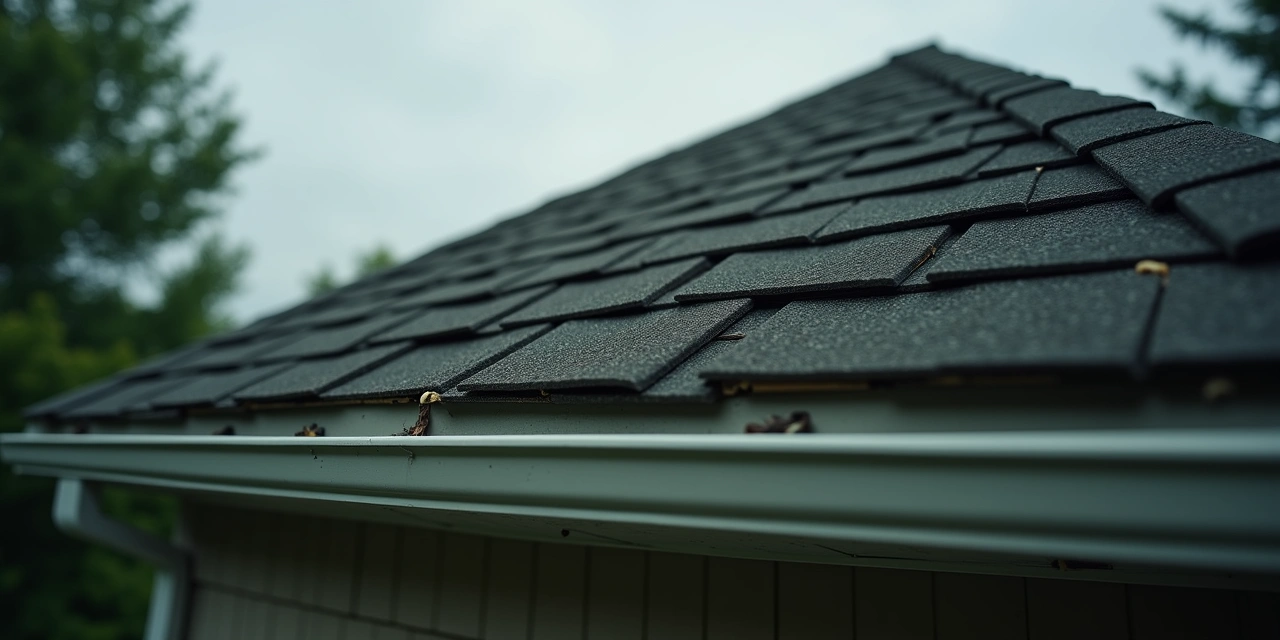
- Close-up shots of any visible missing shingles, displaced sections, or obvious holes
- Gutters showing dents, granule accumulation, or displacement — hail leaves circular dents in aluminum gutters that are unmistakable
- Any dents on HVAC condensing units, mailboxes, or metal siding — these corroborate the hail size and intensity
- Fallen debris, tree limbs, or other storm material on the property
- Date and time stamp visible on all photos
Interior documentation:
- Any ceiling staining, water drips, or wet insulation visible from inside
- Damaged personal property caused by water intrusion
- Photos taken immediately — before any cleanup — to establish pre-mitigation conditions
Third-party verification:
- National Weather Service storm reports for the date and location — these are public records and can be downloaded from weather.gov. An NWS report showing hail at your address is powerful supporting documentation.
- A licensed contractor's written inspection report identifying storm-related damage by type and location on the roof
Keep all documentation in a single folder — physical and digital copies. Your insurance company will request photos, dates, and a contractor's estimate. Having everything organized from day one prevents delays.
What does the Ohio insurance claim process look like after storm damage?
The Ohio storm damage insurance claim process runs in a predictable sequence once you understand each stage.
1. File the claim. Call your insurer's claims line, not your local agent (though your agent can help you navigate). Give the date of loss as the storm date, not the date you discovered the damage. Provide your policy number and a brief description of the damage. You will receive a claim number — write it down and use it on all future communications.
2. Insurance adjuster inspection. The insurer sends an adjuster to inspect the damage. This typically takes 3 to 10 business days after a claim is filed, longer after major regional events. You do not have to be on the roof with the adjuster, but you should be home. Having your contractor present during the adjuster's inspection is your right and strongly recommended — contractors often identify damage that adjusters miss.
3. Adjuster's scope and estimate. After the inspection, the adjuster produces a Xactimate scope of work and a damage estimate. Review it carefully. If the adjuster's scope misses items your contractor documented — missing flashing, hail damage to underlayment, damaged vents — you can dispute specific line items with supporting documentation.
4. ACV vs. RCV payment. Most Ohio policies pay Actual Cash Value (ACV) first, then release the Replacement Cost Value (RCV) holdback after the work is completed. ACV is the depreciated value of the damaged materials. On a 15-year-old roof, ACV might be 30 to 40 percent of replacement cost. RCV holdback is released when you submit the contractor's final invoice. Don't spend the ACV payment before the job is done — you'll need the RCV release to fully cover the project.
5. Supplement if necessary. If your contractor identifies additional damage during tear-off that wasn't in the original scope — damaged decking, deteriorated step flashing, code-required upgrades — the contractor can submit a supplement to your insurer for the additional costs. This is normal and happens on most storm claims. Document the additional damage with photos before covering it.
6. Final payment and close. After the job is complete and you submit the contractor's invoice, the insurer releases the RCV holdback. You pay the contractor, minus your deductible. The claim closes.
For a full walkthrough of the Ohio insurance claims process, see our roof insurance claim guide for Ohio and our guide on how to file a roof insurance claim in Ohio.
How long do you have to file a storm damage claim in Ohio?
Most Ohio homeowners insurance policies require you to file a storm damage claim within one year of the storm date. Some policies have shorter windows — as few as 180 days. Check your policy declarations page for the specific deadline. This is not a grace period; missing the window means forfeiting coverage even if the damage is clearly storm-related.
The one-year window is why you should file as soon as possible after a storm, even if you're not sure how severe the damage is. Filing opens the claim and locks in your date. You can always gather more documentation after filing. You cannot un-miss a deadline.
There is also a practical urgency beyond the legal deadline. Water damage compounds quickly. A roof breach that admits one inch of water per rain event becomes a mold and structural problem within weeks. Waiting months to address a known breach in hopes of getting a better time to file is rarely worth the risk.
One timing note specific to Fairfield County: the active storm season runs March through October. After the major hail events that hit the Lancaster and Reynoldsburg corridor in spring 2025, claims filed in the first two weeks after the event were processed significantly faster than those filed months later when adjusters had cleared their backlog. Early filing is consistently better than late filing.
What repairs can you do yourself and what requires a professional?
After a storm, the line between safe DIY mitigation and work that should be left to professionals is clear once you know where it falls.
What you can do yourself:
- Document damage from the ground with photos and video
- Move furniture and valuables away from active interior leaks
- Place buckets and plastic sheeting to contain water intrusion
- Remove debris from gutters and downspouts if accessible from a stable ladder at ground level
- Cover broken windows or compromised exterior openings from the inside
What requires a licensed professional:
- Any work on the roof surface — tarping, shingle replacement, flashing repair
- Assessment of structural damage to rafters or decking
- Any repair that will be part of an insurance claim — DIY work can complicate or void reimbursement
- Any repair requiring a permit (including full replacement after storm damage)
Specifically on tarping: a properly installed emergency tarp uses weighted edges, proper overlap over the ridge, and attachment methods that don't add additional penetrations to the damaged deck. An improperly installed tarp blows off in the next wind event — or worse, channels water into the structure rather than away from it. This is not a beginner task. The $300 to $800 it costs to have it done correctly is well spent. See our emergency roof repair page for details.
Do not attempt to replace shingles, seal flashing, or perform any permanent repair before the insurance adjuster has inspected. Completing repairs before the adjuster sees the damage can reduce or eliminate your claim for that work. Document first. Mitigate active water intrusion. Wait for the adjuster before permanent repairs begin.
Frequently Asked Questions
How long do I have to file a storm damage insurance claim in Ohio?
Most Ohio homeowners insurance policies require filing within one year of the storm date. Some policies have shorter windows — as few as 180 days. Check your policy declarations page for your specific deadline. Filing early is always better; adjusters clear regional backlogs faster in the weeks immediately following an event than months later.
What does emergency roof tarping cost in Fairfield County?
Emergency tarp installation by a licensed contractor in Fairfield County typically runs $300 to $800, depending on the size of the breach and roof accessibility. This cost is often reimbursable as part of an insurance claim under the mitigation of further damage provision. Keep all receipts and document the damage before the tarp goes on.
What is a percentage deductible and how does it affect my storm claim?
A percentage deductible for wind and hail is calculated as a percentage of your home's insured value, not a flat dollar amount. On a $250,000 home with a 2% wind/hail deductible, you pay the first $5,000 out of pocket before insurance contributes anything. Many Ohio policies shifted to percentage deductibles in recent years. Check your declarations page — the deductible type and amount are listed there.
Should I get on my roof to inspect storm damage myself?
No. After a storm, a wet or damaged roof surface is significantly more hazardous than normal. Do your initial assessment from the ground using binoculars if needed. Document what you can see from the ground with photos and video. Call a licensed contractor for the roof surface inspection — most will do this at no charge as part of the estimate process.
How do I know if the roofing contractor contacting me after a storm is legitimate?
Verify their Ohio OPLC registration at elicense.ohio.gov before signing anything. Legitimate contractors have a physical Ohio address, carry current general liability and workers' compensation insurance, and will never offer to waive your deductible — that is insurance fraud. After major Fairfield County storms, fraudulent contractor solicitations increase by roughly 300 percent. Take 24 hours before signing any contract, and never sign at the door on the day a crew approaches you unsolicited.
Need Help with Your Roof?
Get a free, itemized estimate from Fairfield County's trusted roofing team.
877-367-1885